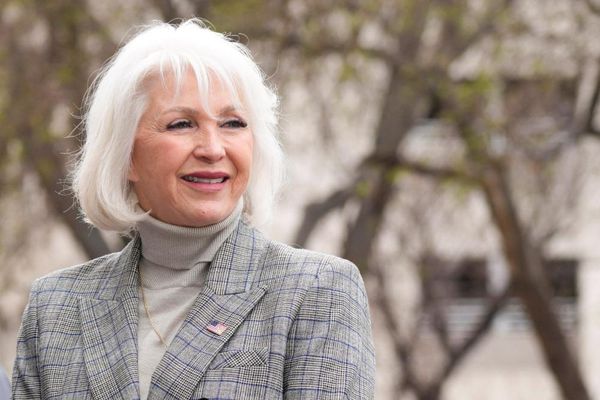
Japan’s main opposition party has elected its first woman leader, with Renho Murata triumphing over two men to head the left-of-center Democratic Party.
Ms Murata will now face the task of reinvigorating an opposition largely viewed as being in disarray and unable to convincingly take on the conservative Liberal Democratic Party that has held power for all but four of the last 61 years.
“I pledge to take the heavy responsibly and to lead the rebuilding of our party into one people will be sure to choose,” Ms Murata – who is known in Japan by just her given name, Renho – said after winning the leadership. “We will confront the huge and popular ruling party and fight fairly, not with criticism but with our ability to make proposals, with imagination, and with our ideas on how the country should be.”
She has promised to lead a “revolutionary party” that will provide strong opposition to Prime Minister Shinzo Abe’s LDP. The mother of twins, Murata has also vowed to provide free pre-school childcare in a country where women find it difficult to hold down full-time jobs because of childcare demands.
Ms Murata, a 48-year-old former newsreader who’s served in the upper house of parliament for 12 years, won in a landslide of 503 out of 849 votes. Her male contenders, former party leader Seiji Maehara and relative unknown Yuichiro Tamaki, received 203 and 116 votes respectively.
Her victory is another boost for women, who are still woefully under-represented in Japanese politics. But, the last few months have seen the election of Yuriko Koike as Tokyo’s first female governor and Tomomi Inada as its second female defence minister (Koike was the first).
But Ms Murata is not just a woman, she’s also half Taiwanese.
Her campaign became mired in controversy when it emerged she still had Taiwanese citizenship, after previously saying she’d given it up – a potentially damaging revelation in a country that prizes homogeneity.
Ms Murata was born in Japan to a Japanese mother and Taiwanese father at a time when women were not allowed to pass on their nationality. She became a Japanese citizen in 1985 when the law was changed.
But it transpired that Ms Murata still retained her Taiwanese passport, meaning that she was not only breaking the law on dual citizenship after the age of 22, but sparking accusations that she could be beholden to Taipei.
“If Renho retains her Taiwan citizenship, she could become the target of undesirable suspicions regarding her relations with Taiwan,” the conservative Yomiuri Shimbun, Japan’s largest newspaper, wrote in an editorial. What if Taiwan made a claim for the Senkaku islands, currently owned by Japan but disputed by China, the paper wondered.
The current iteration of the Democratic Party was created in March through a merger with the Japan Innovation Party, and the new party struck a deal with the Japanese Communist Party to avoid splitting the opposition vote in upper house elections held in July.
Still, its clout in the Diet, as the two houses of Japanese parliament is known, is negligible. It controls only one-fifth of the seats in each of the chambers.
Ms Murata will have her work cut out for her as leader. The Democratic Party has struggled to recover from a catastrophic three years in government that ended in 2012. The party’s leaders were strongly criticised for their response to the Fukushima nuclear disaster in 2011 and for raising taxes.
© Washington Post