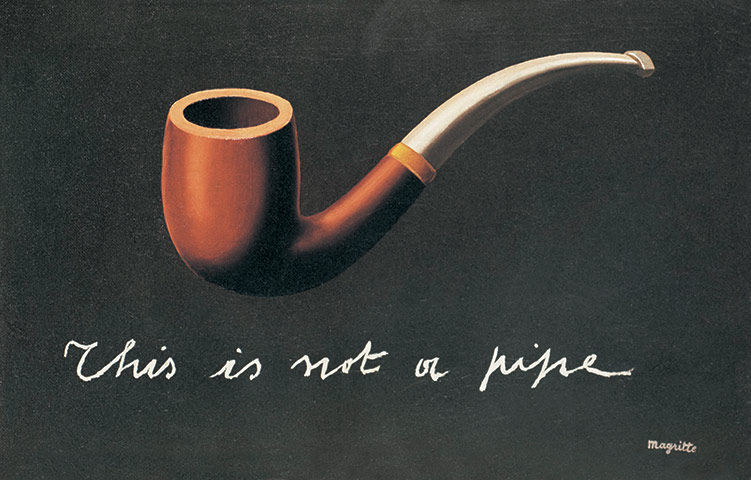
Magritte said of his pipe: ‘I’ve been criticised enough for it! Yet, could you stuff my pipe? No, it’s just a representation. So if I had written “This is a pipe” below the picture, I would have been lying’ Photograph: ADAGP, Paris/DACS London 2011
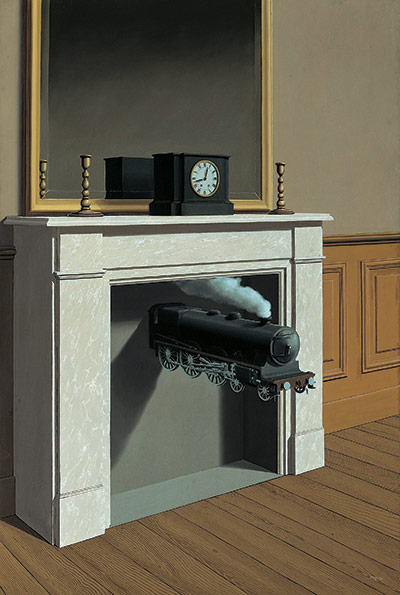
Magritte said he ‘decided to paint the image of a locomotive… In order for its mystery to be evoked, another immediately familiar image without mystery – the image of a dining room fireplace – was joined’ Photograph: ADAGP, Paris/DACS London 2011
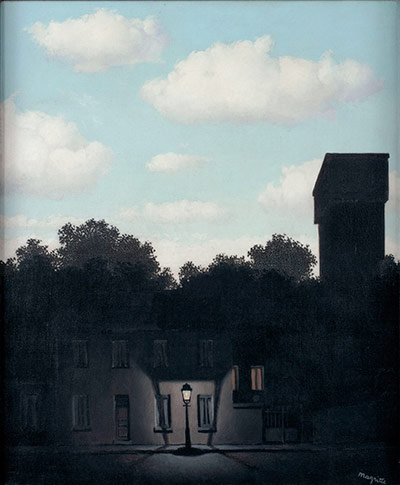
Of this work, the artist has said: ‘This evocation of night and day seems to me to have the power to delight and surprise us’ Photograph: ADAGP, Paris/DACS London 2011
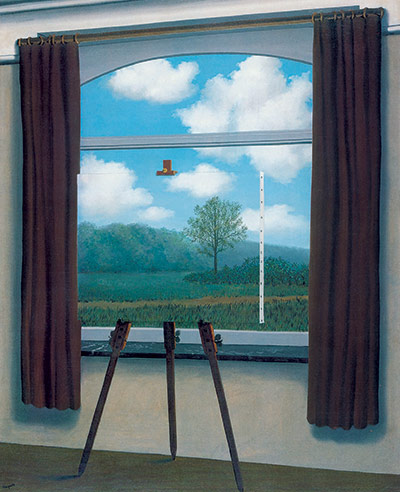
Magritte said that, for the spectator, this painting showed the tree ‘both inside the room within the painting and outside in the real landscape’ Photograph: ADAGP, Paris/DACS London 2011
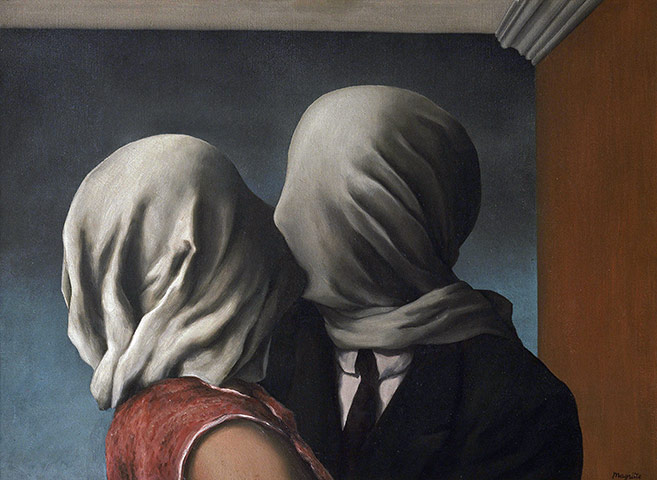
One of several works with figures whose heads are mysteriously covered Photograph: Photo Scala / DACS London 2011
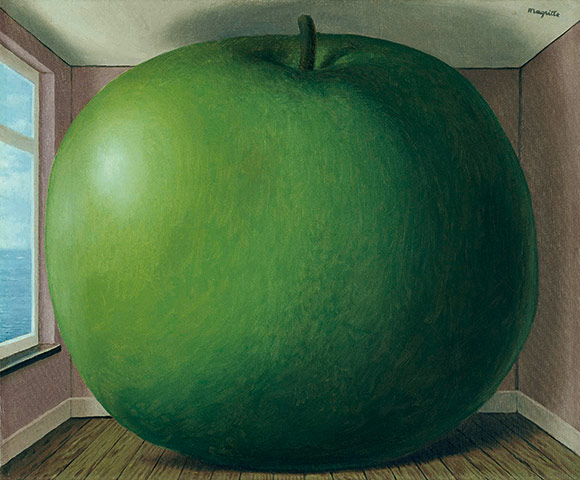
One of Magritte’s many paintings depicting grossly oversized objects dominating domestic rooms, and including the regular motif of an apple Photograph: ADAGP, Paris/DACS London 2011
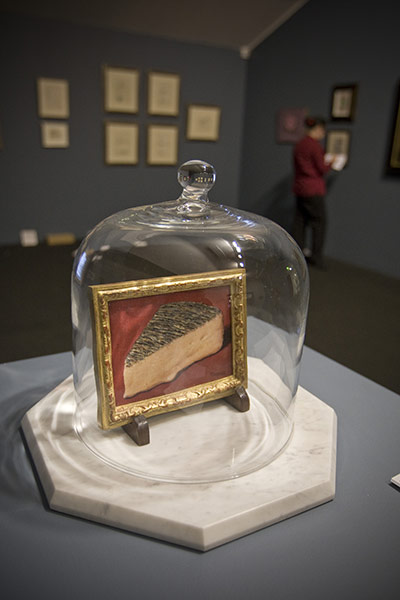
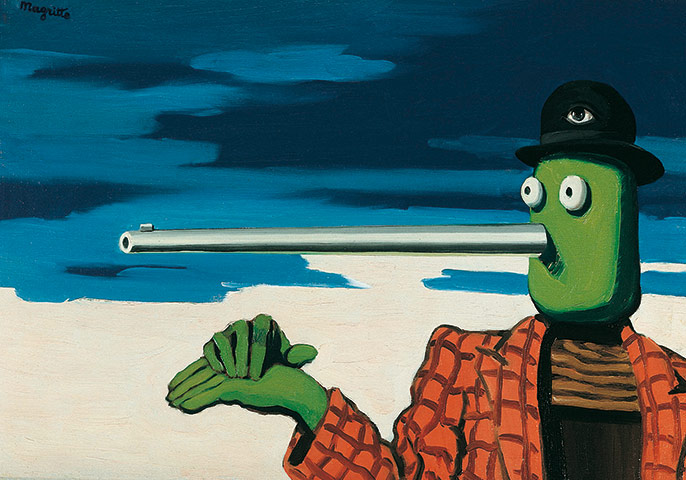
'There is more to him than skies raining bowler-hatted gents over Brussels streets,' writes Adrian Searle, reviewing the show Photograph: Royal Museums of Fine Arts of Belgium, Brussels / Charly Herscovici, ADAGP, Paris 2011 / DACS 2010
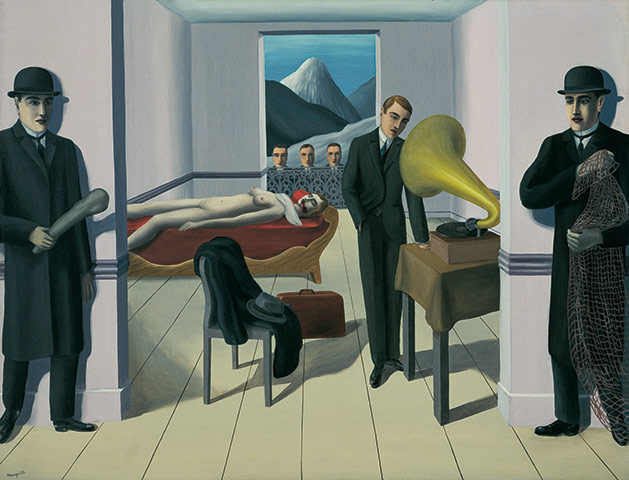
Despite his proclaimed dislike of Freudian theory, Magritte's paintings dwell on themes that would make any analyst raise a quizzical eyebrow – particularly when they seem to refer to the death of his mother while the artist was a teenager Photograph: The Museum of Modern Art, New York / Charly Herscovici, c/o ADAGP, Paris 2011 / DACS 2010
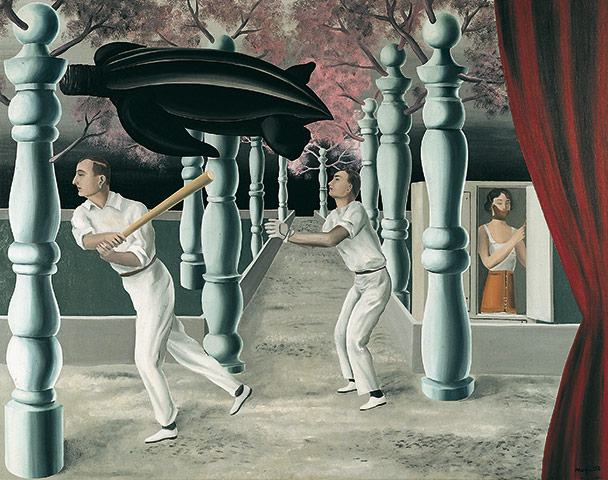
'He had one eye on Freud,' argues Searle, in this video tour of the new Tate exhibition, 'even if he pretended to be looking the other way' Photograph: Royal Museums of Fine Arts of Belgium / Charly Herscovici, c/o ADAGP, Paris 2011 / DACS 2010