Public school families across the ACT logged on for their first official day of remote learning on Friday as the lockdown entered its second week.
Despite being the second experience of home learning since the first wave of COVID-19 hit last year, there were some technology troubles and teething problems.
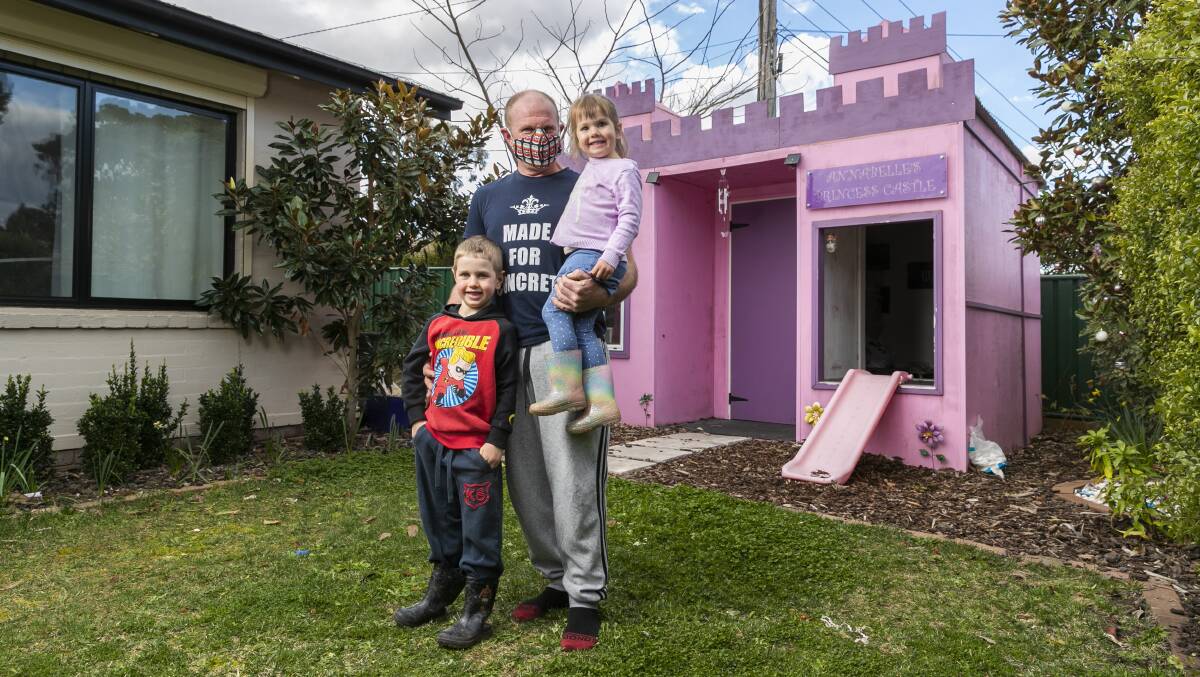
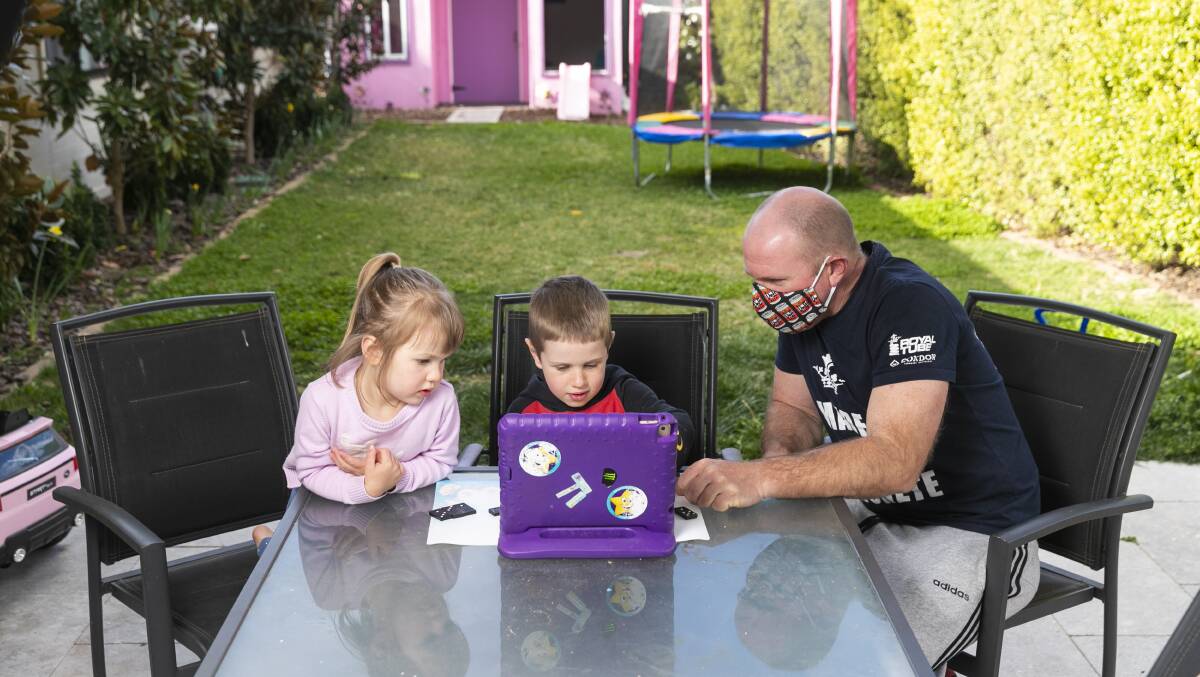
Construction worker Adam Potts found himself the primary carer and home learning supervisor of his three young children: William, 5, Juliette, 3, and Vivianna, 1.
His wife, Kathie, has been able to continue her work for charity Rare Cancers Australia from home and is focusing on being the breadwinner while the construction industry is on pause.
Mr Potts has swapped his long days building formwork for high-rise commercial developments for equally long days managing cooking, cleaning and nap times.
William took the lead with his online learning but still needed some help logging in and finding his tasks.
"We didn't even have computers when I was younger so the kids sort of helped me a little bit," Mr Potts said.
He was looking forward to eventually returning to work after an eventful first week of lockdown which involved a trip to the emergency room when William had a trampoline accident.
"I thought it was going to be relaxing but it's good to spend time with the kids," he said.
Meanwhile, journalist Ginger Gorman had to take a day of leave to help her 11- and 8-year-old children with their first day of remote learning.
She felt very stressed after watching the education minister's video explaining how it would all work.
"I'm a single parent and even though I think the schools and the teachers are doing an amazing job the issue is that it's almost as if there's an expectation that there's two parents in every household, and that one parent is just completely available to help educate the children, whereas in so many different households, that's not the case," she said.
"I would have loved to see a solution that assisted parents with the pressure of lockdown, rather than giving them the feeling that they're actually in a pressure cooker."
Ms Gorman said she felt the scheduled tasks put too much pressure on families and that a break from formal schooling combined with banks of tasks for primary school students to do at their own pace would be better than having to manage multiple meetups each day.
"I understand that the teachers and the schools want to keep the schooling as normal as possible and to try to provide the kids with some kind of education, but I would just question how realistic that is in modern households," Ms Gorman said.
"Honestly at this point my priority is keeping a roof over my kids' head. Not worrying about whether they miss a few weeks of school."
New research from University of Melbourne researcher Professor Lyn Craig found more working mothers than fathers were dissatisfied with their work-family balance and partner's share of the domestic load before the pandemic. This mostly worsened during lockdown.
"It's the women that are actually bearing the brunt of this. That's what the statistics show, and that's also the anecdotal experience of myself and all the other women around me," Ms Gorman said.