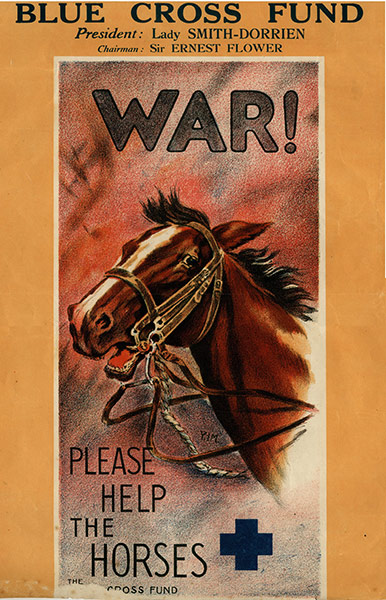
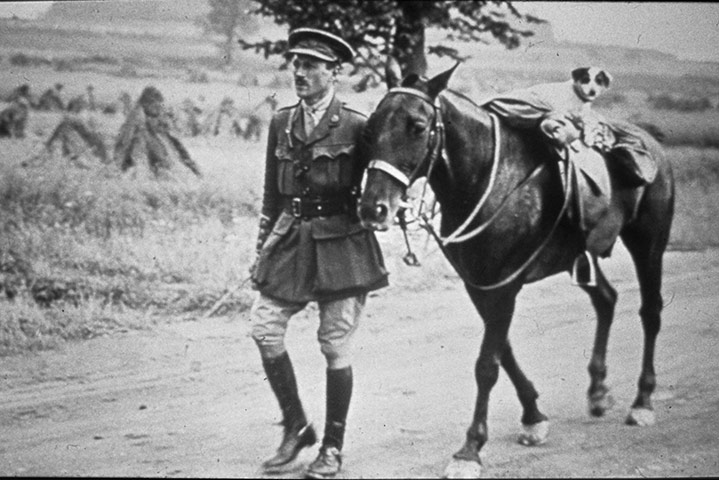
A soldier resting against his horse in world war one. When war broke out in 1914, 140,000 horses were mobilised – many from private ownership. Our Dumb Friends League immediately launched the Blue Cross Fund to raise money to send medicine and horse comforts to British animals sent to the front. During the war, more than 3,500 units of the British army were sent veterinary supplies offering a lifeline for sick and injured animalsPhotograph: Blue CrossThis Blue Cross fundraising poster highlighting the plight of the horses on the battlefields of Europe touched the animal-loving British public and helped to generate £170,000 in donations during the first world war - equivalent to £6.5 million today. While the Army Veterinary Corps was in place to treat British animals in war, our allies were less well equipped. The Blue Cross made an offer of help to the French Army who enthusiastically agreed. It went on to set up 13 horse and dog hospitals in France and six more in Italy, with Blue Cross vets treating over 50,000 horses in France alonePhotograph: Blue CrossDuring the conflict soldiers became incredibly attached to the animals with whom they experienced the terror and hardship of the battlefield. One army captain writing from Belgium in March 1916, on receipt of a Blue Cross veterinary chest, said: “Many things are sent to my men, but these are the first things I have ever got for my horses, and could they speak I suppose they’d express gratitude, and for the men I really believe all my chaps would rather have something for their “long-faced chums,” as they call them, than for themselves.”Photograph: Blue Cross
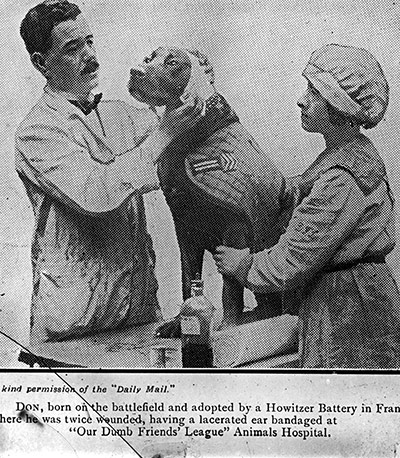
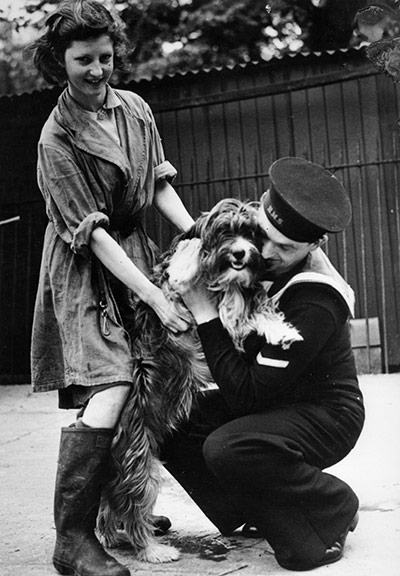
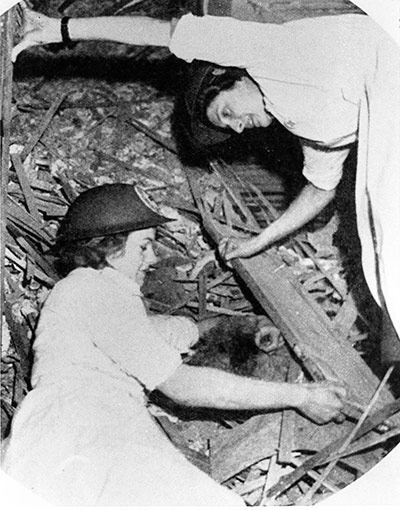
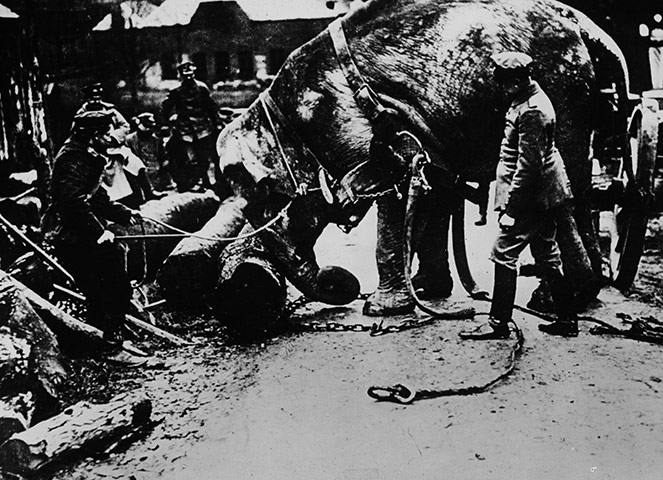
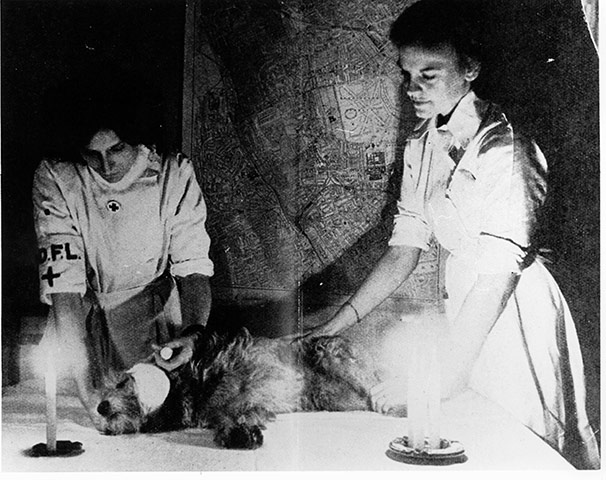
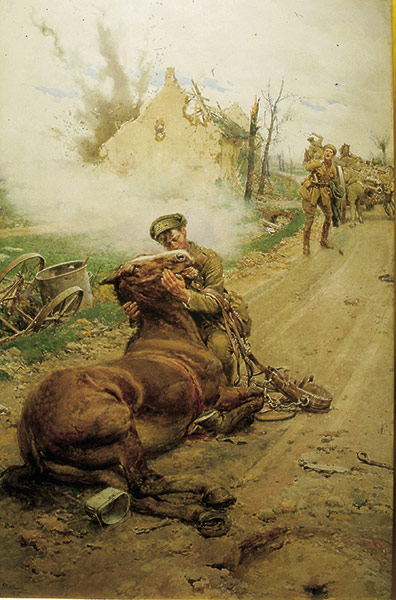
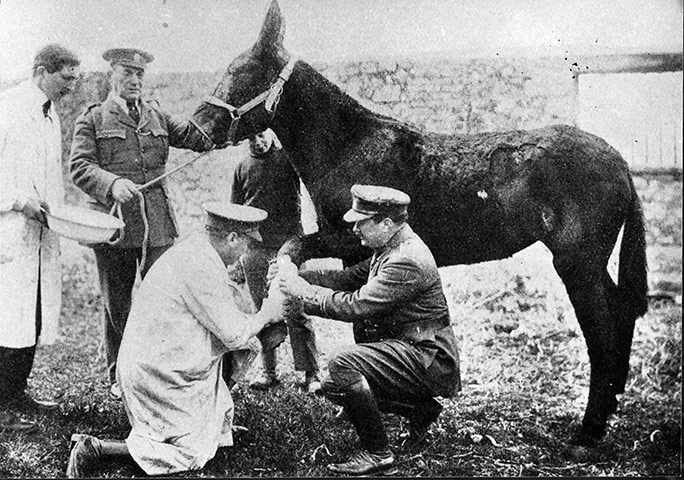
A dog being treated by vet and nurse. This dog was born on the battlefield and adopted by a French Howitzer battery. He was injured twice and treated by the Blue Cross vets who bandaged his lacerated ear. The charity treated over 10,000 dogs in its French hospitals during world war one Photograph: Blue CrossA sailor greets a dog at Charlton kennels. After the war, soldiers who fell in love with dogs while fighting in Europe hated leaving them behind, so the Blue Cross set up quarantine kennels to bring them back to the UK. In the second world war, these were reopened for the dogs of refugees fleeing EuropePhotograph: Blue CrossA women rescuing dog from rubble in Blitz. During the Blitz in 1940-41, Blue Cross staff and volunteers in London worked long, exhausting hours to rescue pets trapped in the rubble of bombed buildings. By the end of 1940 more than 150,000 animals had been taken in, treated, found new homes or painlessly destroyedPhotograph: Blue CrossAn elephant pushing logs in either Belgium or France. It is estimated that the British Army used 1.2 million horses and mules during the first world war, of which 484,000 sadly died in battle, but sometimes more unusual animals could be seen on the frontlines of EuropePhotograph: Blue CrossVet nurses work on an injured dog by candlelight during the Blitz at the charity’s animal hospital in Victoria, London, which was founded in 1906. The hospital still operates today, treating 30,000 sick and needy pets a yearPhotograph: Blue CrossGoodbye Old Man. This poignant painting by Matania shows a soldier taking sorrowful and reluctant leave of his fatally wounded horse while his comrade urges him to leave. The painting is a stark illustration of the deep bond between the soldiers and their animals, a bond still celebrated by the Blue Cross today. Reproductions of the painting were sold between 1914 and 1918 to raise money for the Blue Cross fund and the original still hangs in the charity’s animal hospital in Victoria, LondonPhotograph: Blue CrossA horse being treated by vet and soldier. Horses frequently came in blinded by bullets, with painful septic sores and with shrapnel lodged in their flesh. One, Big Ben, was brought into the Blue Cross hospital in Meaux peppered with 27 pieces of shell, including one lodged in his spine. But thanks to the work of the vets who worked day and night in shifts, he returned to the front in three months Photograph: Blue Cross
Sign up to read this article
Read news from 100’s of titles, curated specifically for you.