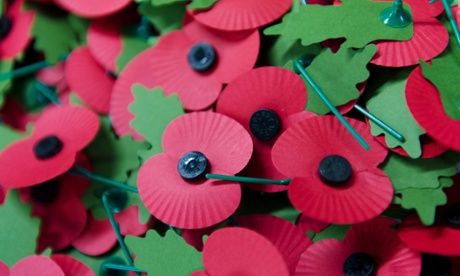
When we asked our readers whether they planned to wear a poppy this year, we received over a thousand responses. In the case of those planning to wear one, the reasons given were deeply personal and varied greatly.
We also heard from people who had chosen to wear a white poppy this year, as well as those who prefer not to wear one.
Here are a selection of our readers’ views.
A red poppy
“It isn’t political, it isn’t triumphalist and it isn’t necessarily patriotic “
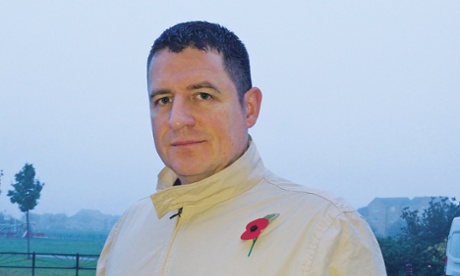
Quite simply, remembrance. For me it isn’t political, it isn’t triumphalist and it isn’t necessarily patriotic. It’s simply remembering the soldiers who fought for their country and played their part, whether they came home or not. Remembrance gives those of us who wish to a chance to say thank you.
Lee Hagan, Doncaster
“We owe them everything we have”
Wearing the red poppy of remembrance for me is acknowledging and remembering that, without those who lost their lives in both world wars, I would not be living with the choice to wear one.
My husband is a soldier and as such I am more than aware of the recent sacrifices made by our forces in Afghanistan and Iraq. However it is for the veterans of wars that I did not live through that I wear my poppy. We owe them everything we have today.
Lisa Milner, Salisbury
“I do find it sad that some people feel obliged to wear them”

It means that I remember the losses experienced by generations of soldiers who died during wars. But I don’t see it as a condoning of wars and the ‘necessary sacrifices’ they entail, nor as an endorsement of past British military endeavours. I wouldn’t mind wearing a white poppy, for the same reasons.
I do find it sad that some people feel obliged to wear them, but in my home country, people do not wear poppies and there is less general awareness of history. I like the fact that this is a tradition in Great Britain.
Nabil Moolna, law student from Mauritius
I remember those who gave their all so that we can choose what type of poppy to wear!
Rich Coughlin, Glocestershire
“I will forever be grateful for what they and their friends did for us”
Wearing the poppy isn’t a glorification of war. I wear it to remember the sacrifice and loss of a generation of young, mostly working class men and women. My grandparents fought in the second world war and I will forever be grateful for what they and their friends did for us.
I’m not a nationalist or a militarist. I don’t think wars are necessary. I just think it’s right to remember one of the greatest losses of mostly working class life that Britain has ever seen.
Chantel Le Carpentier, Southampton
“It most certainly does not glamorise war to me”
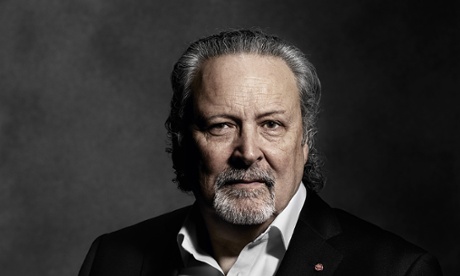
It most certainly does not glamorise war to me.
[I wear it in] remembrance of those who died in all wars and who continue to do so. The futility and bravery, the terror and cowardice; the ongoing mental health problems I remember in both my father and brother, who were soldiers. The poppy stands for all of those things.
Ian Hunter, Fishguard
A white poppy
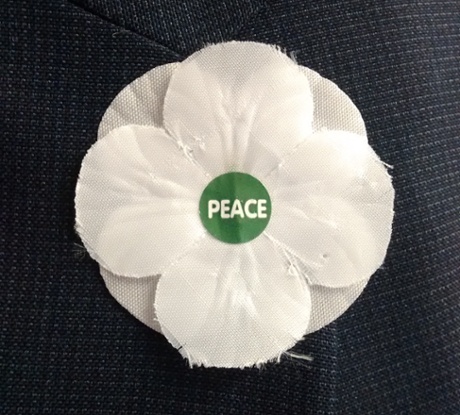
To me wearing a white poppy is a way of mourning all the victims or war both military and civilian and, crucially, on both sides. I see no difference between the British and German man conscripted to kill each other. I also wear my white poppy to raise awareness about how the red poppy has become a way of commemorating only the deaths of British soldiers in their ‘defence’ of our democracy and security (issues that we should regard as academic).
Oliver Patrick, Dorset
“Wear red, white, or none at all - this should be a personal matter”

The white poppy better represents my views and feelings on the matter of wars past, present and future. First of all, it symbolises peace and the pointlessness of war. World leaders should never send soldiers to their deaths. World peace may always be a pipe dream, but I still see it as a positive thing to hope and aim for. My white poppy remembrance will not just honour British soldiers, but every human being who has lost their lives due to needless wars.
Just because a person chooses not to wear a poppy doesn’t mean they don’t remember the sacrifices made in wars past. I would never judge someone for their choices in this matter. Wear red, white, or none at all - this should be a personal matter. The way people treat each other over this issue is ridiculous.
Lianne Smith, Arbroath, Scotland
“All war is man-made and essentially unnecessary”
It’s a symbol of my belief that all war is man-made and essentially unnecessary. As a Christian I believe that war is against the message of non-violence that Jesus shared. I have also lived in Palestine and saw firsthand the futility of conflict: the pettiness; the longlasting and pointless damage to people’s lives and livelihoods and the boredom and weariness that war brings.
Stephen Ashmead, Exeter
Both a red and white poppy
The red poppy represents the fallen and the white one represents a hope that no more will fall.
Satu Vaarre, Maidenhead
No poppy
“I have all my adult life supported the Royal British Legion but have not worn a poppy”
As a pacifistI can’t associate the poppy with hope, and it is for this reason I don’t wear a poppy.
In recent years friends and associates have questioned why I don’t wear a poppy. It is good that people question as this allows me to explain my stance, but the press, television and social media have all promoted a more hostile view towards those who abstain regardless of their reasons. I have all my adult life supported the Royal British Legion but have not worn a poppy. It is tremendously important to remember and honour those who have sacrificed their lives to secure and protect our freedom and support those currently serving, veterans and veteran’s families.
It is really saddening that politicians are willing to enter into conflict not to protect our freedom but to protect financial investments - and then, as was found in the Gulf War, not provide troops with adequate equipment.
It is baffling to me that there has been an increase in numbers displaying the symbol of remembrance, and increased pressure to wear a poppy, but the numbers of those attending Remembrance Sunday services has dwindled. It is also sickening that Remembrance Sunday has been hijacked by hate groups with their twisted doctrine to promote themselves as British moral guardians.
Colin White, Co Durham
“The best way to show a sincere respect for people who died for nothing is to actively oppose similar wars today”
The entire British establishment wears the red poppy because they say it symbolises respect for those who died in the first world war. However, that war was a carnage meted out by the predecessors of that same establishment in order to defend its (now largely defunct) imperial standing in the world. Ordinary people were sent to the slaughter for the not very glorious cause of re-dividing the world and extending the colonial reach of the major powers.
The red poppy campaign attempts to imply that we all think the same about WWI, that it was a “worthy cause” and a “noble sacrifice”. Yet anyone who has read and been moved by the poems of Sassoon or Owen knows there was nothing worthy about it.
The best way to show a sincere respect for people who died for nothing in that war is to actively oppose similar wars today. As such, I find it hard to wear a poppy alongside the warmongers of today.
Joe Hartney, London
“If Remembrance Day became Never Again Day then I would wear a poppy”
As a long time pacifist I have always felt, with the Remembrance Day service, a lack of distinction between the notions of remembering and glorifying war. I simply do not accept that there has been no choice, or that there continues to be no choice.
If Remembrance Day became Never Again Day then I would wear a poppy to remember the already dead and to celebrate the commitment to not wage war ever again.
Tony Lancaster, Kingston