The passing of statesman and Privy Council president Gen Prem Tinsulanonda is a great loss to the country. Gen Prem will be remembered for his substantial contributions to Thailand.
The legacy he left, especially in relation to projects intended for public benefit, reflects how much the late statesman cared about those in need. The projects range from ones to help the poor and the construction of a cardiovascular disease research centre.
Gen Prem passed away from heart failure at Phramongkutklao Hospital last Sunday at 98.
Born in the southern province of Songkhla, Gen Prem was a professional soldier who rose to the top of the military in 1978 when he was appointed army chief before entering politics.
After serving as prime minister for eight and a half years from 1980 to 1988, Gen Prem stepped down and washed his hands of politics, although leaders of the armed forces have always held him in high esteem.
Gen Prem made the decision to step aside despite support for him to stay on as prime minister for another term. He was quoted as saying "That's enough", when asked about his willingness to let go of power, which was quite exemplary, according to a political source.
Known for his integrity, Gen Prem was a man of few words, but he knew how to keep things running in the country's best interests.
As prime minister, Gen Prem normally refused to make public comments choosing to keep politicians and political observers in the dark about what he actually had in mind. It also was not easy for reporters to extract information from him if he was unwilling to share it, the source said.
Considered a father figure to those in military and political circles, he was often referred to as "Pa [Father] Prem'', which demonstrates their high respect for him.
When faced with pressure that threatened his government, Gen Prem was decisive as he did not hesitate to dismiss close associates who were considered as his "children", if there was evidence which pointed to them being involved in irregularities, the source said.
This showed the former premier had the country's best interests at heart and that he was ready to deal with troublemakers within his government without fear or favour.
Gen Pitsanu Phuttawong, a close-aide to Gen Prem said the late statesman intended to bequeath all his savings to help the poor through sustainable projects. According to Gen Pitsanu, Gen Prem's personal estate is worth a significant "nine-figure sum".
Gen Prem also warned his close aides not to pursue any personal benefits on the back of the poor, one of his close aides said.
Playing hardball for positions
Democrat heavyweight Chuan Leekpai's appointment as House speaker, and consequently chief of the legislative branch, shows the Democrats have not lost their edge despite finishing the March 24 poll in fourth and capturing only 53 House seats.
It is, therefore, no surprise that the Democrats are said to be interested in an alliance with the Bhumjaithai Party to increase their leverage in negotiating with the Palang Pracharath Party (PPRP), which is attempting to lead the formation of the next government.
The idea is that the PPRP will not be able to cut a deal with the Democrats without accepting the terms of its ally and vice versa. With 104 seats between them, they have emerged as the third biggest faction after the Pheu Thai Party (136) and the PPRP (116).
This is a strong strategy, according to political observers, especially if one looks at the cabinet portfolios each party is eyeing.
Among the A-list ministerial posts, the Democrats reportedly want the Interior Ministry which oversees a network of local and provincial authorities while Bhumjaithai is demanding the Transport Ministry which supervises infrastructure projects.
The Interior Ministry is under the leadership of regime strongman Gen Anupong Paojinda, meaning it has been under the close supervision of the regime for more than four years since the current government was established. The Transport Ministry has also seen a steady increase in the national budget to fund infrastructure development projects pushed by the Prayut Chan-o-cha administration.
It is totally understandable that the pro-regime PPRP wants to retain these key ministries, and if the Democrats and Bhumjaithai are eyeing these big prizes, then banding together increases their chances.
According to a source, negotiations with Bhumjaithai have gone without a hitch but talks with the Democrats have hit a snag.
The PPRP is reportedly reluctant to assign the key ministries the Democrats want. But it may need to make concessions to get the new government up and running.
First is the Interior Ministry. The PPRP is likely to keep the ministry for itself as it has already granted the Democrats the House speaker post as a gesture of goodwill.
Next is the Commerce Ministry which was under the supervision of PPRP secretary-general Sontirat Sontijirawong. The PPRP might eventually agree to let Democrat leader Jurin Laksanavisit, an old hand at the ministry, take charge. Mr Sontirat is a PPRP stalwart authorised to negotiate with other parties over joining its coalition government.
Another is the Social Development and Human Security Ministry. This B-list ministry is reportedly earmarked for the Chartthaipattana Party as a substitute for the Natural Resources and Environment Ministry which could land in the Democrats' lap.
According to the source, the PPRP's talks with the Democrats were on the brink of falling apart at one point due to the Sam Mitr faction of the PPRP, led by Juangroongruangkit and Somsak Thepsuthin, wanting to keep these ministerial posts within the party.
The Democrats' adjournment of their meeting this week between executives and MPs to adopt a stance on whether to join the PPRP-led alliance was seen as the party playing hardball to pressure the PPRP to back down.
Bhumjaithai, meanwhile, appears to be taking advantage of the Democrats' indecision, although the PPRP may also consider taking back the Transport Ministry which Bhumjaithai had been angling for.
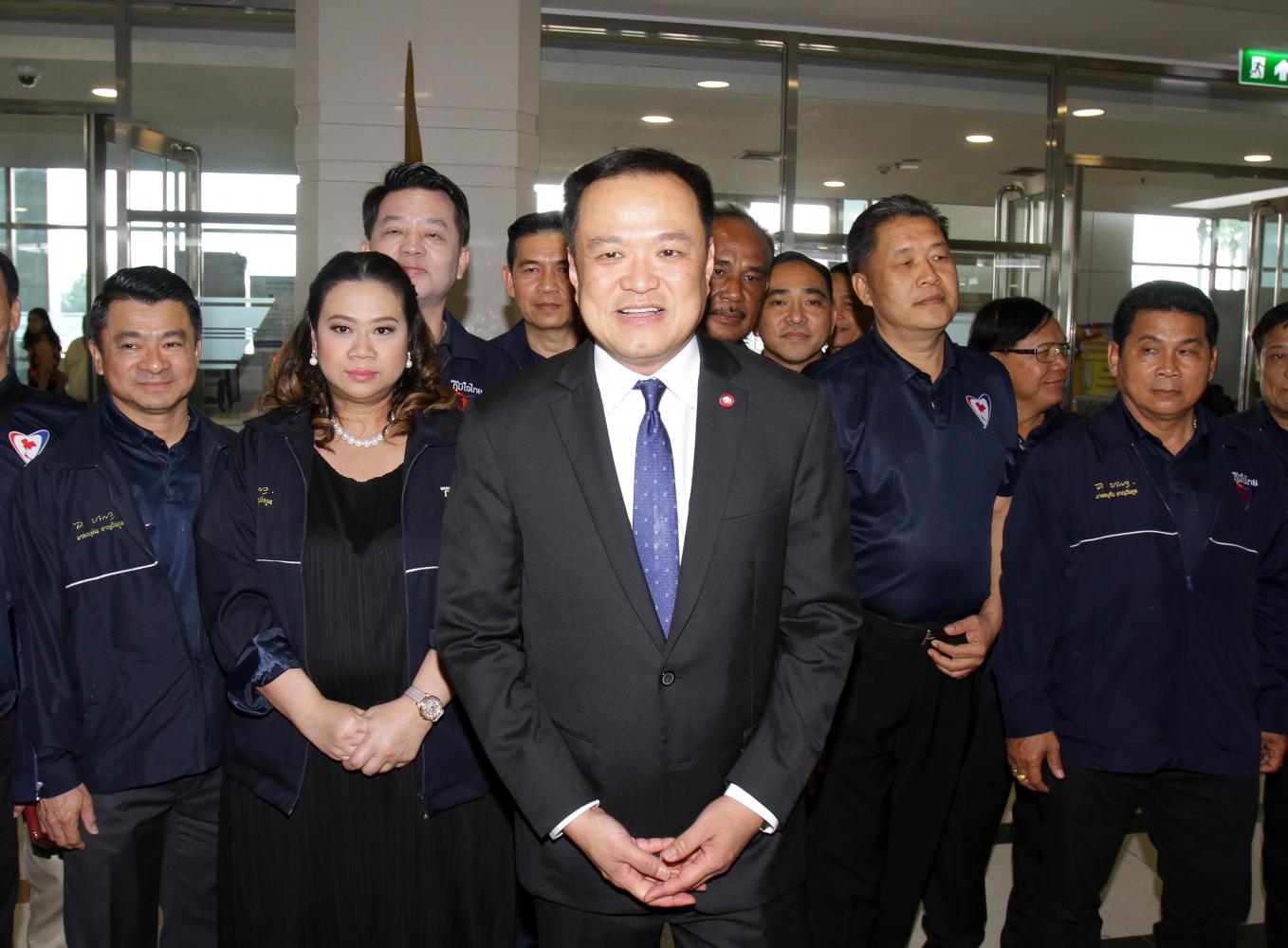
Bhumjaithai leader Anutin Charnvirakul has reiterated that his party should be "left alone" or excluded from the PPRP-led alliance if the coalition government fails to muster a majority in the Lower House.
The PPRP and the Democrats are likely to return to the negotiating table soon.
Marijuana politics takes hold
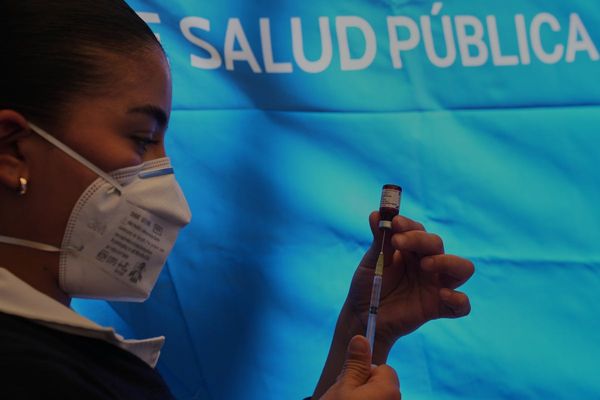
Marijuana was a sought-after political commodity in the lead-up to the election and it has galvanised the Bhumjaithai Party into driving a hard bargain for control of the Public Health Ministry in the ongoing negotiations to form a government.
Bhumjaithai trumpeted broadened use of marijuana as its flagship campaign policy.
The policy was so well-received by many sections of the Thai public that experts believe it is the reason the party was able to garner 51 House seats in the election.
Despite being chided for capitalising on a plant that has long been outlawed, Bhumjaithai insisted that the benefits of marijuana as a herbal plant outweighed its downsides.
Although a law permitting marijuana to be grown in a heavily controlled environment for medicinal and research purposes has been passed, the party deemed the regulation excessive and stated that the government should allow the public to plant marijuana in their backyards for personal use.
Observers said if Bhumjaithai gained the upper hand and took over the Public Health Ministry, the iron-clad restrictions on the use of marijuana could be eased considerably.
If that happened, Bhumjaithai has been predicted to gain support from groups favouring the liberalisation of marijuana.
The National Legislative Assembly late last year made a revision to the Narcotics Act, which set in motion the legalisation of marijuana for medical purposes.
But the government was not immune to criticism as it faced calls from the public, non-government organisations, traditional medicine practitioners and pro-cannabis policy-makers including politicians from Bhumjaithai, to fully liberalise marijuana so that people can plant it at home.
Critics have slammed the proposed liberalisation as a step too far. Rallying behind them are medical specialists who compared marijuana to a coin where its harmful effects appear to have been ignored in the excitement of its medical promise.
In fact, public health Minister Piyasakol Sakolsatayadorn said the World Health Organisation still classifies cannabis itself as a narcotic, although the principal psychoactive constituents of cannabis, tetrahydrocannabinol (THC), and cannabidiol (CBD) are regarded as medical substances.
The government has not gone beyond the WHO's recommendation. It has begun the process of "opening the window" for cannabis extracts to be dispensed for medical use only. If marijuana was completely liberalised, the number of addicts would increase, he said.
The secretary insisted there was no masking that marijuana remains an illicit plant.
"But I beg to differ," said Mr Anutin.
He said he had the right to stick to his guns and say that marijuana is a valuable herb with exceptional medicinal properties.