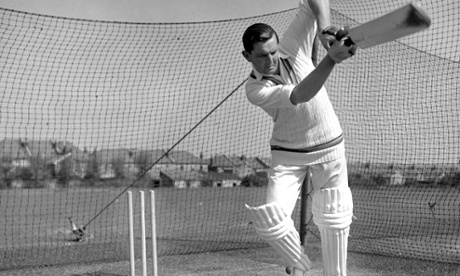
In the 1950s and 1960s, Tom Graveney played test cricket for England. He captained Gloucestershire and Worcestershire county teams, was awarded an OBE, and in 2009 was inducted into the ICC cricket hall of fame. Now aged 88, he lives in a care home in Gloucestershire.
Graveney is one of many residents who inspired Martin Hughes, chief executive of care home group Lilian Faithfull, to celebrate the lives of those who live in its residential homes. Hughes realised that so many residents had “led such rich and varied lives, and had given so much to society”. So he started a project, called Remarkable Lives, to highlight the achievements and histories of people living in the charity’s care homes.
The idea behind the project is simple; every day on social media, the charity shares two pictures of a resident. One is of them when they were young; the second, of them as they are now. Short biographies detail the remarkable things the person has done over the course of their life.
There are some extraordinary examples. Many residents served in the second world war, with one, Lady Gwen Tovey, attached to Bletchley Park, the intelligence unit where German secret codes were broken. Others made wings for planes, one woman served as a secretary to Winston Churchill, and, says Hughes, there is “a chap who was an IT director that ran the first IBM computer system the size of two football fields”.
Todays Remarkable Life is Lady Gwen Tovey- living with us at Astell House #Cheltenham @GlosEcho pic.twitter.com/W2IKAQ4EmZ
— Lilian Faithfull (@LilianFaithfull) August 19, 2015
Telling these stories helps counter the perception that older people in care homes have nothing left to offer society. As Hughes says: “Don’t look at these people with pity, or [think] oh dear they’re old. Look at the life they’ve led and just stand back and think: wow.” And, crucially, it helps ensure that all the staff at the home are aware of the residents’ pasts – and can use this to create a connection and friendship with those they look after.
Grace Stallard, a senior care worker who has worked at Lilian Faithfull for six years, says the project has helped the staff find out about the lives of those they look after: “You just find out so much about a person, and it just gives you even more respect for the person when you know what they’ve done in their life ... Everybody’s got their own story to tell because nobody’s life is exactly the same.”
She also thinks it can help build residents’ confidence, particularly during the difficult time of moving into a care home: “It makes delivering the care a much easier situation because they feel they get to know you as a person and we get to know them as a person.” As Stallard points out, knowing more about someone’s life history makes it easier to work with their psychological needs, rather than just their physical care needs – something that can be overlooked in care.
Tim Graveney, Tom’s son, thinks the project is fantastic, and hopes it will encourage people to view care homes in a more positive light. In particular, he hopes it will encourage sportsmen like his father to feel more comfortable about going into care: “I think it’s hard enough for any of us to get old, but particularly for sportspeople who used to be very active … I think it’s very important that they are handled in a very sensitive way.”
For now, Remarkable Lives is continuing through social media; of the 215 residents Lilian Faithfull cares for, between 40 and 50 have agreed to take part so far. When it is over, Hughes wants to collate all the pictures into a book, to “create a little journal for each home of all the amazing people that live with us”. He didn’t think it would be as successful as it has been, but it seems to have struck a chord with residents, families and the wider community. Perhaps this is because, as Hughes says, “It smashes the misconception that these old people, they’re just old. You think – think again, look at what they did.”
Tom Graveney
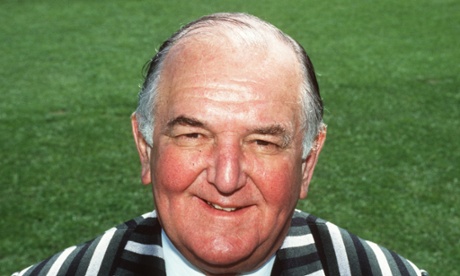
Graveney, born in 1927, played 79 tests for England between 1951 and 1969. He is one of only 25 cricketers to have scored a hundred hundreds, achieving the feat in 1964. Neville Cardus, cricket writer for the Guardian, wrote in 1965: “If some destructive process were to eliminate all that we know about cricket, only Graveney surviving, we could reconstruct from him, from his way of batting and from the man himself, every outline of the game, every essential character and flavour which have contributed to cricket, the form of it and its soul.” After retiring from cricket in 1972, Graveney did some work for the BBC as a cricket expert, then became landlord of a pub in Gloucestershire.
Noreen McGinn
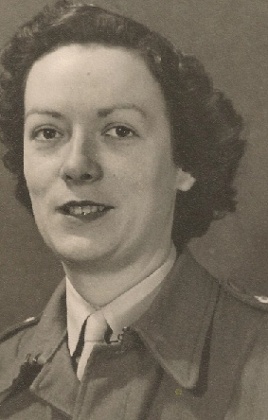
Born in 1922, McGinn became an officer in the 93rd Searchlight Regiment of the Royal Artillery in the second world war. The searchlight regiments were responsible for illuminating German aircraft flying over Britain so that they could be shot down by anti-aircraft guns before bombing towns and cities in the UK. They also helped to guide damaged British aircraft to safe landings.
At the beginning of the war, searchlight regiments were run by men. But as the war went on, male officers were needed elsewhere. In 1942, the 93rd searchlight regiment was formed, and – apart from a couple of senior officers – became an all-female regiment; one of the only times a female regiment has been put on active duty. Army General Sir Frederick Pile said of the officers: “The girls lived like men, fought their lights like men and, alas, some of them died liked men. Unarmed, they often showed great personal bravery.” After the war, McGinn married and lived in Birmingham.
Cynthia Unitt
Todays Remarkable Life-The very glamorous Miss Cynthia Unitt ! @GdnSocialCare @GlosEcho #cheltenham pic.twitter.com/TGlNUA8XuK
— Lilian Faithfull (@LilianFaithfull) August 27, 2015
Unitt was born in 1918. At the age of 21, she worked as a secretary to the then first lord of the admiralty, Winston Churchill, and then went on to work in the War Office. After the war ended, she was a secretary at the British embassy in Turkey in the 1950s, then worked as a legal secretary in New York. It was only when she reached her 70s that Unitt came back to the UK for her retirement.