Get all your news in one place.
100’s of premium titles.
One app.
Start reading
Reuters
Reuters
Entertainment
Natalia A. Ramos Miranda

Remains of Jurassic sea predator found in Chile's Atacama desert

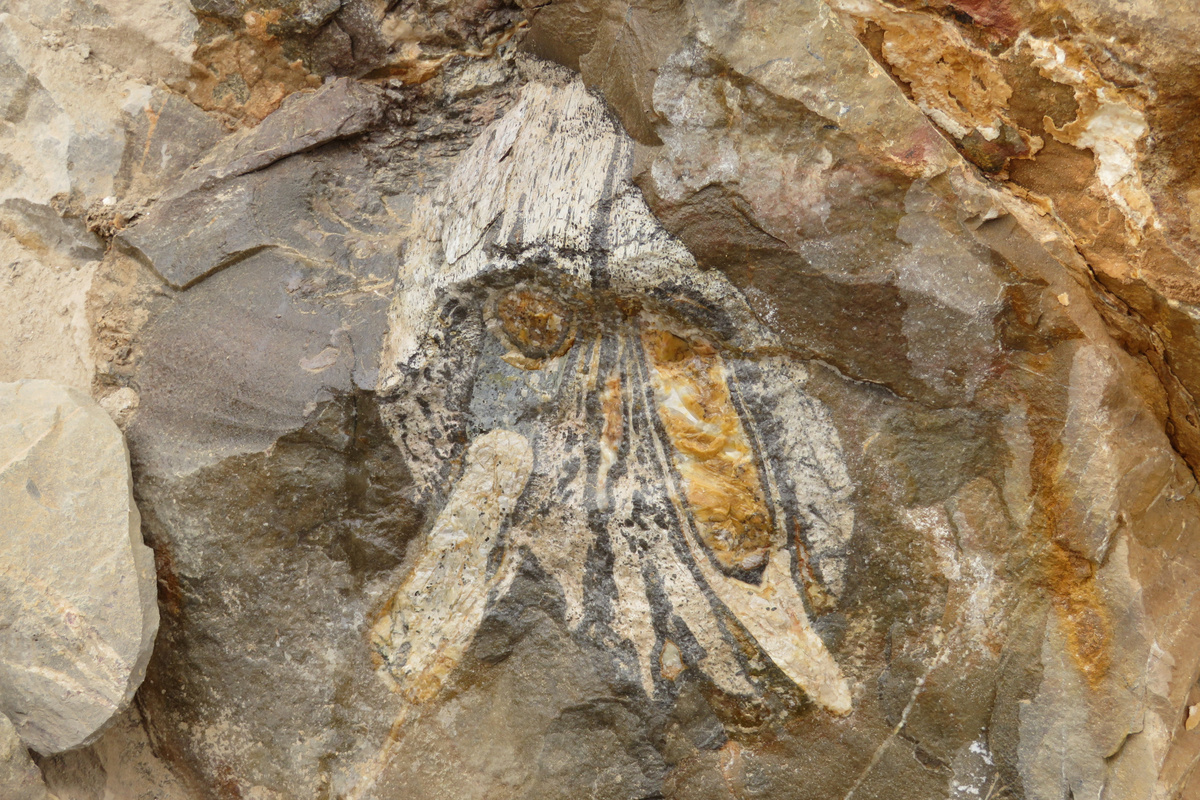
A view of fossil remains of one of the largest and most fearsome marine predators of the Jurassic period found by scientists in the middle of the Atacama desert, Calama, Chile December 16, 2018. Picture taken December 16, 2018. Mauricio Castro/Handout via REUTERS

Scientists have unearthed the remains of Jurassic sea predators resembling killer whales in the world's driest desert in Chile.

Pliosaurs were reptiles from about 160 million years ago with a more powerful bite than Tyrannosaurus rex, according to University of Chile researchers. The fossils are the second oldest record of this species in the Southern Hemisphere.
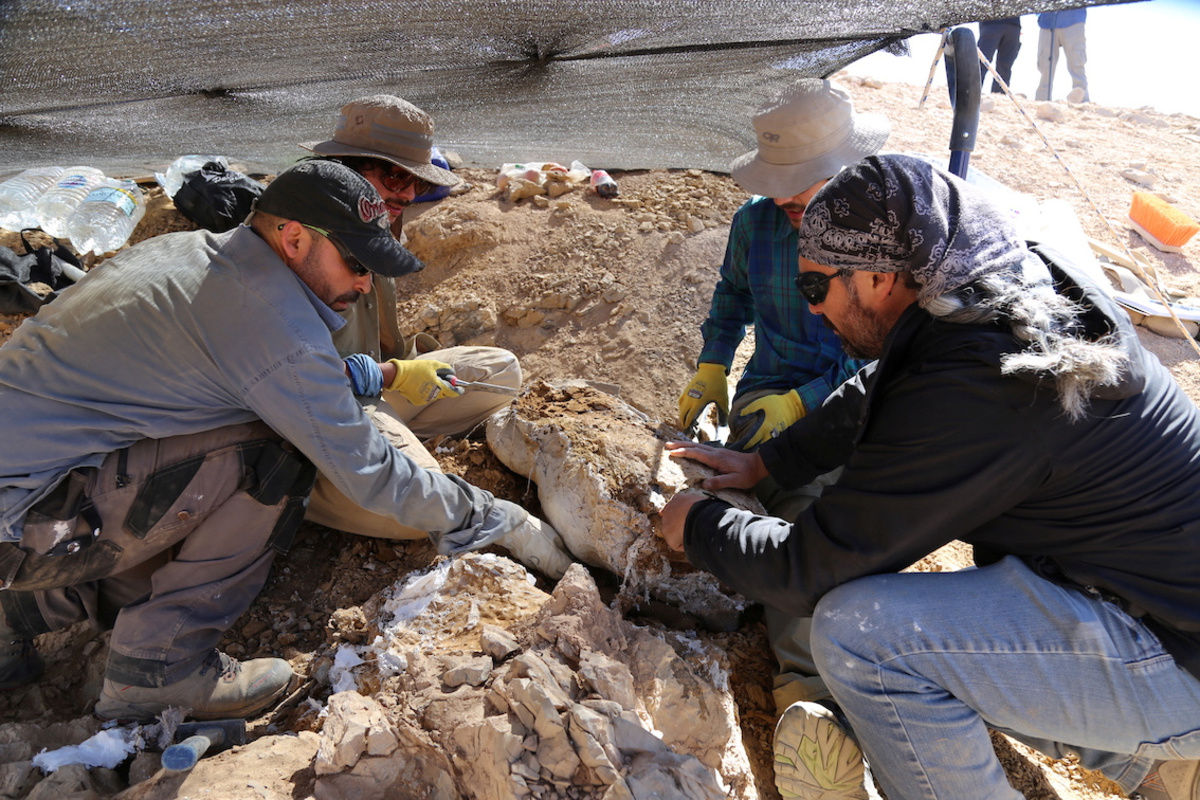
Scientists prepare to move the remains of one of the largest and most fearsome marine predators of the Jurassic period in the middle of the Atacama desert, Calama, Chile December 14, 2018. Picture taken December 14, 2018. Mauricio Castro/Handout via REUTERS

Chile's vast Atacama desert, once largely submerged beneath the Pacific Ocean, is now a moonscape of sand and stone with parts untouched by rain for years. Pliosaurs reined the region, with their large skull, elongated face, short neck, menacing teeth on a hydrodynamic body and fin-like limbs.

Scientists found jaw, tooth and limb fragments of the creatures "ecologically similar" to killer whales at two sites in the Loa river basin near the mining city of Calama.

The find helps scientists fill gaps in evolution, said Rodrigo Otero, a University of Chile paleontologist who led the research.
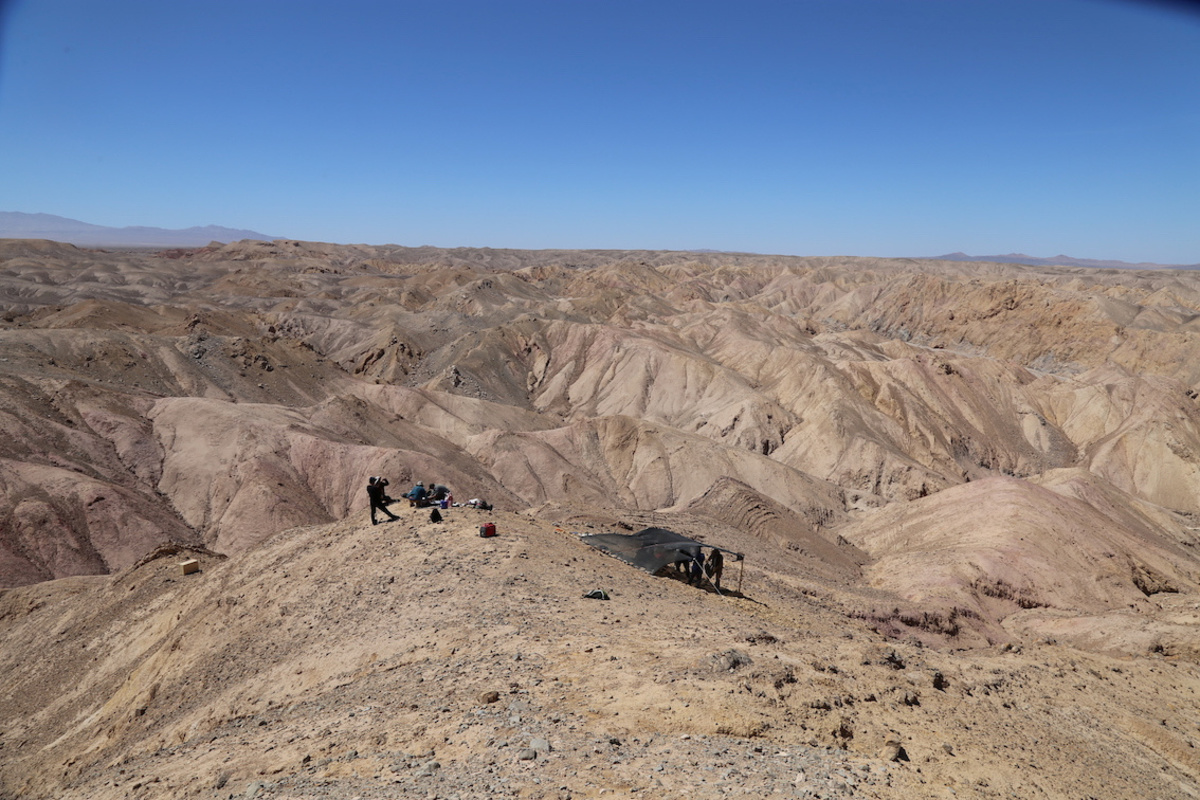
Scientists work on an area where they found the remains of one of the largest and most fearsome marine predators of the Jurassic period in the middle of the Atacama desert, Calama, Chile December 14, 2018. Picture taken December 14, 2018. Mauricio Castro/Handout via REUTERS

The complete fossil, under excavation since 2017, is likely to measure six to seven meters (19.7 to 23 feet). The skull is around a meter (3.3 feet) long, with teeth each around eight to 10 centimeters (3.1 to 3.9 inches) long, Otero said.

The study was published in the Journal of South American Earth Sciences in early September.
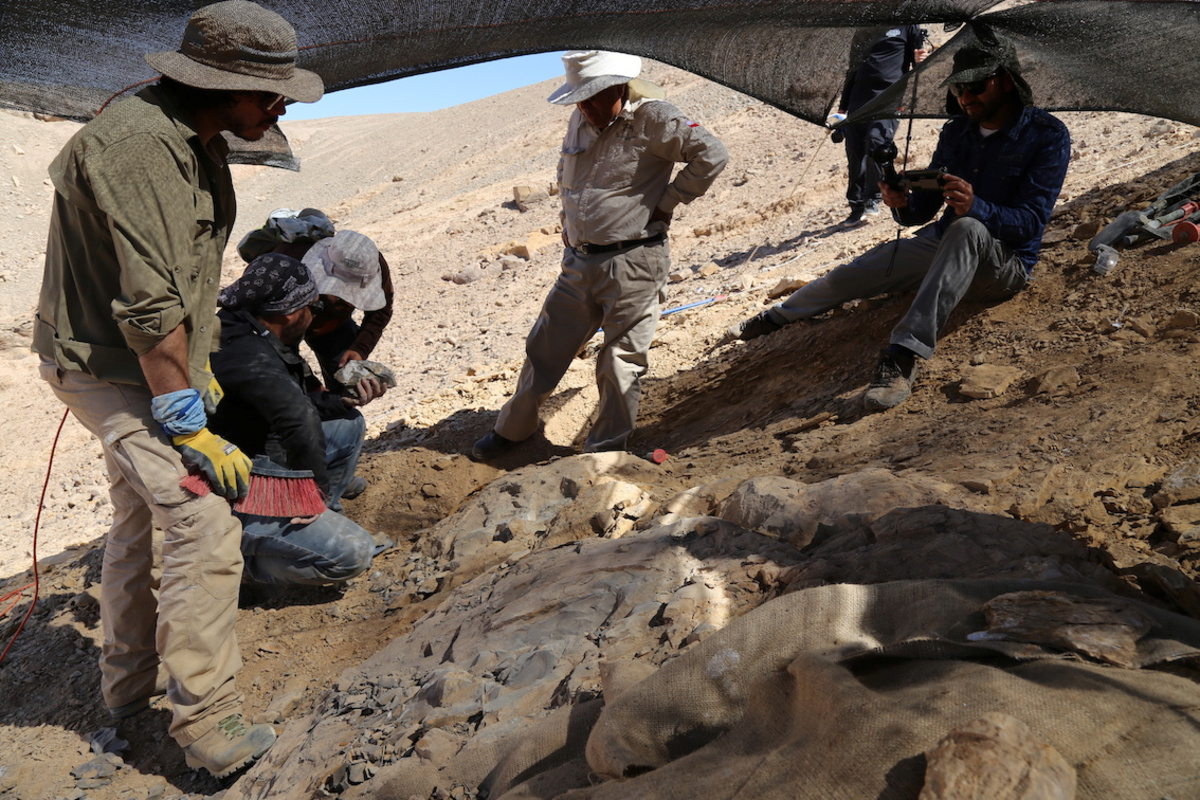
Scientists work on an area where they found the remains of one of the largest and most fearsome marine predators of the Jurassic period in the middle of the Atacama desert, Calama, Chile December 14, 2018. Picture taken December 14, 2018. Mauricio Castro/Handout via REUTERS

(Reporting by Natalia Ramos; Writing by Dave Sherwood; Editing by Richard Chang)

Sign up to read this article
Read news from 100’s of titles, curated specifically for you.
Already a member? Sign in here
Related Stories
Top stories on inkl right now
One subscription that gives you access to news from hundreds of sites
Already a member? Sign in here
Our Picks
Fourteen days free
Download the app
One app. One membership.
100+ trusted global sources.