Oliver O’Brien and James Cheshire’s extraordinary and illuminating heatmaps of Britain’s religious fervour look as if they have a lesson for people interested in religion, and this is that it is fading over large sections of the country. The overall tone is pale pink at best and often completely cyanotic blue.
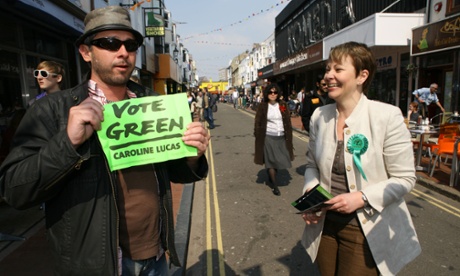
Looked at more closely, though, and one lesson to emerge is the absolute centrality of religion in today’s politics. The cities where ‘religion’ is the most completely toxic brand – Brighton and Norwich to name two – are also those where green politics are likely to be strongest, and where a strong sense of ethical obligation to the world and to humanity is easiest to appeal to. This may not be theistic, and it certainly isn’t arranged around the worship of one Father God – but it’s not atheist either. A distrust of ‘religion’ often goes alongside a strong belief in ‘spirituality’ and an interest in alternatives.
Meanwhile, in London, there are huge areas where religion is of passionate importance. That more than anything is what distinguishes the East End from the surrounding countryside. Most of the religion here is of course Islam, rather than Christianity. But this fact shows a fascinating and important paradox in political discourse.
London is not at all like the rest of the country: we know that. It is a central part of Labour’s strategy that it must appeal to London and its metropolitan, multicultural sensibilities, just as David Cameron has been trying to do. But it turns out, when you look at the map, that these aren’t really the sensibilities of Islington or Richmond. Both those places are deep blue and think they are utterly secular. Yet there is a solid wedge through the East End of people to whom religion is tremendously important, and who vote accordingly.
Religious and ethical issues are among the few on which people still feel really strongly that they can change things by voting – look at the passions stirred up by gay marriage or the Trojan Horse scandal in Birmingham. And what these maps show is that they don’t map at all comfortably on to the divisions in which we’re used to thinking about the country. England is changing, and religious opinions are a big part of that.