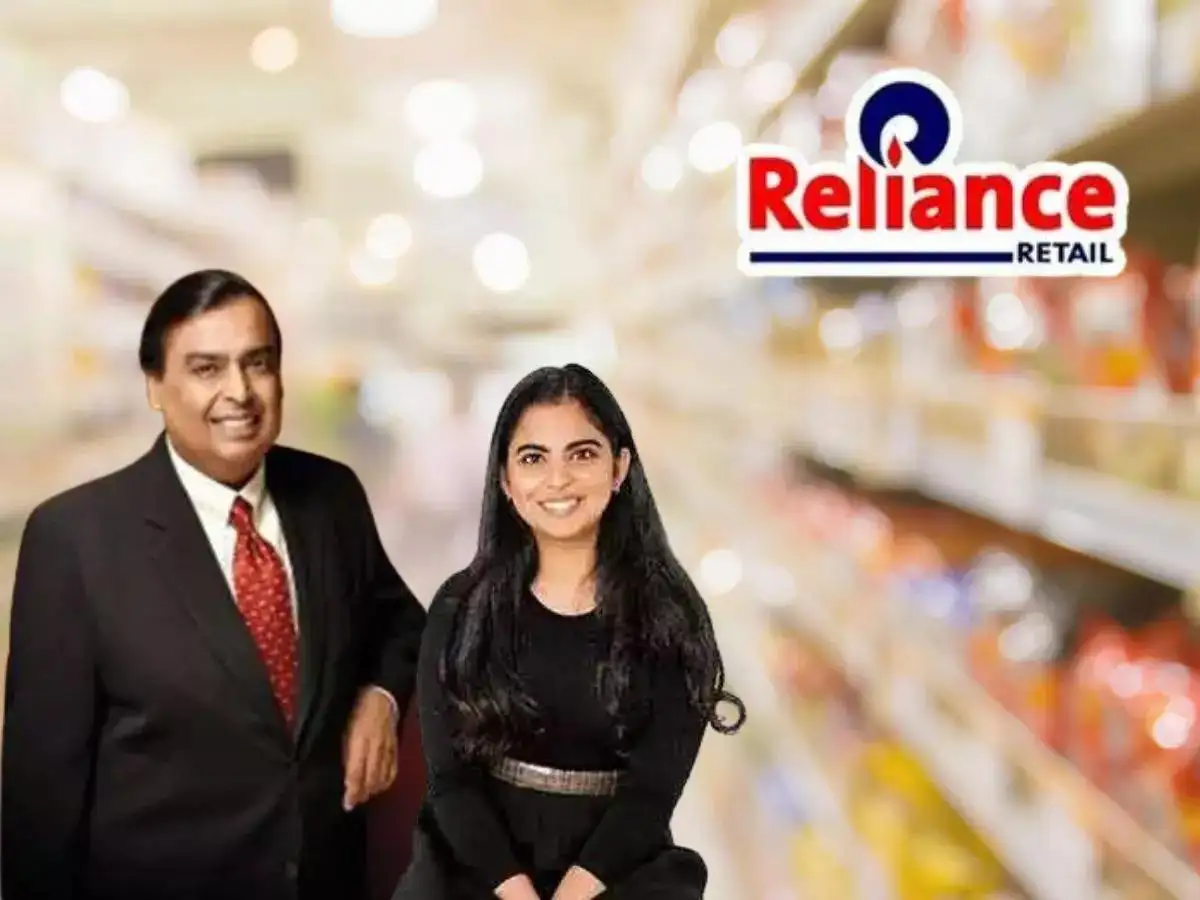
Reliance Industries on Friday unveiled an ambitious roadmap for its retail and consumer businesses, setting a target of building a Rs 1 lakh crore consumer products business by FY30 even as it moved a step closer to listing its digital arm, Jio Platforms.
Speaking at the company's 49th Annual General Meeting, Executive Director Isha Ambani Piramal said Reliance Consumer Products Ltd. (RCPL) aims to become one of India's largest fast-moving consumer goods companies.
Catch live updates from Reliance AGM 2026
"Reliance Consumer Products Limited's near-term ambition is to reach Rs 1 lakh crore in revenue by the financial year 2030," she said. "Our long-term vision is to become one of India's largest FMCG companies on a global scale."
Chairman Mukesh Ambani outlined a broader vision for the retail business, saying the group's objective extends well beyond scale.
ALSO READ | Reliance Jio eyes India's own satellite broadband network: Akash Ambani
"The company's ambition for the next decade is not simply to be the world's largest retailer, it is to be the world's most intelligent, most humane, and most inclusive consumer ecosystem – one that makes a life of quality and dignity an everyday reality for every Indian," he said.
The biggest announcement of the meeting came from the group's digital business, with Ambani revealing that the board of Jio Platforms had approved its draft red herring prospectus (DRHP). The company will file the document with market regulator SEBI later on Friday, marking a key milestone in the telecom and digital services company's long-awaited public listing.
Reliance Retail also showcased strong operational growth across its physical stores and digital commerce businesses. The retailer processed 1.93 billion customer transactions during the year, up 39% from a year earlier, while expanding its network to 20,160 stores spanning 78 million square feet.
Its Smart Bazaar supermarket chain crossed the 1,000-store milestone, with much of the expansion focused on Tier-II towns and smaller markets.
In fashion, Ajio continued to gain scale, with its business expanding seven-fold over the past five years. Average bill value rose 23%, average selling price increased 17%, while the platform's catalogue grew to 3 million options. Its four-hour delivery service, Ajio Rush, now operates in more than 600 towns.
Reliance AGM 2026 Key Highlights
Quick commerce remained another major growth engine. JioMart now operates what Reliance described as India's largest quick commerce network, spanning more than 3,100 stores across over 1,200 cities and 5,100 pin codes. Average daily orders rose 3.6 times year-on-year, while repeat quick commerce orders increased more than six-fold.
Grocery business
The company also continued to strengthen its grocery business through higher customer footfalls and category expansion across food and non-food products. Metro Cash & Carry maintained growth by focusing on kirana stores and hospitality customers, while Milkbasket expanded its subscription-led daily essentials delivery business.
Reliance's consumer brands business also continued to gather momentum. Beverage brand Campa recorded gross sales of more than Rs 4,700 crore during FY26, making it India's fourth-largest carbonated soft drink brand.
The retailer also expanded its premium fashion portfolio through partnerships with international brands including Stella McCartney, Kurt Geiger, Max & Co. and Fabletics.
Despite the aggressive expansion plans, Reliance cautioned in its annual report that macroeconomic uncertainty, pressure on discretionary spending, geopolitical disruptions and supply chain volatility remain among the key risks facing the business.
What's next for Reliance Retail
Reliance Industries is laying the groundwork for its next phase of growth by building large-scale manufacturing and export platforms to strengthen its consumer products ecosystem and expand its presence in global markets, Chairman and Managing Director Mukesh Ambani said.
Ambani said the group will add "two powerful growth-boosting platforms" between Reliance Retail and its FMCG arm, Reliance Consumer Products, describing the move as another "great leap forward". The first is an integrated manufacturing platform spanning categories from beverages and daily essentials to fresh fruits and vegetables, one of India's most fragmented consumer markets.
"This category is in urgent need of waste reduction, hygiene promotion, and higher safety standards. We will modernise by bringing our sourcing, cold-chain, and distribution strength to fresh produce. This will give farmers fairer returns, shopkeepers dependable supply, and every family fresher food at fairer prices," Ambani said.
The conglomerate is also building a future-ready manufacturing ecosystem for apparel and affordable electronics. Reliance has already created supplier partnerships across 21 manufacturing clusters to produce garments, and plans to replicate the model for electronics, including smart eyewear, televisions, smartphones and connected wearables.
"We have created supplier partnerships in 21 pan-India clusters, where these garments will be manufactured. We will also do the same for affordable electronics – from smart eyewear to televisions, smartphones, and connected wearables – with a continued focus on superior customer service," he said.
Alongside manufacturing, Reliance is setting up a dedicated exports platform to take its consumer brands overseas. Ambani said the rapid growth of its FMCG business in India has given the company the confidence to build a scalable global consumer products business.