As teleworking becomes more standard amid the coronavirus pandemic and work styles and lifestyles change, consumers' needs regarding fashion are also evolving. These days, comfortable, durable and simple clothes are gaining a following over trendier clothes.
A 30-year-old public worker in Tokyo stopped wearing suits after he began telecommuting in April due to his workplace's policy. He usually wears T-shirts now. He likes comfortable and durable types made with natural materials.
"I prefer clothes that suit my body type, rather than clothes with trendy designs," he said. "I'll take care of them so they'll last for a while."
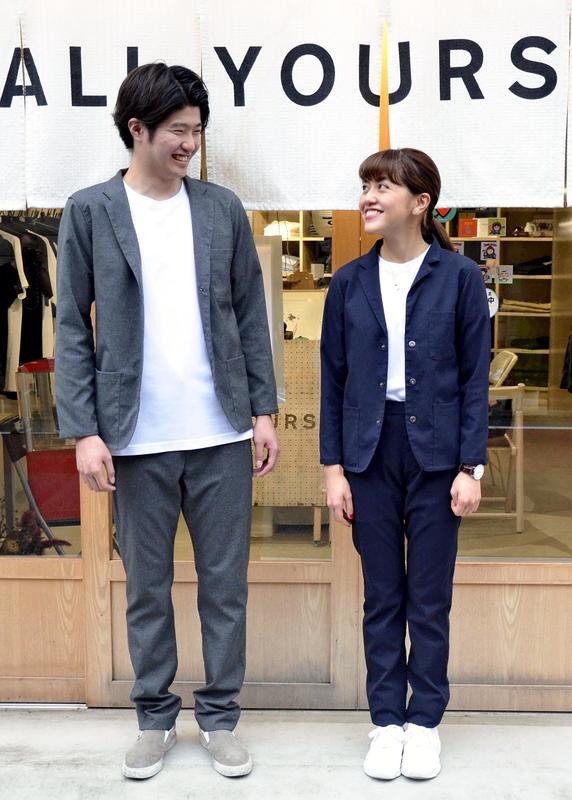
The apparel company All Yours sticks to its motto -- "offering clothes not for dressing up, but for living comfortably." A shop directly managed by All Yours in Setagaya Ward, Tokyo, attracts people who want to wear comfortable, durable clothes.
The shop sells a jacket labeled "the most stress-free in the world." It is machine-washable and hard to wrinkle. The T-shirts at the shop are fast-drying and designed so that sweating does not make them feel clingy.
All the items by the brand are unisex, and a range of sizes are offered based on the belief that both men and women seek comfort.
"The boundaries between workday clothes, loungewear, and dressy, fashionable clothes are growing vague," said Masashi Kimura, 37, a representative of the company. "My priority is to make clothes that can be part of people's lives, suitable for any occasions and have the people wearing them feel they are part of their bodies."
The apparel company 10YC in Tokyo aims to produce clothes that make people want to wear them for 10 years. A plain T-shirt by the company looks nothing special. But this product made with an old-style knitting machine at a factory in Wakayama Prefecture, is soft and hard to wrinkle.
"Our brand isn't interested in pursuing fashion trends," said Shota Shimoda, 29, representative of the company. "I place emphasis on offering clothes that can be worn for a long time, rather than on selling new clothes each season."
The company also offers a color reform service, in which its products, worn by customers, are dyed again when they have been stained or their colors have faded.
As fewer collared shirts have been sold due to the novel coronavirus spread, T-shirts are selling better.
"I think everybody wants to wear comfortable clothes," Shimoda said.
Amid the pandemic, many large apparel companies have started to use Solotex, a functional material manufactured by the major textile company Teijin Frontier Co., to take advantage of its stretchy, comfortable and shape-stable features.
Solotex is also used by the Japanese fashion label "beautiful people," which presented a collection at the Paris Fashion Week, and similar brands at home and overseas.
During the April-June fiscal quarter of this year, Teijin Frontier received twice as many inquiries about the material compared to this same time last year.
"There is an increasing need for this material, especially because it is designed not to put stress on the person who wears it, and the material itself is easy to handle," said an official who is in charge of public relations for Solotex.
-- Contribution to society
How will fashion trends change?
"These days, many people have fewer chances to meet others as they practice self-restraint due to the coronavirus pandemic," said Hiroyo Matsui, a researcher at the Hakuhodo Institute of Activation Design. "In this environment, many have a growing desire to wear what they like without worrying about how they look. I assume there will be two different tendencies: One is to pursue comfort and excellent functions. The other is to place emphasis on well-designed products and try wearing avant-garde clothes."
A survey shows people are becoming interested in contributing to society.
"The idea of ethical consumption will further spread for consumers to carefully examine a brand's approach to social issues such as protecting the environment and honoring humans' rights," Matsui said.
Fashion designer Yoshikazu Yamagata, 40, said, "People see their cultures and lives jeopardized by the coronavirus, and this general sentiment will result in accelerating the recent trend toward giving the role of information devices to clothes.
"I think innovative clothes will be created, such as products designed to prevent a virus from attaching to the wearer and clothes that contribute to curing illness by monitoring the wearer's health. Consumers will enter that kind of era when they choose clothes based on such performances."
Yamagata also referred to the growing prevalence of online meetings and their participants' choice of clothes.
"I would imagine virtual fashion will become more accessible in line with the development of, for example, virtual clothes that can be pasted on your own image that look like clothes with emoji and game characters on them," he said.
Read more from The Japan News at https://japannews.yomiuri.co.jp/