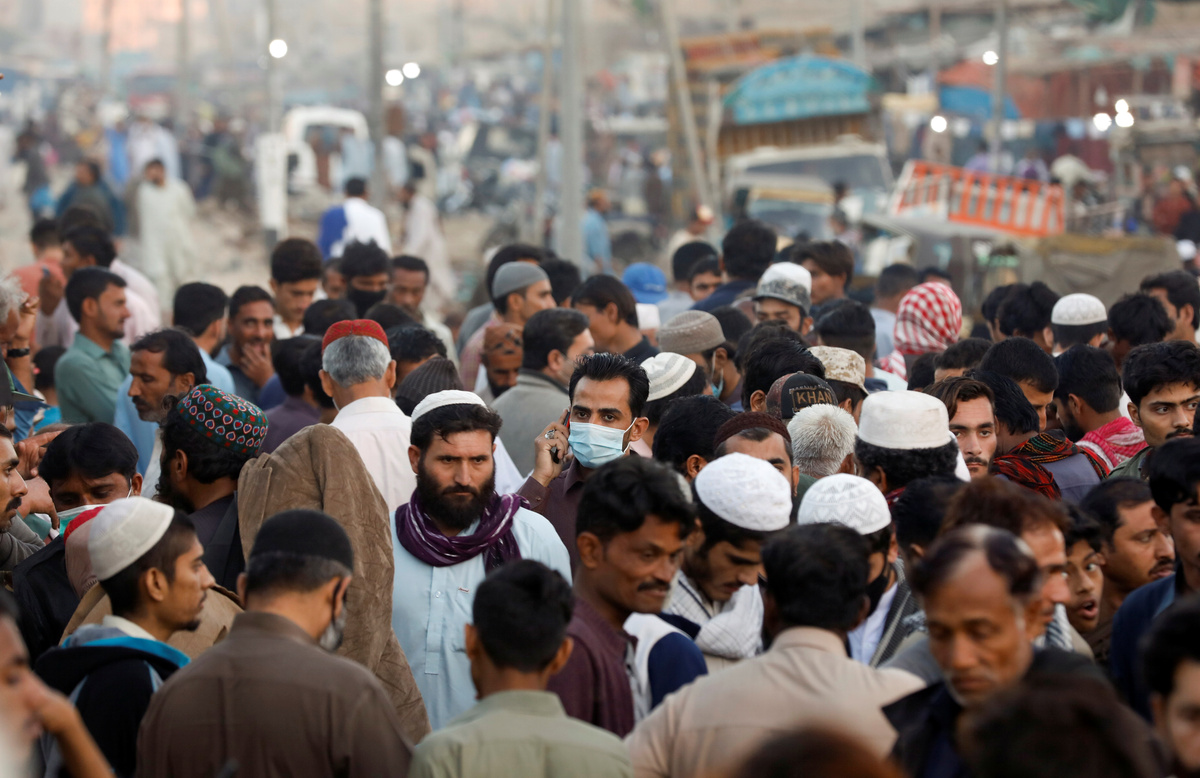
Alongside the usual snacks arranged on a tray balanced on one hand, Momin Khan sells face masks to passengers at a crowded bus stand in Islamabad. Most choose the snacks instead of paying six cents for a mask, he says.
"It’s mostly rich people buying the masks, the poor people say we don’t have the money anyway and we will do without them,” he told Reuters.
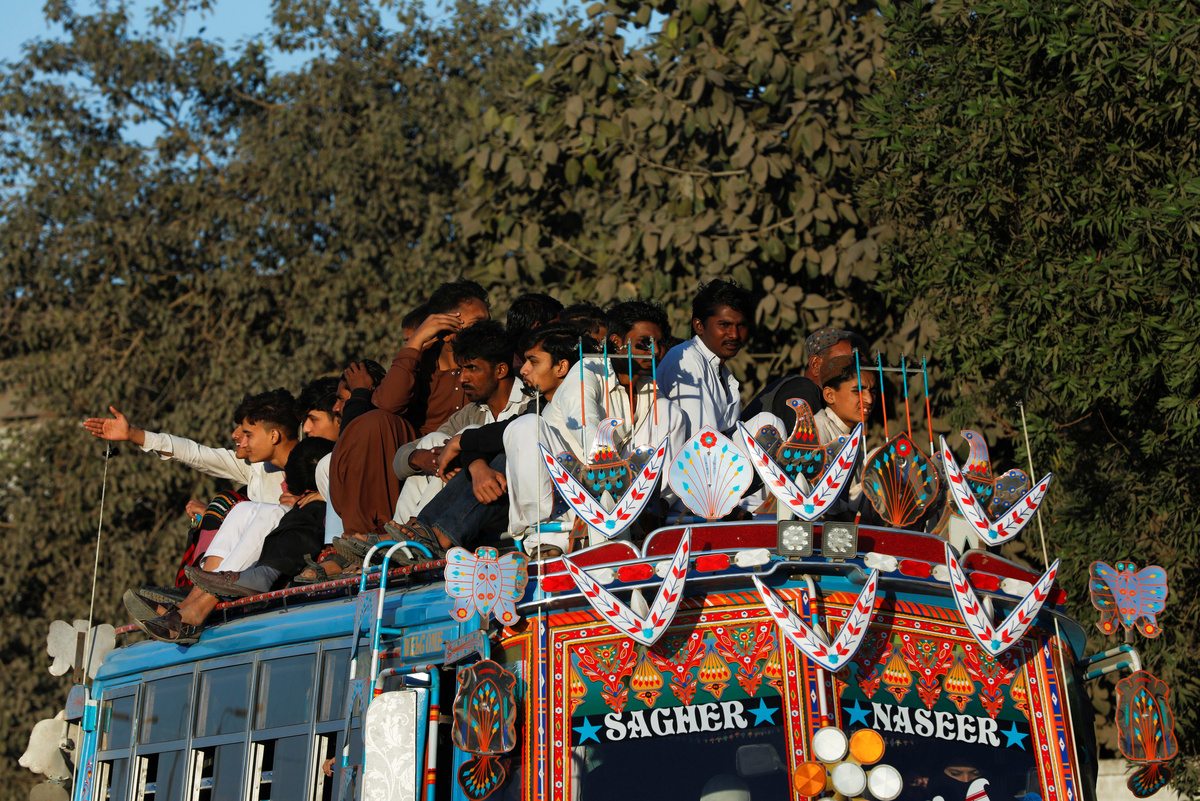
Nearby, dozens of passengers crowd into a minivan, only a handful wearing masks, as the driver shuts the door and windows to keep out the winter cold.
Pakistan has reported 527,146 COVID-19 cases so far, and 11,157 deaths, far lower than what officials had feared. Now, authorities worry complacency could undo that good fortune, as an economic divide emerges between the public when it comes to who is remaining vigilant.
Some 57% of Pakistanis say the virus threat is exaggerated, and 42% say it’s a foreign conspiracy, according to a December 2020 poll conducted by Gallup Pakistan.
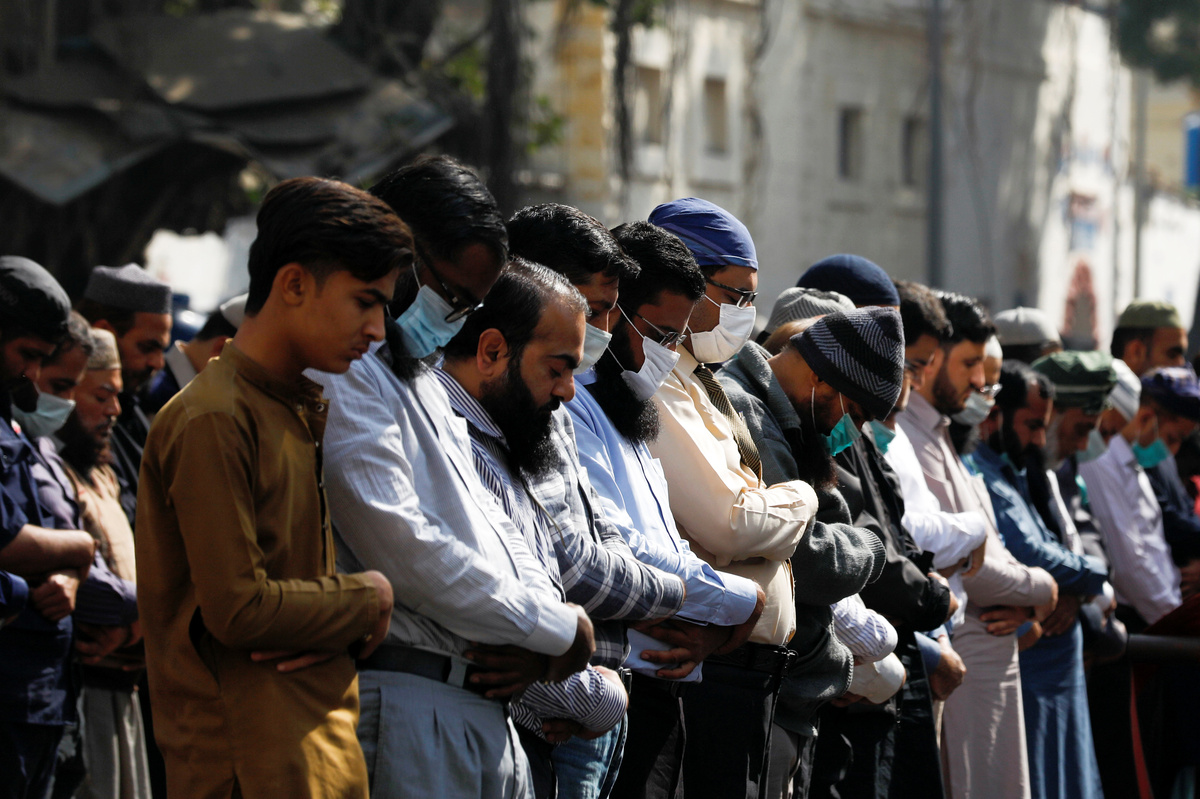
Restrictions to curb the pandemic, dubbed Standard Operating Procedures (SOPs), are rarely followed.
At the bus station, passengers are supposed sit socially distanced, wearing masks.
“We lose a lot of income when they are apart from each other, because only when the bus is full can we make a profit,” Kabir Ahmed Kiyani, the station’s manager, told Reuters.
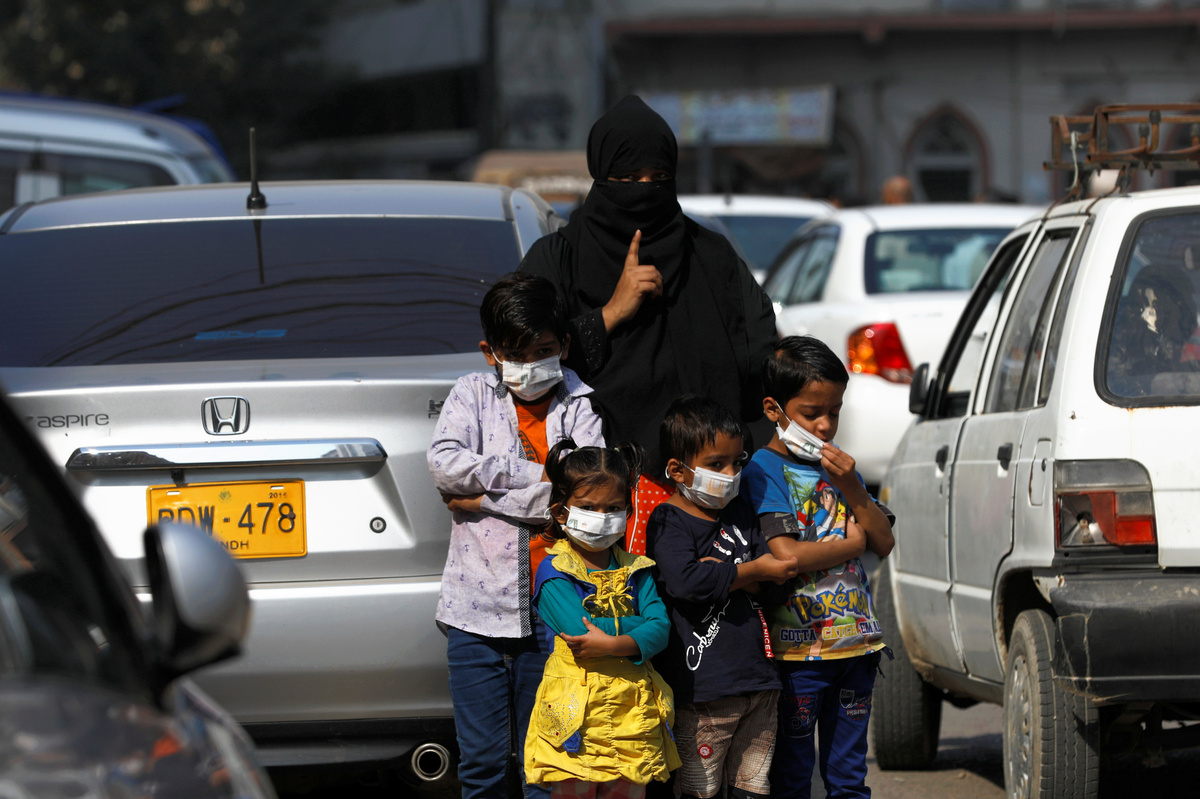
“All business has been hurt and especially transport...more than half our passengers are gone.”
Elsewhere, Islamabad’s Deputy Commissioner Muhammad Hamza Shafqaat leads a team of police officers on a surprise inspection of a bustling upscale marketplace. Shopkeepers usher out customers and hastily produce masks.
“Generally the people of the upper classes or upper middle class, they are somehow implementing the SOPs,” Shafqaat told Reuters. “But if you see people from the lowest strata, for them implementation of the SOPs is almost impossible, and for us it is also a huge challenge.”
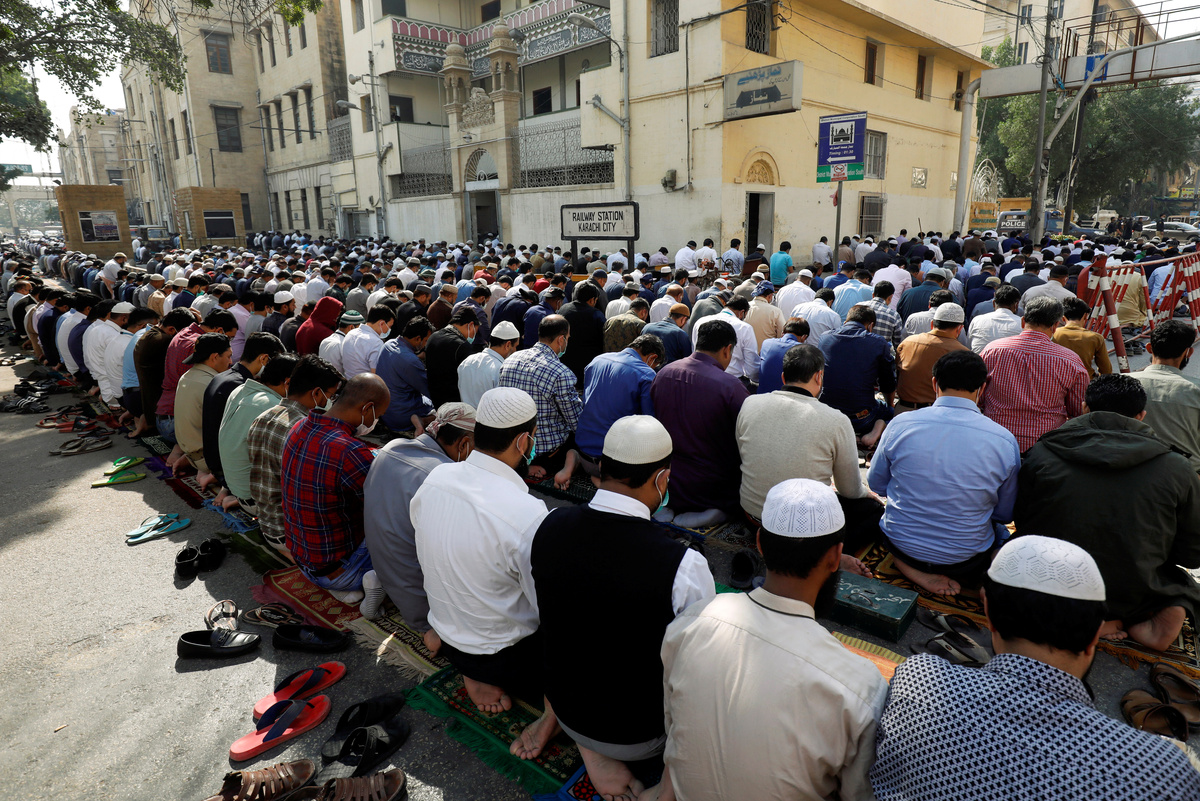
Shafqaat said the city has handed out some 10 million rupees ($62,400) in fines and closed 800 businesses since the pandemic began.
Restrictions like closing schools and mosques could return if the case numbers go back up.
"But there cannot be a complete lockdown, our country cannot afford it.”
($1 = 160.2500 Pakistani rupees)
(Reporting by Umar Farooq; Editing by Kim Coghill)