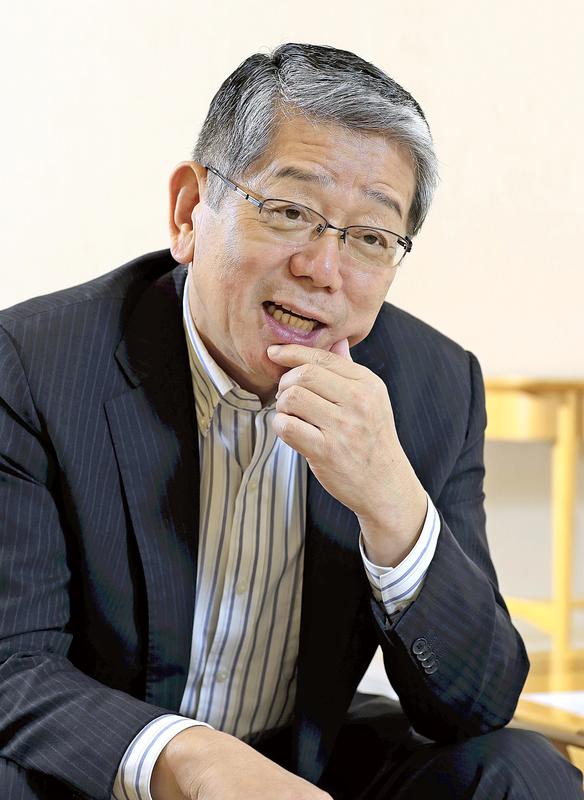
The Yomiuri Shimbun asked Kiyotaka Takahashi, a former deputy chief cabinet secretary for crisis management, for his views on combating the coronavirus. Below is his response.
Amid the outbreak of the new coronavirus, the government's preparedness was not deemed sufficient as it handled a succession of developments it had never experienced before, such as the repatriation of Japanese nationals stranded in Wuhan, China and the occurrence of an infection cluster aboard the Diamond Princess cruise ship. There is a problem with the Health, Labor and Welfare Ministry, being on par with other ministries and agencies in the directing of measures to cope with infectious diseases. It is necessary to strengthen the power behind the control tower function of the Cabinet Secretariat, charged with the overall coordination among the ministries and agencies.
Should a minister of state in charge of infectious diseases be created, it is necessary to bestow powerful authority upon that minister, strong enough to force each ministry to move accordingly. It would be fine if the Office for Coronavirus Disease Control within the Cabinet Secretariat were reorganized into a new infectious disease response office, and its staff members were increased from the current 60. On this basis, the office should proceed with working out relevant measures and data collection in ordinary times. The creation of a system in which those who specialize in the sphere of infectious diseases, experts who are seldom spotlighted, could be fostered is also necessary.
When fighting against infectious diseases, technical and scientific knowledge is indispensable. The establishment of an organization equipped with a high degree of specialist knowledge, such as the Centers for Disease Control and Prevention (CDC) of the United States, to cooperate with the infectious disease response office and the National Security Secretariat of the Cabinet Secretariat, and to repeatedly conduct drills on the assumption of an occurrence of an infectious disease is also recommended.
The way in which information is transmitted by the government should also be improved. In times of dealing with such crises as a nuclear disaster and infectious diseases, where the situation changes from moment to moment, it is important to transmit information accurately, quickly and frequently. Frequent explanations to the public by holding a press conference five times a day, for instance, would help dispel people's anxiety and distrust. It is also advisable to have a clear division between the roles at such press conferences, for instance, while the prime minister announces important political decisions, officials in charge will explain the situation regarding the infections.
While the state of emergency was declared on the basis of a revised law on special measures against new types of influenza, an explosive spread of infections has been avoided thanks to restrictions on behavior, deemed more lenient compared with measures taken in countries in Europe and North America. However, if the government requests restraints on traveling outside of the home or the operation of businesses, measures to support those heeding the requests should also be stipulated in the law.
Read more from The Japan News at https://japannews.yomiuri.co.jp/