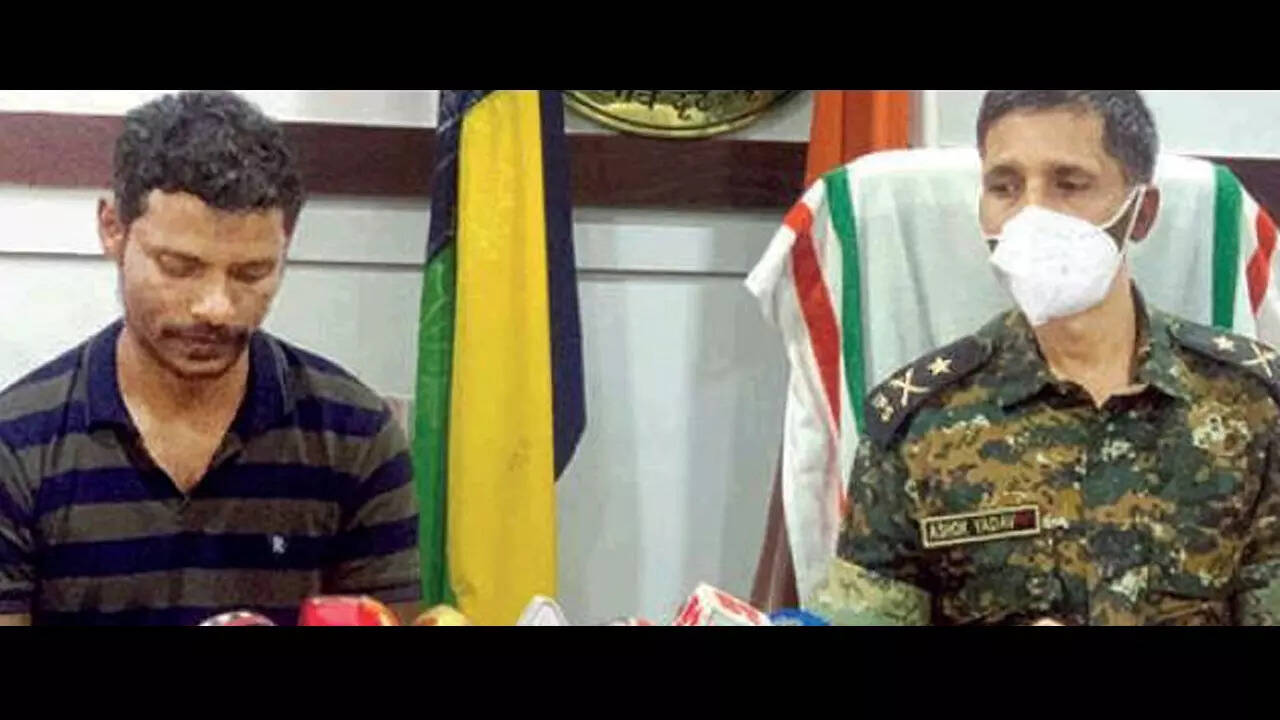
KOZHIKODE: In the first surrender under the ‘surrendercum-rehabilitation’ scheme announced by the government in 2018, Panikkaparambil Lijesh (alias Ramu), a senior leader of the banned CPI (Maoist) from Wayanad, surrendered before the police.
Announcing the surrender, IG Ashok Yadav said in Kalpetta on Tuesday that Lijesh surrendered before Wayanad police chief Aravind Sukumar at10pm on Monday.
Yadav said that as per the rehab scheme, a screening committee comprising the collector, district police chief and representative of ADGP (intelligence) will screen details before recommending a rehab package for Lijesh within two months. Yadav said police will ensure the security of the surrendered person and his family. He added that cases were registered against Lijesh for associating with CPI (Maoist).
Yadav said police were confident that more will follow suit and return to mainstream society after realizing that the violent ideology has no future. Lijesh, who hails from Amarakuni, said that he was associated with CPI (Maoist) for seven years and had operated in the forests of Kerala, Karnataka and Andhra Pradesh. He claimed that he was the deputy commander of Kabini dalam of the banned organization. His family had moved to Karnataka while he was a child to take up work in ginger fields.
Lijesh said he surrendered following a realization that there was no point in continuing with the militant group and seeing that many youths are being misled by the organisation. He is married and his wife is still a member of the organization.
As per the rehab policy, the district-level committee will sanction a package according to the category of the surrendered candidate and they will be paid money ranging from Rs Three lakh to Rs Five lakh depending on the category. Also there is provision for allotment of houses under housing policy of the government and payment of a fixed sum for pursuing studies.
As per the surrender policy, while heinous crimes committed by the surrendered will continue in courts, the government may consider withdrawing cases related to minor offences. It may also provide free legal services and fast track courts may be constituted for speedy trial of cases against the surrendered.