Regional banks are now under increasing pressure to reorganize under the initiative of the government. Due to a prolonged period of ultralow interest rates and a declining and aging population, the banks' earning power is falling. On top of this, with the continued spread of infections of the novel coronavirus, the strength of loan-borrowing corporate clients is also declining.
Although regional banks have long supported local economies, they are at a crossroads in various parts of the country. This is the first installment of a series pursuing how the regional banks have been struggling for their survival.
-- Selling ironware
Kingo Tatsuno, who designed the Tokyo Station building and the main building of the Bank of Japan in Chuo Ward, Tokyo, is known as the father of modern Japanese architecture.
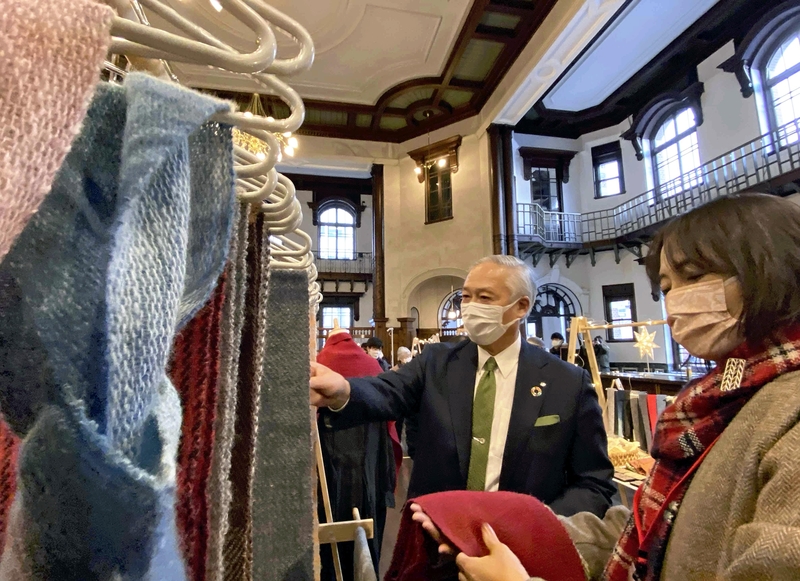
In Morioka, there still stands a red-brick building, one of the buildings designed by Tatsuno. At this building, which is also designated as important cultural property, a Christmas market was held on Dec. 18 and 19, with about 1,500 people visiting.
A locally based trading company, manorda Iwate Co., which is wholly owned by the Bank of Iwate, organized this event. Nanbu Tekki -- traditional ironware in the region -- and candles and mufflers manufactured by local companies were displayed in a cramped manner there.
Sachio Taguchi, president of the Bank of Iwate, explained the aim of the event. "First, we get local companies within our prefecture to prosper," Taguchi said. "If regional strength declines, our bank cannot survive either."
With a population declining, local economies have become ever more exhausted, thus the corporate environment will also become tougher.
According to an estimate by the National Institute of Population and Social Security Research, the population of Iwate Prefecture will be about 890,000 in 2045, down roughly 30% from now. With 43% of its population expected to be 65 and older by then, the prefecture's fortunes will dwindle into nothing if no measures are taken.
-- Status shaken
In rural areas, which the ministries and agencies of the central government, the Bank of Japan or megabanks can hardly keep an eye on, regional banks assume a pivotal role in their communities.
Regional banks do not merely lend money. They have single-handedly undertaken such roles as analyzing trends of local economies, promoting local industries, and fostering manpower. Their employees are treated as the elite in local communities.
Now, the status of regional banks has been shaken, as they have become unable to earn money as much as they once did.
The combined net profits of the nation's regional banks have declined 40% over the past four years. In the wake of the ultralow interest rate policy taken by the Bank of Japan, the interest rate spread -- the difference between the interest rate a bank pays to depositors and the interest rate it receives from loans to consumers -- has continued to contract.
According to the Japanese Bankers Association, the rate spread for Japanese banks -- including leading banks, such as megabanks -- which stood at around 0.5% a decade ago, fell to 0.2% in fiscal 2019, or less than half since then.
Even if a 100 million yen loan is extended, a bank can earn only 200,000 yen a year for that loan.
It has also been pointed out that many regional banks have fallen into a state of "excessive competition," in which they lower their lending rates on their own initiative because they want to attract borrowers.
An official at a regional bank in the Tohoku region said: "The situation is extremely bad in Sendai, a city with many excellent companies. There are even such cases in which a bank offers to its borrowers a lending rate which is close to 0% [just to grab away their dealings with their main banks.]"
-- 500 avocados harvested
To break the deadlock, regional banks have been hastily trying to diversify their means of earnings.
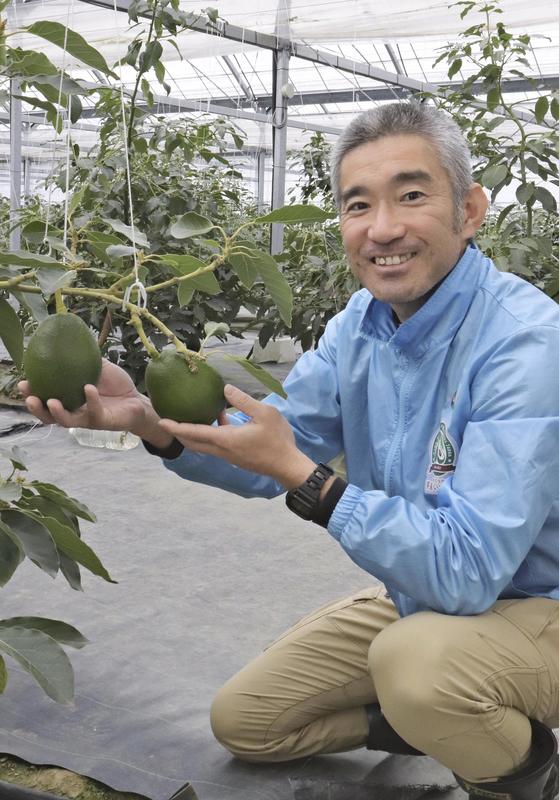
Miyazaki Bank has sent its employees to Yumeai Farm, an agricultural corporation it established in August 2017. The farm aims to make the most of the mild climate of Miyazaki Prefecture and grow new local specialties. The plants they deal with are varied, ranging from lemons, coffee and avocados, for instance. In autumn 2019, the corporation harvested 500 avocados for the first time.
Agriculture is one of the mainstay industries of Miyazaki Prefecture, but the sector is faced with an aging population and a shortage of successors. The regional bank conducts research on cultivation methods and so forth, which can be shared among many farmers. If the corporation can increase the number of farmers this way, it can unearth new demand for finance.
Hyakujushi Bank in Kagawa Prefecture on Dec. 15 formed a business tie-up with freee k.k., a Tokyo-based company that deals with corporate accounting automation software.
The bank has about 10,000 corporate clients in the prefecture, 75% of which are small businesses with 15 or less workers. By joining hands with freee, the bank will embark on a consulting business for these corporate clients. While receiving commensurate expenses, the bank will extend its support to its corporate clients to improve their productivity.
Ryuji Nishikawa, a senior managing executive officer of the bank, said with emphasis, "We have been extending loans and selling financial products until today, but from now on we will offer solutions for the challenges our clients face."
But it won't be easy to nurture a new line of business into a primary revenue source.
Hayanari Uchino, principal researcher at Daiwa Institute of Research, said: "Having a finger in some undertaking haphazardly would be meaningless unless it makes profits. What's important [for a regional bank] is to make sure of its strong points and figure out what sorts of roles it can play, then enter into a new field."
Read more from The Japan News at https://japannews.yomiuri.co.jp/