

Reggie Yates has finished
Updated
saulholland asks:
What topics are you planning to cover in the future?
 Guardian contributor
 We are in development at the moment on a series I've wanted to make for years, about identity. I love the city I was born in is as integrated as it is. London is a really special place. But I don't think we've spoken about how much things have changed in terms of race. What it is to be black and Briitsh is changing, and with mixed race Briton being the fastest growing race in this country, there's something to be said for the racially ambiguous to have a voice. We're in the final stages of developing an idea for the show about this, based on interracial relationships, for the BBC. So watch this space.
TuskGeorge says:
Do you think you would have ever been able to make a living from TV if you hadn’t had the support of your family and lived in London?
Guardian contributor First of all, I wasn't exactly born with a silver spoon and didn't go to drama school - I'm not the product of nepotism or a financial leg up. I started out in a drama group, playing £2.50 a lesson, with people who wanted to excel - like Naomie Harris. And some of us ended up in jail. That being said, investment in young talent on a grassroots level should be happening across the country - we're all bored of hearing the same stories from the same sorts of voices. It's fantastic that things feel like they're changing but there's a long way to go. There's definitely a doc to be made about my drama group though!
Lightull asks:
What are your 5 favourite tunes at the minute?
Guardian contributor Love the new xx album. There's a tune on the new Wiley album called Bang, with Ghetts - amazing song. Mercston's Back to 95 EP. A surprise EP from Jeremih and Chance the Rapper. The Little Simz album. And the new Kid Cudi record.
Anna Cooke says:
I love your documentaries and the way you manage to get everyone you talk to relax and talk openly. I’m quite a shy person. What advice would you give to me to encourage my 3yr old son to be less like me and more like you?!
Guardian contributor The best thing is to encourage them to be themselves at all times. I'm not a parent but I'm one of five kids, and my younger siblings are just as confident as they want to be because they were never encouraged to be anything but themselves. And it's ok to be quiet!
I'm a young man, even if I feel like an old codger! I hope to be on TV for decades. There's lots to learn
Donald J Makin says:
Do you feel feel you had to fight more than others to be taken seriously due to your start in kids TV? I’d just like to say I personally see you as the next Theroux!
Guardian contributor I will never fight to be taken seriously or otherwise, because I am what I am all the time. If you take that seriously, fantastic, if you don't, so what. To be compared to Louis Theroux is a massive compliment, but as someone who has sat with him, I feel I'm walking my own path, and can only learn from what has come before me rather than emulating it. Regardless of what people think of me and the work I've done, I have grown up on screen, and I continue to do so. I'm a young man, even if I feel like an old codger - I hope to be on screen for at least another two decades. There's lots to learn.
Updated
sand44 asks:
Are you annoyed BBC3 isn’t on TV any more?
Guardian contributor No. I think BBC3 being online has given the opporutnity for so many new voices to be heard. The emergence of shortform online, via BBC3, has started to really allow new voices to shine. I love Ackee and Saltfish, and if it wasn't for BBC3 online, I wouldn't know who these incredibly talented performers are.
aksana111 says:
Do you feel you are spoonfed your opinion by the BBC, as that is how it appears as a viewer.
Guardian contributor Thanks for mincing your words, buddy! I'm not spoonfed my opinion - it's my own. And the BBC is such a huge organisation, I don't even know how "they" would be able to tell me what to say, because the BBC is thousands of people. It's worth saying that that would go against everything that I and the BBC stand for.
On all of my films, there's something to learn and something to take away, sometimes not even on camera
irishg asks:
Out of all your documentaries which affected you most?
Guardian contributor Sounds like a cop out but they're affecting in very different ways. That's the truth. Every person I meet, there's something to learn, and equally there's something to take away, and sometimes what you see and encounter stays with you a long time. There's things that have stuck with me, and will be with me for life - sometimes not even on camera.
Updated
TheRootsTheRoots says;
Any weird encounters from a member of the public recognising you? Even though i know you are a real person, you have only existed on tv throughout my life, so i can imagine i would feel initially weird if i saw you, then i would gab your ear off talking about UGetMe.
Guardian contributor I have weird encounters every single day - I love them. The encounters are never aggressive or rude - they're familiar and friendly. I feel proud - there's a generation of people who have grown up with me on their tv screens. I feel like I've definitely done something right - I've been in their front room for decades, and that's a privilege. UGetMe is a show I made 15 years ago, for the people late to the party!
At heart, these films are steered by the personal experiences of the people I meet: they're about people, always
rtm2222 asks:
Your show, on the Aboriginal community in Australia, investigated stereotypes and the historic causes of the discrimination and social problems the community faces. That aspect was very insightful, however I wonder why you did not focus more on the governmental, third sector and social programmes that are necessary to break this cycle of discrimination, heavy alcohol use and unemployment?
Guardian contributor That's an easy question to answer. These films are never about infrastructure, never about government, they're about people, always. At their heart, these films are steered by the personal experiences of the people I meet, so to get to the heart of an issue, the people in question are my only guide, and the aim is to tell the stories through the people I meet and what I experience myself. To add to that, I never intend to come up with an answer or some sort of strategy to fix an issue - I just intend to start healthy conversation. If you have questions when the credits are rolling and you want to talk to someone, then the film has done its job.
Possibly heavily researched filmmakers like Michael Moore, who actively go out there, propose good solutions - I'm not that kind of filmmaker. We do research, but we always intend to tell personal stories, rather than fix problems. There's room to find solutions as a documentary filmmaker, but I'm not one of those filmmakers.
Updated
spooker says:
Terrific work you’re doing! Youth gang culture seriously limits opportunities for their future. You are in a unique position to explore the draw to gangs and possibly offer up a more balanced viewpoint on why youth gangs appear so popular. Youth violence is developing a seriously worrying trend – it would be great to see you apply your technique to some of these issues.
Guardian contributor I actually made a doc on teen gangs years ago, and it was one of the worst I've made. The reason is that I didn't know what I was doing, I wasn't working with a team I could trust, or that handled me and the topic with care. I don't have any regrets when it comes to getting it wrong, but I do know I've learned so much - I will definitely revisit this with the knowledge and the lessons I've learned to factual. Not only do I pick my team but I also produce - the story is closer to my actual true experience and take on an issue.
What I did learn was that when you're making a film about something close to home, it's important that your voice is reflected in the content. As a young black man making a film about people who look like me on the streets I live on, I learned a lot about letting people telling that story on my behalf, not knowing what it's like to live in that environment. I would never let that happen again.
If we forgave and forgot lessons from slavery, the Holocaust, what would we teach our children about what we got wrong?
Robert_G_Mugabe says:
Both me and my girlfriend loved your documentaries. As a mixed race couple we found the Russian one particularly chilling.
I have a question or two about your time in South Africa. You were interviewing someone re apartheid. I believe she was the camp leader of ‘Coronation Park’.
Did you find yourself letting your own feelings get the better of you? I would be really intrigued to know what your thoughts on all of this are. Obviously with TV editing etc we may be missing part of the tale.
Guardian contributor During my time in Coronation Park I found myself getting increasingly close to the residents, and the leader, she and I had quite a spicy exchange. We disagreed because she believed that white and black South Africans should be able to forgive and forget and move forward - I thought that was a crazy idea, given apartheid, and what the repercussions of that have been. I believe there are always lessons to be learned from history. It's a scary thought, if we had forgotten the lessons from slavery, the Holocaust, if we just forgave and forgot, what would we teach our children about what we got wrong?
Updated
samwrite asks:
Which place was scarier for a black man Putin’s Russia or the USA?
Guardian contributor The question is flawed really - it should be what's scarier for anyone. These countries being let by Trump and Putin, they're not that different. Russia is an acceleration of what could happen in the States with Trump and his cabinet of billionaires. It's about: what do these regimes mean for all people? That's what we need to focus on.
Updated
johnny68 says:
Have you ever wondered how funny it would be if you had a twin brother called Ronnie?
Guardian contributor No. My builder is called Ronnie though, he's a nice geezer. One could make a crack of some description when we were hanging out together.
tommyds asks:
Do you feel that you’re still viewed as a ‘youth’ presenter? Does it bother you either way?
Guardian contributor Yes and no. Yes, because programmes that are made for youth generally are sort of dismissed as bits of fluff. As things not of value. And that winds me up - we were making really special shows that have stayed with the audience. If you're making programmes for children, they're an audience that grows with you. Being called a youth presenter annoys be though because I ain't a kid, but I'm proud of the things I did on Radio 1, MTV... I've done stuff for all age groups. I'm not offended but it does frustrate me because of the negative subtext to what that could mean - people have their noses in the air when they talk about youth programming. Also, millions of people watch it on BBC1 - we've won lots of awards for this 'youth' programme. It's not about whether it's for kids or not - it's whether it's good or not.
Crosby_escapee asks:
You’ve done some ballsy things in your documentaries. How scary was the march in Russia? It looked terrifying.
 Guardian contributor
 The march in Russia was years ago now, jeez, it was three years ago. It wasn't terrifying, and it wasn't ballsy on my part. It was predominently young people, and when you see people in their early 20s hurling racist abuse, it doesn't make you feel scared, but sad. When you see someone that young in the age of information who isn't educating themselves socially, or has friends challenging them on backwards ideas, it's sad. I found it sad rather than intimidating.
When we were in South Africa, there was a gang fight we were in the middle of where a gun got pulled out. There was a drunk guy driving in a township and he nearly hit some kids, and the people tried to grab him and be violent. We were worried for him but also us, community violence is crazy - there's a thing called necklacing where someone set on fire with tires around them. The police aren't coming to settle a disagreement so that town decides sometimes. We were able to calm the situation down and the man could leave. 7 or 8 years doing this is long enough to be able to smell when something could turn.
Early on I realised the films aren't about me, and if I make them about me, I will fail
justamentalpatient asks:
I’d ever heard of you before one of my brothers told me to watch Release the Hounds.
Now I look forward to your documentaries.
Do you ever feel like giving people you are interviewing a good slap?
Guardian contributor Yes, of course! Sometimes you meet people who are incredibly disrespectful, rude, prejudiced. But early on I realised the films aren't about me, and if I make them about me, I will fail. In situations confronted with something aggressive, I just remind myself of that - when you really want to punch someone, that would ruin the story, and would stop them being honest. The most important thing is telling an honest story. If someone's beliefs are different to mine, who am I to challenge them? That's not what we do in these films. We find honest voices on both sides of the conversation. I'm not an expert, and there's a reason for that - we try to present an objective film with both sides of the argument. I share my feelings and thoughts - if it's fitting, i'll challenge someone on something. But only towards the end of the story. Because the best films I've made are the ones where I change someone's mind. If I shut them down in the first five minutes, that's not smart programme making. I let them think about it and come back to them. That's where you get balance, as opposed to one-sided films.
Updated
Tarantella asks:
I enjoy your documentaries – but where are the follow-ups? Would you like to follow stories through down the line? Or is it the BBC brass calling the shots? How much autonomy do you have (or can’t you say)?
Guardian contributor The first doc I made was only 7 or 8 years ago - Im a relative novice. I've been in TV for 26 years, but factual programming in the way we make them, is quite specific and requires time to grow and effort to be better and knows what it takes to make good films. We're getting amazing reactions, but it's early doors. Follow ups will come naturally. We look up to Louis Theroux, and his follow ups came decades later - he's the blueprint. To go back and see if people's lives have moved forward, or not as the case may be.
Updated
Bunn asks:
Why do you never seem to age?
Guardian contributor I'm a vampire. No, maybe it's because I don't drink or smoke. I just never started. As a teenager when everyone was starting I decided not to - I was told I had a hell of a lot to lose, and if I cocked up, the TV work would probably end. So I'm thankful to my mum for keeping that in my mind.
These shows are designed to start a conversation rather then provide a conclusion
kwilson26 says:
As an Australian living in London I watched your show with sadness and frustration. Sadness as the state of Aboriginal affairs in Australia and the horrific history that underlies them. Frustrated though mainly at your depiction of this aspect of their culture. My question is: why did you choose to show this so sensationally and why did you not do any research before doing this program?
Guardian contributor This is an honest answer, from a person who has made a lot of shows in exactly the same way. This is the way we do everything - not specific about these people. First of all: sensationalist is something i'm not, objective is something I am. They're designed to start a conversation rather than provide a conclusion. We intended to show every element of my journey - what I found was what I presented. It's a small town, 95% Aboriginal, and I stumbled across a party in the middle of the day with people getting drunk. This was just what we found. We ended up talking to elders in the community and could provide commentary about what's going. People apologised for the behaviour we showed at the beginning of the film. It's not sensationalist - it's honest. We talked about horrific situations like the stolen generation - and it's a band aid, the addiction. It brought to a head a lot of the problems in the town - and in an apologetic way, which I'm proud of. What you see is an objective film. This film is truthful - and that's what I always try to be.
Updated
Jonathan Chadwick asks:
What are the chances of Agent Z and the Penguin from Mars ever coming out on DVD? How are the other two boys doing now and can we ever see a sequel?
Guardian contributor So for anyone who doesn't know, this is a fantastic kids book. Agent Z and the Penguin Mars is about a group of suburban kids - I played Jenks, a bit of an idiot, he had a good heart though. This was a show that ran for about 7 weeks on BBC1, and I'm sent random vids on YouTube from a following who love the show. Doing a sequel featuring myself is very unlikely - but it was great when we did it.
Dowling1981 asks:
Why does someone who has never even smoked a cigarette feel that they are qualified to make a programme about drug taking?
Guardian contributor This is pertaining to the film that's just gone live on Monday, Hidden Australia, which is about ice, a drug sweeping Australia. I'm perfect to make this film becuase I'm not a journalist - i'm interested in people, personal journeys and personal stories. I feel that meeting people, who have experiences with an issue, that's the best way to get to the heart of an issue. As I've never taken drugs, I feel I'm the perfect person to make the film because I'm coming at it from a position of complete objectivity. As long as you're prepared to learn and understand, you'll be able to turn out something honest.
For anybody in the arts, my advice is: never aspire to have the same career as someone else
DanLewisDrums asks:
Was wondering what advice you have for anyone aspiring to a successful career in the arts/television/music as you have?
Guardian contributor For anybody in the arts my advice would be first of all never aspire to have the same career as someone else. One of the best things I've learned is to follow my passions, the things I have a unique take on, and when you tread your own path, your voice becomes increasingly unique. You don't sound like anyone else.
Updated
Reggie Yates is with us now!

Post your questions for Reggie Yates
Turning yourself from an exuberant children’s TV star to a presenter of weighty documentaries is a tough call, but Reggie Yates has pulled it off.
For years he was the cheery face of BBC youth shows, from Top of the Pops to Rastamouse to a Radio 1 slot with Fearne Cotton. But while there’s still space in his schedule for fun – like the high-concept reality gameshow Release the Hounds – he has since presented a series of acclaimed documentaries, meeting everyone from hardcore Russian nationalists to victims of US police brutality. In his latest series, called Hidden Australia, he meets disenfranchised Aboriginal communities and Melbourne’s crystal meth addicts.
With the first film out now and the next airing on 23 January, Reggie joins us to answer your questions about anything in his career in a live webchat, from 1.20pm GMT on Tuesday 24 January – post them in the comments below, and he’ll answer as many as possible.
Updated



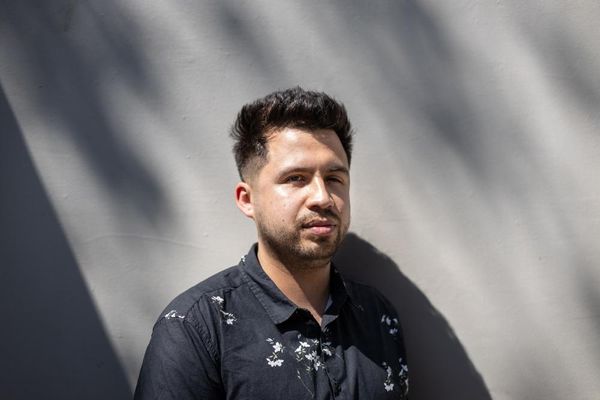









Thank you so much for all your questions, an absolute pleasure to hear what you the Guardian readers think and feel about the work I've done. There's lots more to come this year so thank you for your support, and for your questions - there's nothing worse than an echo chamber, and it's always great to be challenged on what you're doing. See you again soon, I'm sure.