Maan al-Habi, a Syrian living in the foetid Idomeni border camp between Greece and Macedonia, was unequivocal. He would not be taken back to Turkey.
“I survived all this to get here, with my wife and child,” said the 36-year-old from Damascus. “I will not go. I can see there will be trouble. Lots of the younger men here will not go.”
As night fell on Monday, the mood in Idomeni was getting bleaker. Storm clouds again threatened to turn the camp at the start of the so-called “Balkan route” to northern Europe into a rancid mud bath.
Everyone wanted to know whether the rumour that they were all being sent back to Turkey could be true.
And still, the Macedonian border guards appeared impervious to all and any documents. The border remained closed to those seeking to travel further into Europe.
Food queues appeared longer than the days before, and the pungent smell of a refugee camp seemed stronger. The sense of desperation and despondency was new.
Many officials from non-governmental organisations told The Independent they fear the situation might become violent if migrants at the sprawling camp were told the border was closed and were ordered back to Turkey.
One senior aid official, who asked not to be named, said: “Safety will become an issue and we might have to pull out.”
In Idomeni’s village square, a local Greek woman got out of her car and immediately migrants, mainly young men, surged around her before she could hand out the food she had brought them to eat.
A fight broke out between two men over a loaf of bread. The woman was then crammed violently against her car as she tried to give away more food from the boot. The scene was repeated a few hundreds yards away on the main track into the heart of the camp.
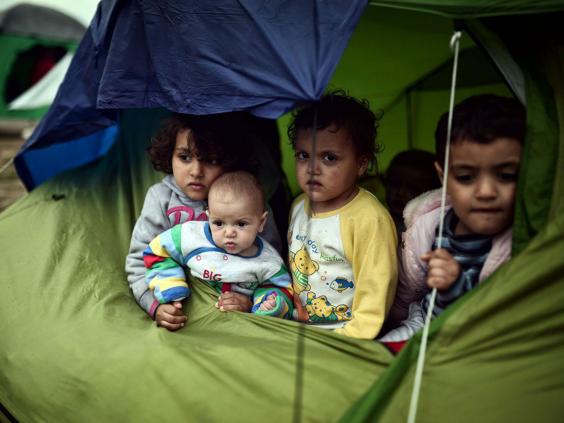
Around six miles south from the Macedonian border, Unicef has constructed tents to house 800 or so migrants in the grounds of a motorway service station. The rumours of a total closure of the Balkans route, or admission into Macedonia only for Syrians from certain cities, were on everyone’s lips here as well.
Inside the petrol-station cafe was Donaa Mohamad, 26, a translator who fled from Deir Ezzor in Syria, because Isis killed both her parents.
She asked if people from Syria would still be let through the border at Idomeni. Showing her passport, she asked if it will be sufficient to get her into Macedonia. It was impossible to say.
Sitting next to her was a man who said he was from the so-called Isis capital, Raqqa.
He said he was not let across on Monday and agreed when it was pointed out that if people fleeing the heart of the “caliphate” cannot enter mainland Europe it will be near impossible for others.
“It will be very, very hard, if they force me to go back to Turkey,” the man said.
“I did not feel safe there. I will have no hope,” added Ms Mohamad.
Amer Haj, 25, was standing outside, on the petrol-station’s forecourt. He too asked whether the border was to be closed. Like others at this smaller camp, he retreated the six or so miles from Idomeni to escape the squalor. He said many migrants had not been able to shower for a month. But still he was thinking of going back to Idomeni to try again “before the border is closed”.
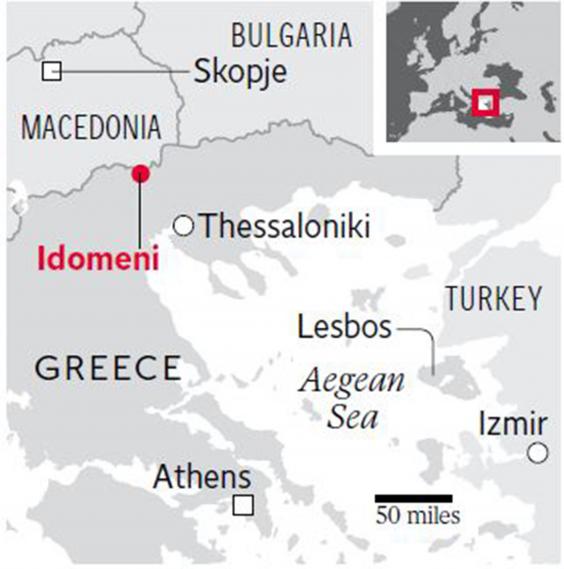
Back at Idomeni, the smoke from fires lit by families to cook and keep warm was so thick dozens of people needed medical attention. Médecins Sans Frontières (MSF) doctors had to treat a two-year-old girl for breathing difficulties and smoke inhalation.
“We are seeing hundreds or thousands of very young children suffering serious damage to their lungs because they haven’t got a decent place to stay,” said Cristian Reynders, a senior MSF co-ordinator at the Idomeni camp.
The Greek government said it would send primary care teams to the camp by tomorrow to help.
“But we’re not solving the underlying problem,” said Mr Reynders. “There are 13,000 people living here in mud, and what they need is some compassion.”