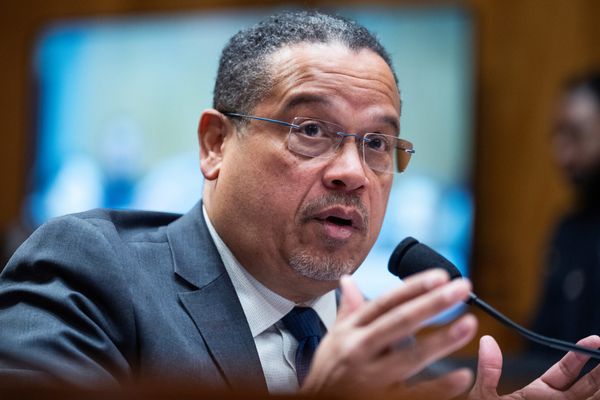
European Council President Donald Tusk has warned that the quota plan is not enough in the face of millions of refugees potentially trying to reach Europe.
We are talking about millions of potential refugees trying to reach Europe, not thousands. #EUCO #refugeecrisis #migrationEU
— Donald Tusk (@eucopresident) September 23, 2015
Tusk pointed out that there were a eight million displaced people inside Syria, as well as the four million who had fled the country.
We’re pausing the blog for now, but there will be more updates on our refugees page. You can read our latest news wrap, by Ian Traynor, here.
Updated

The European Commission has left no stone unturned in the search for funding for the refugee crisis, its president Jean-Claude Juncker insisted ahead of the EU summit on migration.
He said: “We have almost doubled the resources to tackle the refugee crisis – from € 4.6 billion to € 9.5bn”
Juncker set out the key points of further funding measures:
- €100m more for emergency assistance for the most affected Members States
- €600m more for the EU agencies in 2016
- €200m more for the World Food Program in 2015
- €300 million more for humanitarian aid in 2016
- Up to €1bn for Turkey
- € 700 million for Serbia and the former Yugoslav Republic of Macedonia
Here’s a summary of the latest developments:
- EU leaders are preparing for a tense summit in Brussels dedicated to the continent’s migration crisis, a day after European governments forced through a divisive deal to impose refugee quotas. The summit will focus on the faster screening and fingerprinting of people arriving on the EU’s southern borders and helping neighbouring countries in the Balkans and the Middle East, notably Turkey, to stop people heading for the EU.
- Slovakia has threatened to take court action against the resettlement quotas. But the other three countries that voted against quotas have reluctantly accepted the plan.
- Hungary’s prime minister, Viktor Orban accused Germany of “moral imperialism” over the refugee crisis. Speaking in Bavaria Orban said: “Even if Germany decides to accept mass migration, please do not make it mandatory for others to do the same.”
- The European Commission has announced a multi-billion euro package to tackle the refugee crisis including €1bn of aid Turkey and €17m for Serbia. EU president Jean-Claude Juncker said: “It is time for further, bold, determined and concerted action by the European Union, by its institutions and by all its Member States.”
- Serbia is preparing counter-measures against Croatia if it fails to lift the blockade at its borders. For its part Croatia is reported to be preparing to send refugees back to Serbia if Hungary closes its border with Croatia. Croatia’s state broadcaster showed footage of Hungarian soldiers building a new border fence with Croatia.
- The UN secretary general’s special representative on migration has urged Britain and France to act immediately to tackle the “horrible conditions” facing refugees in Calais. After a visit to the makeshift camp, dubbed the Jungle, Peter Sutherland, said the conditions there were an indictment to society.
- The first of 20,000 Syrian refugees to be taken in by the UK have arrived in the country. Britain has refused to take part in the EU refugee-sharing scheme and has an opt out from having to take part.
More on the Balkan border merry go round.
Serbia is preparing counter-measures against Croatia if it fails to lift the blockade at its borders, Balkan Insight reports.
Belgrade is considering blocking any freight coming from Croatia, its source said.
“Serbia also has a Stabilisation and Association Agreement with the EU, which regulates trade relations between two sides. The blockades on the Serbia-Croatian border have practically abolished the SAA. We will strongly protest to the EU because of that,” the source said.
Orban accuses Germany of 'moral imperialism'
Hungary’s hardline prime minister Viktor Orban has accused Germany of “moral imperialism” over the refugee crisis.
Speaking in Bavaria Orban said: “Even if Germany decides to accept mass migration, please do not make it mandatory for others to do the same.”
#Orban wirft Deutschland in Flüchtlingskrise «moralischen Imperialismus» vor http://t.co/v1HhG3Ts2U via @faznet /dmo pic.twitter.com/4Sz0xA80XD
— dpa (@dpa) September 23, 2015
AFP adds:
When asked what he expected from Merkel while Europe grapples with an influx of asylum-seekers, Orban grinned: “I have a long list.”
Orban accused Merkel of trying to impose her vision of an open EU on the rest of the bloc.
“The most important thing is that there should be no moral imperialism,” he said during a visit to the southern German state of Bavaria.
Orban, speaking ahead of an EU summit in Brussels later Wednesday, said his country had a “democratic right” to a different approach.
“We are Hungarians however, we cannot think with German minds. Hungary should have the right to control the impact of a mass migration,” he said.
“The Hungarian people don’t want this, we ask that the wishes of Hungarians be respected.”
Orban revived recent proposals in what he called a six-point plan to resolve the crisis.
They included persuading Greece, one of the EU countries on the front lines of the migrant influx, to hand over control of its borders to EU countries willing to help police them, as well as separating asylum-seekers from “economic migrants” before they reach the passport-free Schengen zone.
Orban said he would also press fellow EU leaders to agree on a common list of safe countries of origin to which migrants can be returned, and to pitch in one percent of their EU income and their EU contributions to an emergency fund.
Updated
The European Union has launched 40 new infringement cases against 19 member states for failing to implement common asylum rules.
The European Commission says that elements of the asylum policy not being implemented include legislation focused on speeding up asylum decisions, ensuring humane treatment of asylum-seekers and clarifying grounds for granting asylum.
European Commission Vice President Frans Timmermans says, “Our common European asylum system can only function if everyone plays by the rules.”
Infringement notices have been sent to Austria, Belgium, Bulgaria, Cyprus, Czech Republic, Germany, Estonia, Greece, Spain, France, Hungary, Lithuania, Luxembourg, Latvia, Malta, Poland, Romania, Sweden and Slovenia.
Croatia’s state broadcaster has shown footage of Hungarian soldiers building a new border fence with Croatia at Gola in the Koprivnice province.
[VIDEO] Od ranog jutra Mađari postavljaju bodljikavu žicu i ogradu kod Gole #izbjeglice http://t.co/ykI9b1hGmX pic.twitter.com/xKHOTqFJRo
— HRT Vijesti (@hrtvijesti) September 23, 2015
A Dutch MEP has condemned the “inhumane” conditions facing refugees in Croatia after being shown undercover footage filmed by a Dutch reporter posing as a refugee.
The footage is due to be broadcast by 3onderzoekt in October. But the filmmaker Danny Ghosen showed the rushes to MEP Judith Sargentini. She commented: “This situation is inhumane. Europe should be ashamed.”
The footage is said to show refugees being sent to a fenced off area, under heavy police surveillance. Refuges are reported to be shown in sweltering conditions without cover.
In one clip filmed at night refugees complained the camp was like a prison.
Sargentini added: “If Croatia cannot cope with the large number of refugees entering the country, it should call for help, instead of hiding the misery. That is also European solidarity.”
Croatia’s interior minister Ranko Ostojic refused to answer questions about what foreign reporters uncovered at the camp, according to state broadcaster HRT.
But he announced that a new camp area had been opened where refugees do not have to sit in the sun.
Speaking from the Opatovac camp, he called for a common European solution to the crisis.
“Do not make us suffer, this is torture,” Ostojic pleaded.
He added: “We opened two fields at the centre in which to conduct medical screening and security checks. This takes a long time and we had to move the refugees from the area in front of the reception center in order not to stand in the sun but also so the entire area can be cleaned and disinfected” Ostojic said.
The European Commission has announced a multi-billion euro package to tackle the refugee crisis including €1bn of aid Turkey and €17m for Serbia.
EU president Jean-Claude Juncker said the EU needed to go further than the binding quota plan agreed on Tuesday. He said: “The decision to relocate 160,000 people from the most affected Member States is a historic first and a genuine, laudable expression of European solidarity. It cannot be the end of the story, however. It is time for further, bold, determined and concerted action by the European Union, by its institutions and by all its Member States.”
Under the commission’s plans member states will be able to request “rapid border intervention teams” to protect Europe’s borders.
It also announced that proposals for legal migration, including a relaxation of work permit rules, will be set out in March 2016.
Slovakia threatens court action over quotas

Slovakia will go to court to challenge quotas for distributing asylum-seekers, Slovak Prime Minister Robert Fico has announced.
“We will go in two directions: first one, we will file a charge at the court in Luxembourg... secondly, we will not implement the (decision) of the interior ministers,” Fico told reporters.
On Tuesday he said: “As long as I am prime minister, mandatory quotas will not be implemented on Slovak territory.”
Updated
UN urges Britain and France to tackle 'horrible conditions' facing refugees in Calais
The UN secretary general’s special representative on migration has urged Britain and France to act immediately to tackle the “horrible conditions” facing refugees in Calais.
After a visit to the makeshift camp, dubbed the Jungle, Peter Sutherland, said the conditions there were an indictment to society.
I cannot easily recover from the shock of Calais.the French and British governments should rapidly respond to the horrible conditions.
— Peter Sutherland (@PDSutherlandUN) September 23, 2015
With the filth has come disease and the place is testimony to the desperation of the people in it. They deserve immediate action.
— Peter Sutherland (@PDSutherlandUN) September 22, 2015
The Camp in Calais is a truly dreadful place. It is an indictment of society that it exists.Why have the media largely moved on?
— Peter Sutherland (@PDSutherlandUN) September 22, 2015
Updated
The Guardian’s Europe editor Ian Traynor previews the summit:
EU leaders are preparing for a tense summit in Brussels dedicated to the continent’s migration crisis, a day after European governments forced through a divisive deal to impose refugee quotas.
The leaders did not want their emergency summit on Wednesday evening to be hijacked by an unseemly squabble over quotas and ordered interior ministers to strike a deal in which member states will share 120,000 people between them.
The summit will focus on the faster screening and fingerprinting of people arriving on the EU’s southern borders and helping neighbouring countries in the Balkans and the Middle East, notably Turkey, to stop people heading for the EU.
The policies presuppose substantial increases in staffing and resources for EU police and border agencies and the ceding of national authority over borders to the same EU agencies, none of which is proceeding quickly. Any summit decision must be unanimous under EU rules, unlike decisions taken at the level of ministers.

Romania, one of the four EU states who voted against mandatory quotas, says it can manage the number of refugees the EU plans to send its way under the scheme.
President Klaus Iohannis said he regretted that the decision was forced to a vote rather than the negotiated, and insisted that binding quotas were not the solution.
Romania has said it can take in a maximum 1,785 of migrants in a voluntary scheme to help ease pressures. Under the relocation scheme it would take in 2,475 people.
“The decision has been made. I understand other countries plan to challenge it and we will wait to see the outcome,” Iohannis told reporters.
He added: “In reality, the number of refugees Romania must receive during a period of 1-2 years ... is not large. It is manageable and I think Romania must show solidarity.”
Of the four dissenting countries only Slovakia has vowed to fight the imposition of quotas.
The Serbia-Croatia feud is escalating. Prime Minster Aleksandar Vucic has written to the EU to complain about Croatia’s closed border with Serbia, while his foreign minister Ivica Dacic accused Croatia of leading a “trade war”.

Hungary’s anti immigration prime minister Viktor Orbán is not in Brussels for the summit. He’s visiting Bavaria instead.
He is holding talks with the prime minister of Bavaria Horst Seehofer, who praised Hungary’s tough stance on immigration over the weekend. Germany could not have gained control over the refugee situation if Orbán had not decided to close his country’s borders, Seehofer told the German all-news channel N24. “We will be thankful for what Orbán does”, he said.
Hungary has indicated it will reluctantly accept Europe’s decision on quota, but questioned the feasibility of the plan. Zoltán Kovács, a government spokesman, said: “We believe it will be impossible to keep people assigned to, say, Slovakia if they want to go to Germany. How do you keep people in one country if they want to go join their relatives who live in another EU country or want the more favourable social welfare benefits in that country?”
Orbán was greeted with protesters.

Updated
Czechs likely to accept quotas
The Czech government, one of four to vote against quotas, is not likely to challenge the European Union’s decision, Reuters reports citing the Czech public news agency CTK.
Several ministers from Prime Minister Bohuslav Sobotka’s Social Democratic party and from the ANO movement told the agency such a step was not probable as they were arriving for a regular government session.
But the Slovak PM, Robert Fico, has pledged to defy it. “As long as I am prime minister, mandatory quotas will not be implemented on Slovak territory,” he told MPs in Bratislava.
Updated
EU Commission vice-president Frans Timmermans has urged the four dissenting member states to respect the EU’s decision on quota. Asked to comment on Slovakia’s intention to resist the imposition of quotas, Timmermans said: “In the European Union, a treaty based organisation, a decision is a decision regardless of the way you voted. The decision is legal, it’s valid and it binds all members.”
Updated
Austrian police say that about 2,500 migrants and refugees have arrived at the main border point between Austria and Hungary, a day after 5,000 crossed into Austria.
Police spokesman Helmut Marban told AP that the new arrivals were bused to the Hungarian side of the Nickelsdorf crossing point early Wednesday. From there they are walking into Austria.
Updated
Croatia has said it will bus another 4,000 refugees to the Hungarian border after announcing the number of new arrivals in Croatia has increased to 39,000 since Hungary sealed its border with Serbia last week.
Interior minister Ranko Ostojic, made the announcement on a visit to the crowded Opatovac transit camp overnight, according to the Croatian news site HRT.
Update: The figure for new arrivals has climbed to 44,000 according Croatia’s interior ministry, including a record 8,750 on Tuesday.
Hungary has been accepting bus loads of refugees across its border with Croatia. It then buses the refugees to Austria.
The Hungarian police reported more than 5,000 new arrivals on Tuesday after the number dropped to a few hundred last week.

Updated
Croatia’s interior minister Ranko Ostojic has promised thousands of refugees queuing at the Opatovac camp that they will be transferred.
Crowded again at the entrance of Opatovac camp. Interior minister Ostojić: Maintain order, you'll all be transferred pic.twitter.com/w3taVbJzTG
— Vlada R. Hrvatske (@VladaRH) September 23, 2015
Some 4,000 people registered at the camp on Tuesday, according to the BBC’s Anna Holligan who filmed the scene on Periscope.
LIVE on #Periscope: Opatovac transit camp - Syrians, Iraqis, Afghans... https://t.co/bS69HNpN63
— anna holligan (@annaholligan) September 23, 2015
Meanwhile, road traffic between Serbia and Croatia faces continued disruption after truck drives blocked the border crossing at Batrovci, when Croatia decided to allow a limited number of trucks to pass the border, according to Balkan Insight.
At least 35,000 migrants, many of them Syrian refugees, have entered Croatia from Serbia since Tuesday last week, when Hungary sealed its border with Serbia.
Since the end of last week, Croatia has been bussing new arrivals to the Hungarian border. Croatia says it cannot cope with the numbers, saying Serbia should send them to Hungary and Romania too. Reuters has more on the continuing border feud:
Serbia gave Croatia until the end of Wednesday to lift the freight blockade or face political, legal and economic retaliation.
Serbian Prime Minister Aleksandar Vucic said he had spoken by phone with his Croatian counterpart, Zoran Milanovic, and that they would continue discussions to find a resolution. Without a deal by midnight on Wednesday, he said, Serbia would implement a package of measures against Zagreb.
“I believe we will be able to agree with our neighbour,” Vucic said. But, he warned, “Serbia must reply to the destruction of its economic integrity and national policy.”
Minutes before he spoke, the Croatian government said it had decided to ease the blockade to allow through only trucks carrying perishable goods. But frustrated drivers were livid, and as night fell they parked several trucks across the main Bajakovo-Batrovci crossing in no-man’s land, halting all road traffic.
A new migrant crossing point emerged overnight at the Croatian village of Bapska, with hundreds seen walking through rolling hills to a new camp for 4,000 at Opatovac, which is fast reaching capacity.
Several thousand more were waiting in no-man’s land between Sid in Serbia and Tovarnik in Croatia; some spent the night sleeping in a cemetery.

The Guardian’s Mona Mahmood has been speaking to Abu Maria, a 40-year-old father of four from Syria, who has just been granted asylum in Sweden
I had to leave the Za’atari camp in Jordan by any means. I needed medical treatment for my daughter, Maria, who suffers a mental disorder and has difficulty speaking. There was no proper medication or clean accommodation so her suffering was accute.
I had no choice but to smuggle myself to Greece on a crowded boat. I had to borrow $1,500 from a friend in Jordan. The Jordanian authorities were only too happy to allow me to leave. They gave me approval within a day.
My plan was to take Maria with me to Europe, but after the drowning of the Syrian kid, Alan Kurdi, I decided to leave her with her mother in Jordan. It took me 15 days to get to Sweden after crossing Greece, Macedonia, Hungary and Germany.
I wish I could have gone to England as I speak English, but my friends warned me that I would end up in Calais for months and never be able to get to England. They said that the police were checking lorries and trains heading to England and I might end in jail.
I went to the immigration centre in Gothenburg as soon as I stepped off the the ferry to Sweden. To my surprise, I found more than 300 refugee already in a queue. The Swedish authorities took us to a hotel to stay over night and come to apply again on Tuesday.
I’m so glad to be in Sweden. I can breathe freedom now. I was suffocating in Jordan.
The European Commission has published a useful guide to how the refugee quota system will work. It sets out the individual quotas of refugee that each country will take under the plan. Despite objections from four central European countries they will also be forced to take their share of refugees. Here are the quotas for the dissenting countries:
- Czech Republic: 1,591
- Hungary: 1,294
- Romania: 2,475
- Slovakia: 802
Summary
Welcome to our continuing live coverage of the refugee crisis as an EU summit is set to agree a deal to resettle 120,000 across Europe in the face of opposition from central European states.
Here’s a roundup of the latest developments:
- European governments have forced through a deal to impose refugee quotas, sharing 120,000 people between them in a watershed decision that several states bitterly opposed. The decision to overrule opponents in the newer states of central Europe was perceived as an assault on the sovereignty by the four countries that voted against and sets the scene for a tense summit of EU leaders in Brussels on Wednesday dedicated to the refugee emergency.
- The first of 20,000 Syrian refugees to be taken in by the UK have arrived in the country. Britain has refused to take part in the EU refugee-sharing scheme and has an opt out from having to take part.
- The west’s richest countries have been warned that the prospect of a million asylum seekers this year will require an urgent and collective response to the unprecedented refugee crisis that has developed over the past two years. The Paris-based Organisation for Economic Cooperation and Development (OECD) called for a comprehensive plan that would provide both immediate humanitarian assistance to asylum seekers and help to integrate them.
- US President Barack Obama and German Chancellor Angela Merkel discussed Europe’s response to the refugee crisis in a phone call on Tuesday. “The two leaders agreed on the need for a Europe-wide solution, in which all European member states accept their fair share of refugees,” the White House said.
- One of the latest flashpoints in the crisis is the Croatian transit centre in Opatovac where the UNHCR reported that hundreds pushed against fences outside the front gates, awaiting their turn for a “painfully slow registration process”. It said: “The ground near the centre gates was boggy with mud as crowds pressed forward in hopes of any news, and the shadiest spots under the pine trees were crammed tight with men, women and children trying to sleep off the stress.”
- Options and routes are changing rapidly as countries impose border controls in the absence of a political solution to the continent’s worst humanitarian crisis since the second world war. You can track the crisis on visual guide.
Updated