The Interior Lifestyle Tokyo fair was like a maze, with more than 750 companies participating and numerous booths showcasing products that could set industry trends. I stopped at one booth after another, using the guide and the map for the vast site.
Suddenly, a logo that seemed out of place caught my eyes.
Showing a person sheltered under two hands, it was the logo of the U.N. High Commissioner for Refugees, which protects and supports refugees around the world. Yet in its vibrant booth, containing a variety of stylish and intricately made products, there were few of the images usually associated with refugees.
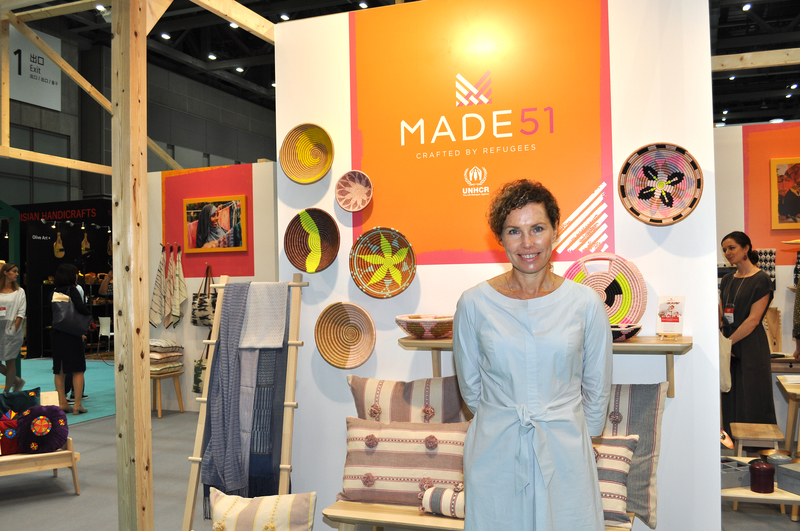
"You may be wondering what the U.N. refugee agency is doing at a lifestyle fair. Yet there is a connection," Dirk Hebecker, UNHCR's representative in Japan, said during a talk at the three-day fair, which was held at Tokyo Big Sight in July. "When people think about refugees, they first think of camps, desperation, poverty and lack of opportunities. But these products are a symbol of something very positive about refugees."
Refugees from countries such as Afghanistan, Syria and Myanmar are working under MADE51, which stands for "market, access, design, empowerment" for refugee artisans. The number refers to the 1951 Refugee Convention.
MADE51 was launched in 2016 at the UNHCR's initiative, to help refugees rebuild their lives by connecting refugee artisans with social enterprises and bring their products to global markets. Efforts to help refugees achieve self-reliance are not new, but conventional projects are usually conducted on a local basis. In addition, refugee-made products are often not designed to be marketable.
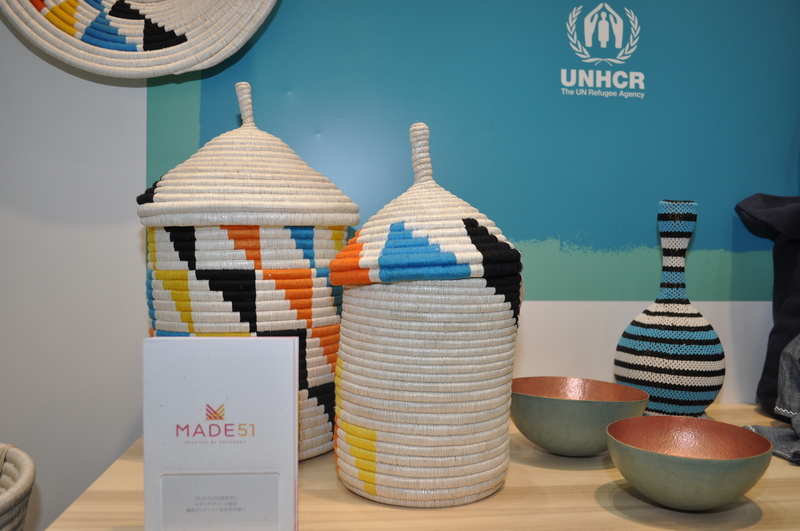
MADE51's strength is its approach to establish a global brand with crafts that can sell through a global network.
Its collection made its trade show debut at the Ambiente fair in Frankfurt in February 2018, and the recent Tokyo fair was the first time for MADE51 to present its collection in Asia. Currently, negotiations are underway with Japanese companies and groups to market its products in Japan.
Among the items that fascinated me most were baskets crafted by Burundian artisans who are refugees in Tanzania using their traditional weaving skills. They unravel grain sacks used for food distribution in refugee camps and coil them into baskets. Such creative and eco-friendly items immediately hooked me and sparked a desire to buy them if I could. "They're so pretty," a woman standing near me said in an excited tone.
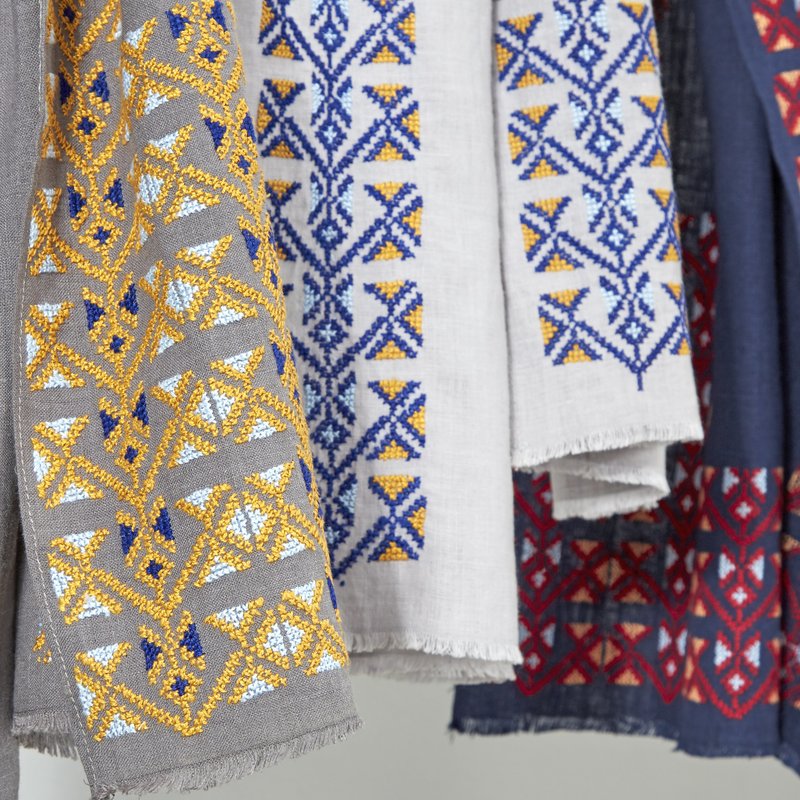
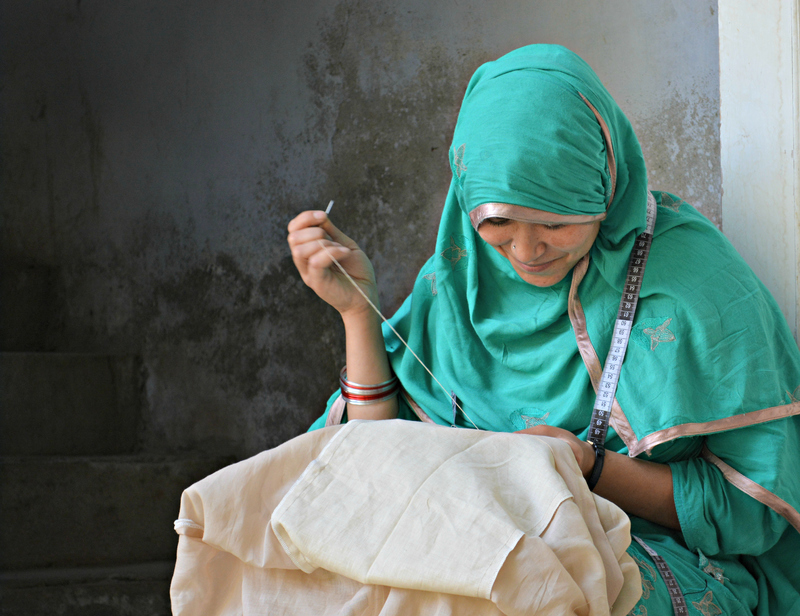
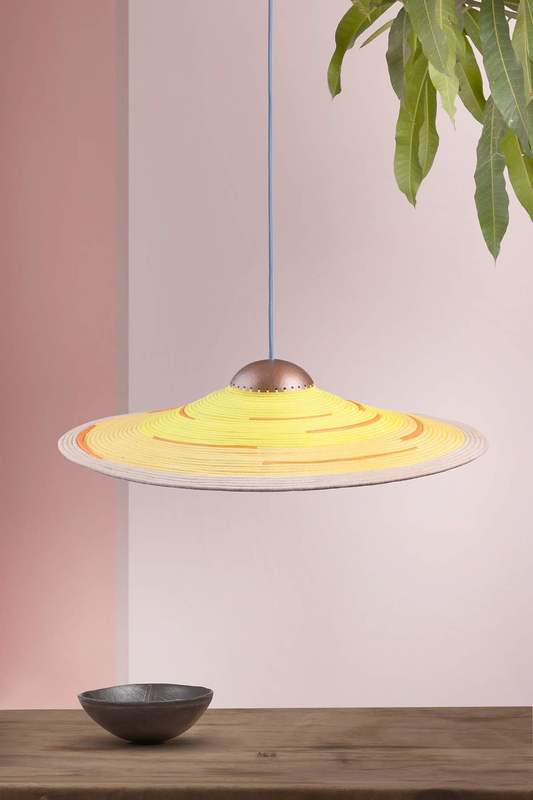
For the MADE51 collection, Malian refugees in Burkina Faso hand-hammer bronze and copper and combine them with leather to make bowls, boxes and jewelry that are infused with their Tuareg culture. Delicately crafted cashmere throws, linen scarves and bags featuring heritage patterns are created by Syrian refugees living in Jordan. Afghan refugees in Pakistan contribute embroidered home textiles, cushions and wool fabrics. The MADE51 collection also includes wool rugs, lampshades and woodwork.
These crafts are created with skills and techniques that have been passed down for generations, and each product has a story.
"I would never have imagined that I could one day make a living from my weaving and provide for my family," Nyamvura Koronaria, an artisan at a refugee camp in Tanzania, was quoted as saying by UNHCR. "Weaving in the camp also gives me something to do, a purpose, and a sense of belonging."
Escaping dependency
According to statistics released by UNHCR in June, about 70.8 million people were forcibly displaced last year due to war, conflicts or persecution, a record high in the agency's history. Among them, 25.9 million were refugees.
"Usually when refugees flee, they carry very little. But what they do carry with them are their culture, skills and heritage. Their hands go with them," Heidi Christ, global manager of MADE51, said during a presentation at the Tokyo fair.
"MADE51 is not a charity model," Christ said. "MADE51 gives refugees the chance to become contributors rather than dependents, individuals not statistics. Powerful not powerless."
This initiative, which is currently operating in 15 countries, also caters to the current consumer trend that emphasizes ethics and sustainability. However, there are challenges in making MADE51 a sustainable, profitable global brand while also helping refugees to live "with dignity."
"We don't want refugees to be used as labor to produce products," said Mark Kwami, who is in charge of design strategy and control for MADE51. "The challenge we have for MADE51 is trying to utilize craft skills of refugee artisans and match those with contemporary design ideas to create products which are unique and marketable and allow us to tell stories."
To make the products suitable for the tastes and trends of international markets, the MADE51 design team has, for example, asked refugee artisans to change overly colorful designs that are often seen in traditional African crafts. Designs have been standardized by asking refugee artisans to use molds and tape measures, while materials need to be locally available to enable continuous production.
As I browsed the MADE51 crafts, I recalled my visits to refugee camps. As a student majoring in international politics and journalism, I visited refugee camps in the Gaza Strip and Lebanon where I talked with refugees about music, dreams and romance -- topics I often discuss with my friends back home. That experience demolished the stereotypes I previously had of "vulnerable" and "hopeless" refugees.
It was then that I learned a saying about aid: "Give a man a fish, and you feed him for a day. Teach a man to fish, and you feed him for a lifetime." MADE51 is giving shape to that idea.
Read more from The Japan News at https://japannews.yomiuri.co.jp/