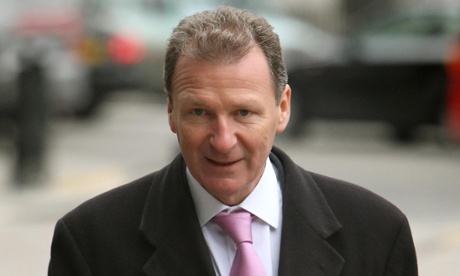
An EU referendum will not settle the European question, as the dispute following last year’s referendum in Scotland has shown, the former head of the civil service, Lord O’Donnell, said on Monday.
Speaking at an Institute for Government seminar in London he said: “I don’t buy that any more.” He warned that the referendum had the danger of being about more than Europe and if David Cameron lost, everything would fall apart, saying the government would be in uncharted territory.
He suggested at the seminar, dedicated to the issue of governing with small Commons majorities, that there would be a realignment if there was a vote to reject Cameron’s renegotiated terms, implying Conservative rightwingers and Ukip might align.
He asked whether Cameron might try to divide the opposition by offering to give Alex Salmond, the former Scottish first minister, a role on the EU negotiations.
O’Donnell, who was head of the civil service during the start of the coalition talks in 2010, admitted he had been privately concerned about possible problems surrounding the formation of a coalition following the 2015 election. There were aspects of the procedure for transforming power from one government to another that were unclear, he said, adding: “We missed a bullet. Things could have got very difficult.”
He predicted the government’s small majority would make it impossible to pass the planned reduction in the number of MPs from 650 to 600, even though the reform might not require primary legislation. He said the change would never happen.
It is widely thought that the reform of the boundaries to equalise the size of constituency electorates would help the Conservatives substantially, since at present their MPs are in constituencies with larger numbers of voters.
O’Donnell predicted Cameron would inject a large number of Tory peers into the House of Lords to alter the political balance. He said the Lords would be most difficult for the government on constitutional issues such as the Human Rights Act and Scottish devolution.
There are 224 Conservative peers, about 170 crossbenchers, and more than 100 Liberal Democrats.
The SNP – the third largest party in the Commons – has refused to accept peerages in the Lords, making an imbalance in its power between the two houses.
The absence of the SNP in the Lords will raise issues about how the question of English votes for English laws is handled in the upper chamber
O’Donnell praised the way Cameron had kept so many ministers in their posts, arguing continuity led to stronger government.
O’Donnell was press secretary to John Major, who governed with a small majority during the battles over the Europe, and predicted Cameron would need a powerful whips’ office that knows how to reward backbenchers and deal with MPs who feel they have no way back into government.