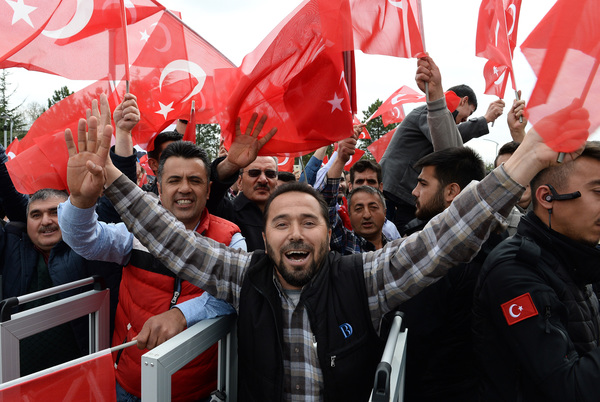
ANKARA, Turkey �� Turkish voters will decide Sunday whether to endorse President Recep Tayyip Erdogan's attempt to centralize power in his hands in the most radical shake-up since the republic was formed 93 years ago.
Opinion polls this month showed the referendum result was too close to predict after two months of campaigning that divided Turks and damaged relations with the European Union, where some nations called the vote an affront to democracy.
Nine months ago, Erdogan beat off a military coup. Now, Turkey's leader of 14 years is on the cusp of a victory that would make him one of the Group of 20's most powerful elected heads of state. Constitutional amendments being considered would give him the authority to appoint ministers and judges at his discretion and call elections at any time.
He's been setting the stage for this vote since winning the presidency in 2014 and turning what was a largely ceremonial office into a nexus of authority. In the process, he quashed protests and muzzled critics in the media, undermining civil liberties in the majority-Muslim nation. Under a state of emergency imposed after the coup attempt, Erdogan fired more than 100,000 people and jailed 40,000, among them academics, journalists and judges.
In recent years, Erdogan's clampdown and attempts to meddle in central bank policy have alienated foreign investors, with the lira losing a fifth of its value since the failed coup alone. Turkey's once-booming economy has stalled as terrorist attacks drove away tourists and unemployment climbed to seven-year highs.
The referendum positions Erdogan's political base spanning the country's vast rural heartland against cosmopolitan antagonists in Istanbul.
The amendments being voted would also:
��Abolish the role of prime minister.
��Remove the requirement for presidential neutrality, allowing Erdogan to reinstate his affiliation with the ruling Justice and Development (AK) party he co-founded.
��Enable the president to run in two five-year election cycles, and a third with parliamentary backing.
��Allow the president to appoint six of a whittled-down panel of 13 top judges, with others chosen by lawmakers.
If the "yes" vote succeeds, Erdogan, who first became prime minister in 2003, could hold his office at least until 2029. That's a decade longer than the rule of Mustafa Kemal Ataturk, the father of the modern secular nation that he Erdogan has sought to roll back.
While clinching power at home, Erdogan is turning his foreign alliances on their head. He has sought to repair his relationship with Russian President Vladimir Putin _ a staunch ally of the Syrian regime of Bashar Assad that Erdogan opposes _ while threatening to reconsider ties with the EU, a bloc Turkey had been trying to join for half a century.
When countries like the Netherlands stopped Turkish ministers from campaigning on their soil last month, Erdogan accused them of Nazi practices, throwing a critical deal on halting the flow of migrants to Europe into jeopardy.
����
(Benjamin Harvey and Constantine Courcoulas contributed to this report.)