Get all your news in one place.
100’s of premium titles.
One app.
Start reading
The Guardian - UK
The Guardian - UK
World

Reducing disasters: Farmers in Burkina Faso

Burkina Faso: International Day for Disaster Risk Reduction
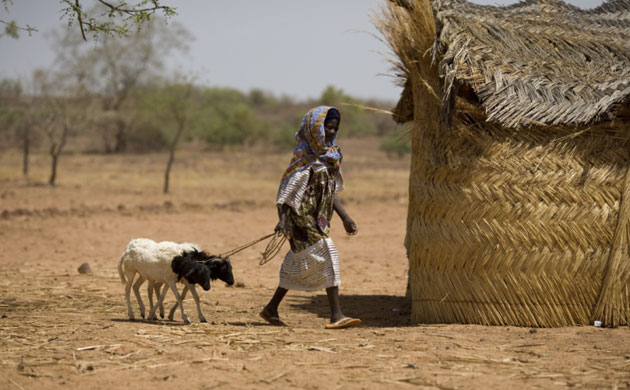
At the livestock project in Gourcy, north-east Burkina Faso, run by Reseau Marp, farmers are given livestock, which they breed and then hand one animal back to the project. The animals provide organic fertiliser and are also used as a savings account. For example, they can be sold if medicines are needed.

Alex James, farmer and member of the pop band Blur, spent a week in Burkina Faso to learn about the problems faced by farmers in Africa and how Christian Aid is helping local communities to come up with solutions.
Photograph: Abbie Trayler-Smith/Christian Aid
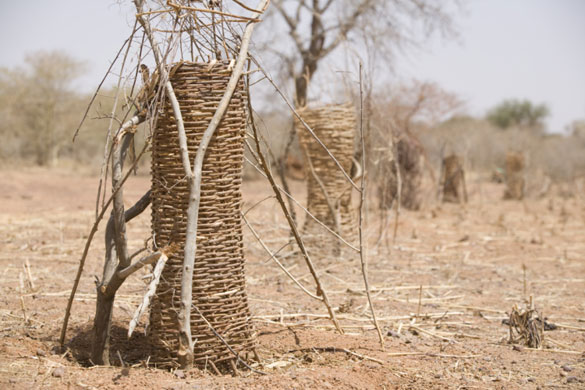
Burkina Faso: International Day for Disaster Risk Reduction
March 2009. Recently planted trees on a farm in north-eastern Burkina Faso. This part of the country gets rain for only three months of the year and climate change is making the weather even more extreme. Traditionally, trees are said to 'call' the rain and some people believe that the climate is changing because so many trees have died or been cut down. Photograph: Kevin Leighton /Christian Aid
Burkina Faso: International Day for Disaster Risk Reduction
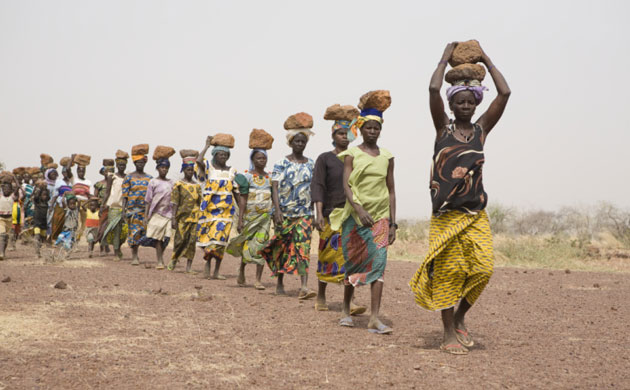
Women carrying rocks in Keleguem village, north-eastern Burkina Faso. They will build 'rock belts', low rock walls which help to protect the soil and its plant nutrients from erosion by rain and wind. Photograph: Kevin Leighton /Christian Aid
Burkina Faso: International Day for Disaster Risk Reduction
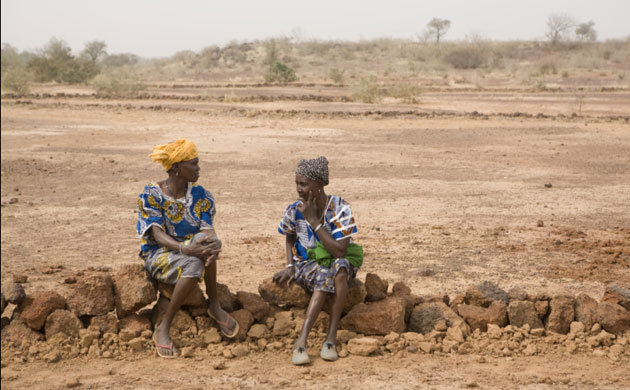
Women sit on a 'rock belt' at Keleguem village. The rock belt also encourages rain water to penetrate the soil rather than running off it. All of this helps crops to grow and yield more food. Photograph: Abbie Trayler-Smith  /Christian Aid
Burkina Faso: International Day for Disaster Risk Reduction
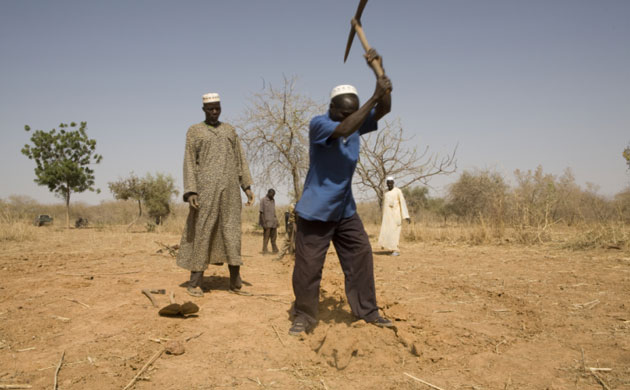
Building demi-lunes on a farm in north-east Burkina Faso. Demi-lunes are semi-circular depressions in the soil that help to keep precious water and soil around crops and so help them to grow and survive even in this harsh environment. Photograph: Kevin Leighton /Christian Aid
Burkina Faso: International Day for Disaster Risk Reduction
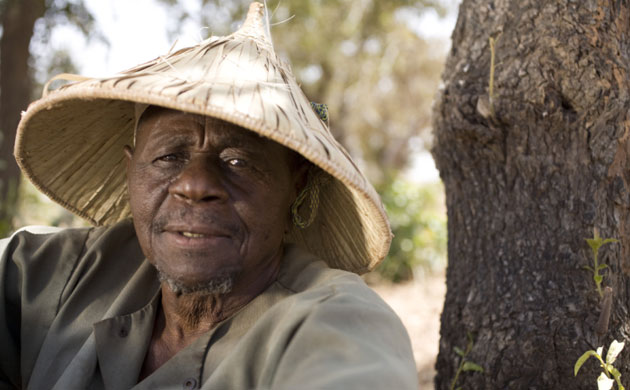
Ali Ouedraogo, 79, sits under a tree on his land, near the north-eastern town of Gourcy. Climate change is making the dry conditions more extreme. He says the trees started dying about 25 years ago, but that none have died since he built rock belts on his land. 'Since I surrounded my land with rock belts I can keep a lot of water in my farm. Consequently, no tree died since that time,' he says. Photograph: Kevin Leighton /Christian Aid
Burkina Faso: International Day for Disaster Risk Reduction
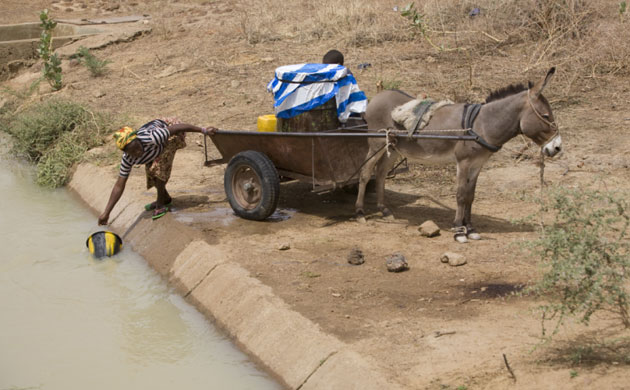
The Dam in Zoungou was built in the 1990s to catch and store rainwater. The dam cost about £2.1m and was funded by several donors including Christian Aid. Many local landowners gave their labour to build the dam, which has 3,000 direct beneficiaries (local landowners who use its water to grow vegetables to eat and to sell at market) and numerous indirect beneficiaries. The dam is surrounded by 100 hectares of lush green gardens. Now, farmers can grow two crops each year, one watered by the rain and one watered by the dam. Photograph: Kevin Leighton /Christian Aid
Burkina Faso: International Day for Disaster Risk Reduction
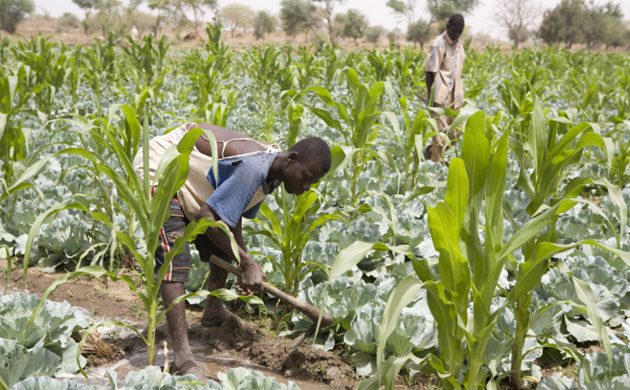
Working in the fields around the dam at Zoungou. The dam has allowed people in the area to grow crops outside of the short rainy season, which has greatly improved their lives. It means they have produce to sell, providing money for medical care, school fees and bicycles. Photograph: Kevin Leighton /Christian Aid
Sign up to read this article
Read news from 100’s of titles, curated specifically for you.
Already a member? Sign in here
Related Stories
Top stories on inkl right now
One subscription that gives you access to news from hundreds of sites
Already a member? Sign in here
Our Picks
Fourteen days free
Download the app
One app. One membership.
100+ trusted global sources.