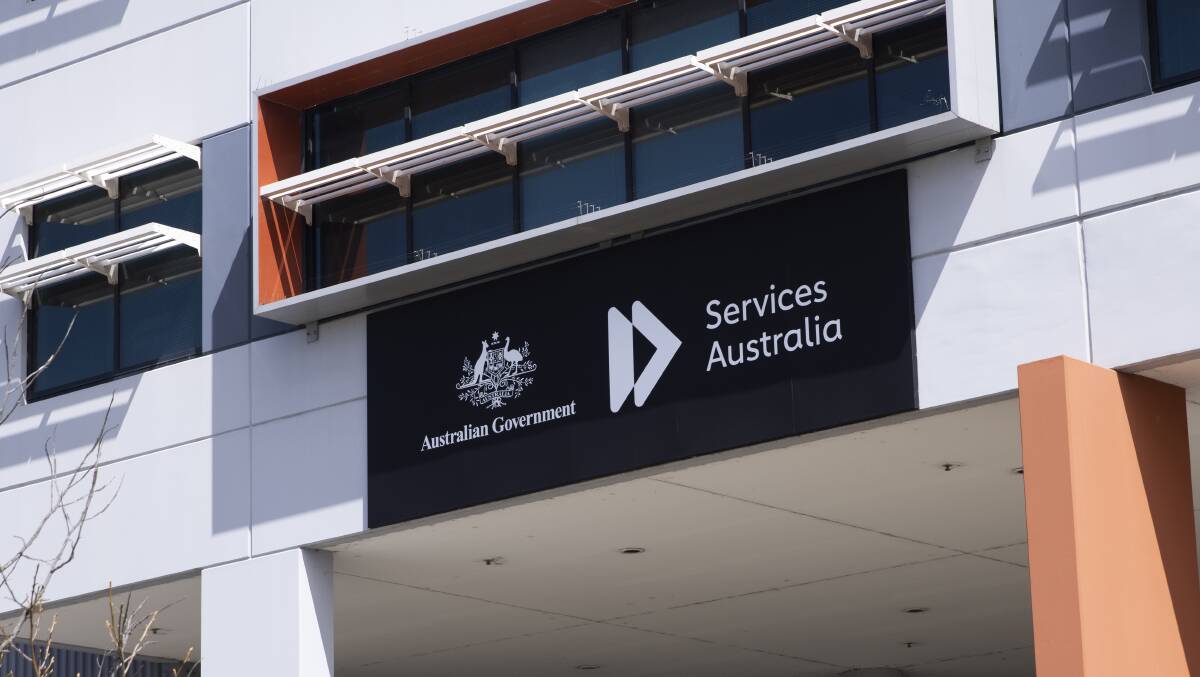
A contractor working as a case coordinator on the national redress scheme for victims of institutional child sexual abuse was fired after accessing restricted data about applicants without authorisation.
Services Australia sacked the mother of two, who is not being named for legal reasons, after she looked at protected information about two people between August 2018 and December 2019.
There were 46 instances of unlawful access, with 35 of those related to records about the woman's brother and the rest pertaining to another person who was not a relative.
The woman, aged in her 50s, was subsequently charged with the criminal offence of accessing restricted data without authorisation.
She pleaded guilty and appeared in the ACT Magistrates Court on Thursday afternoon, when she was convicted and fined $1000.
Her lawyer, Michael Kukulies-Smith, told the court his client was remorseful and accepted her actions were inappropriate.
He said the offending involved a breach of the trust placed in the woman, and a contravention of the terms of her employment.
But Mr Kukulies-Smith said the number of breaches was probably "an exaggeration" because each click within a person's digital records was considered an occasion of access, meaning the woman had not opened up the restricted records 46 different times.
MORE COURT AND CRIME NEWS:
- Anti-gang detectives bust alleged drug trafficker in Braddon
- Harsher penalty imposed on protester to avoid 'idle threats'
- Real estate agent charged over alleged $4m of meth in mail
- 'What really was going on?' Cop indecency claim 'doesn't fit'
He added that the woman was already aware of her brother's situation prior to accessing data about him, and that she "thought it would help her brother to update him on the matters he had raised".
While the woman did not disseminate any of what she looked at, Mr Kukulies-Smith accepted her having looked at the files pertaining to a non-relative was "a more serious breach of privacy".
He argued, however, that the woman's crime was not as serious as a hypothetical one in which a hacker had gained access to the files.
In this case, he said, the woman was authorised to access this sort of material, just not in relation to these particular people.
Mr Kukulies-Smith added that his client did not have a criminal record and her behaviour was "unlikely to repeat itself".
She had lost her employment, the lawyer said, "at least in part" due to this offending.
He asked magistrate James Lawton to consider a non-conviction order, saying his client was concerned about the potential impact of her crime on future job opportunities.
But Mr Lawton did not think this would be appropriate because of the number of accesses and the fact the woman had looked at a non-relative's personal information without any invitation.
He imposed a conviction and gave the woman three months to pay the $1000 fine.