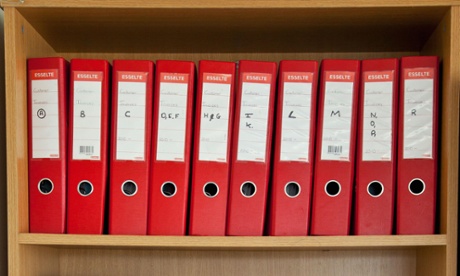
Small businesses blame compliance with regulations as one of their biggest inhibitors to growth. In response the government has launched a review into burdensome red tape in five industry sectors, in an effort to save businesses £10 billion by 2020.
But will this be enough to drive business growth? We asked small business leaders which government policy they would like to ditch and why:
Anna Sarjantson, co-founder of Availexe, a company that supplies flexible work talent, says that reducing the red tape around flexible working would make small businesses more productive.
“Currently only 6.2% of employers mention flexible working in job adverts, yet there are 2.3 million economically inactive people in the UK who want to work. It is essential that some of the red tape is removed so small businesses can tap into the amount of talent available. It should be about output rather than numbers of hours worked,” says Sarjantson.
“Legislation has recently been introduced which gives employees the legal right to request flexible working. This in isolation is not a good thing for employers as they need the right support to implement it. Without support and education, it could result in small business owners declining flexible work requests when there is clearly a need for flexible workers.”
Another concern is over the burden placed on businesses to carry out roles the government used to undertake.
“The government has delegated the responsibility of managing things like payment of benefits, collection of pensions, deduction of child support on to employers. But it’s not just administrative duties, they have to explain the processes too. If a boss stops benefit payments for whatever reason, it’s not the government that has to explain it, it’s the employer,” says Carl Reader, a director at Dennis and Turnbull chartered accountants.
Small businesses are often disproportionately affected by regulations and the way they are enforced. We all know that calculating tax and filling in tax returns can be confusing but, according to Reader, businesses often hinge their very creation on what they perceive to be tax shrewdness.
“Because of the wide range of taxes sometimes businesses get fixated on saving tax at all cost. They might set up their business in a particular way to save tax but could jeopardise the commercial side of their business,” he explains.
“For example, businesses might structure themselves as a partnership to save tax but commercially it might not make sense. A lot of businesses set themselves up as limited companies purely so they can pay for themselves through a combination of salary and dividends, which might not suit if they are a small business with poor administrative skills,” says Reader.
Alice Waters, co-creator of The Turpentine, a company that promotes young creative talent to bring handmade goods to the high street, singles out VAT regulations as a problem for smaller companies.
“VAT incentivises businesses to deal with other VAT registered businesses, as VAT on purchases can be reclaimed, meaning smaller traders under the threshold could be disadvantaged,” says Waters. “We passed the VAT threshold in the past year, however, as our business is all about supporting emerging artists and young brands, almost none of our suppliers are VAT registered. This means we can’t reclaim VAT on purchases – leaving us with a heavy tax burden, which has made us consider sourcing from larger companies.”
But regulatory burdens don’t simply equate to measurable costs. They encompass other issues such as anxiety generated by the threat of litigation, uncertainty, the pace of change and sense of injustice.
Mike Morgan, director of Welsh Rarebits, a website that lists places to stay in Wales, cites health and safety regulations as challenges for the hospitality industry.
“The most valuable asset to the hospitality industry is the people who work in it. The reliance on people-driven service provision can have positive and negative implications. The growing tide of no-win, no-fee claims for personal injury compensation has a very real effect. We have to ensure that our staff are adequately covered for any accidents they may have, which can result in a significant cost to the business and indeed the industry,” says Morgan.
“The government needs to put the brakes on an increasingly litigious society, as false claimants result in insurance companies raising the premiums, and honest business people having to suffer the consequences.”
For Richard Selby, director of Welsh construction and project management company Pro Steel Engineering, the bureaucracy between his devolved government and Whitehall is holding his firm back.
“A breakdown in communication still exists between the Welsh and UK governments, and until this is fixed we won’t be able to get the Welsh construction sector to where it should be. There is a lack of joined-up thinking about who is paying for what. We need an infrastructure plan that is adhered to by both governments,” he says.
The lack of a joint approach means that promised projects often fail to launch, hindering the company’s growth, explains Selby. “My business currently contracts some of our staff and although we have the potential to employ more permanent staff, we don’t have the economic security to do so. None of the large construction projects that have been promised have moved on from the planning stage. With a clear programme of work guaranteed, I would be able to employ more staff and contribute more to the economy.”
Business Secretary Sajid Javid says the government’s review will look not only at the rules but the way they are enforced.
“I am determined to take the brakes off British businesses and set them free from heavyhanded regulators,” Javid explains. Let’s hope, for the sake of small businesses, the paperwork doesn’t get caught up in the system.”
This advertisement feature is paid for and produced to a brief agreed with Simply Business, the UK’s biggest businessand landlord insurance provider, and sponsor of the supporting business growth hub.