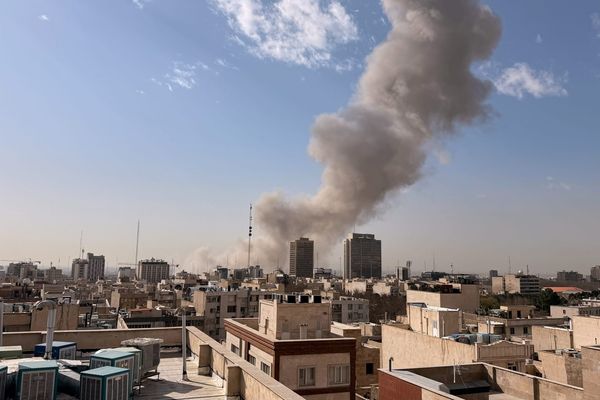
The morning after the demolition of the Red Road flats in Glasgow, children trotted past the rubble to attend nursery, while pensioners waited at the doors of Alive and Kicking, the day centre for elderly people.
It was in this day centre in 2009 that I interviewed John McNally, 89 – a former shop steward at the Provan Gas Works and more than 20 years widowed – who had lived in the same flat in Red Road since 1969. It was 27 floors up and had views of the Isle of Arran in the west. He remembered seeing men at work to build the high-rise blocks in former cabbage fields. “I watched them getting built every day as I was passing. Steel, steel, steel.”

Here too, I interviewed Jean McGeogh, who put her hand in a ballot box to find out which flat she was going to get in 1966. Like others, whose former houses were inspected by the council before a flat was allocated, she moved there from a tenement flat and worked as a cleaner and a barmaid – Red Road rent was high. The flats were “immaculate” and a welcome solution to the city’s overcrowded and squalid housing. Designed by architect Sam Bunton and built between 1964 and 1969, the two 28-storey “slab” blocks and six 31-storey “point” blocks were once the tallest residential structures in Europe.
For the children of Red Road in the 1960s and 70s the concrete walls of the housing scheme were climbing frames, the surrounding fields football pitches. Games of chap door run away, giant headers (a football thrown from one of the windows of the towers and headed at the bottom), den making and squash matches against the gable ends were popular.
Kids messed about in the lifts and rode bikes to the nearby hills of the Campsie Fells. Inspired by the Ken Loach film Kes, one of my interviewees, Matt Barr, kept a kestrel on a homemade perch on his veranda. For the adults, there was the underground pub – the Brig Bar – and the adjacent bingo hall, the electric heating, floor-cleaning rotas, grocery vans and community spirit.
But as early as the 70s, the flats’ reputation went downhill. Concerns about asbestos, antisocial neighbours, vandalism and too-small lifts that frequently broke down led many families to seek accommodation elsewhere. A fire in 1977 in 10 Red Road, in which a young boy died, was a tragic catalyst for change. Many residents refused to return to their homes.
From the 80s, two of the blocks housed students. Louise Christie moved into Red Road in 1987 and stayed there for five years. She remembered students arriving from the Western Isles, India and Indonesia. A student Labour party activist, she gave talks at the residents’ meetings, advising new students on Red Road life. “You didn’t use the ice-cream van, you didn’t buy drugs from anyone in the area, you didn’t borrow money in the area, you stayed out of the pubs, and you stayed out of the bookies,” she said.

Also in the 80s, despite 24-hour concierges and secure electronic door entry systems, the flats were dogged by crime and vandalism. Heroin blew in and took the aspirations and lives of many of the scheme’s young people. Territorialism and gang fighting was commonplace, indeed violence in all its forms was mentioned by nearly everyone I interviewed throughout every decade. And suicides, too.
In 1999, the first asylum seekers, from Kosovo, arrived and a new chapter in Red Road’s history began. Locals, horrified at the destitution of the arrivals, donated clothes, toys and furniture. In 2009, I interviewed a Zimbabwean teenager who had stayed for two weeks while her application was processed.
I also met a 17-year-old Iranian who had lived at Red Road much longer. Unable to study medicine because she did not have leave to remain, she raged against the asylum system, seeing its effects on the physical and mental health of her parents. I interviewed boys who played the same games as their Scottish counterparts in the 60s and 70s. “Blacks v Scottish” became a popular whole-scheme football match.
In 2007, noted tightrope walker Didier Pasquette attempted to walk a high-wire between two of the point blocks but had to abandon the effort because of high winds. Residents told me their bath water would slosh about in windy weather.
As the “mainstream” tenants were being rehoused from 2005 onwards, the last Red Road block remained home to asylum seekers. Even in 2014, when it was announced that the flats would be demolished live during the Commonwealth Games opening ceremony, asylum seekers were living there; just one of the reasons why the idea was dropped.
Before he was due to be uprooted from his home of 40 years, McNally died. He would have hated the demolition. For others, their feelings hold more contradictions. The woman who was afraid for her young children when they encountered drunken men in the lifts reminisced about days spent on the grass with other families, playing music and having picnics while the kids played. The man in his 40s who left Red Road to stay out of trouble also had happy memories of childhood and lifelong friends. The 74-year-old who could not wait to move to a “front and back door” said she missed the neighbourliness of life in her high rise. The Red Road flats allowed for all these contradictions.
Ade Kearns, a professor of urban studies at Glasgow University, told BBC Radio Scotland: “High rises work in some contexts, but they don’t work in situations where you build them in rather large numbers, often in quite isolated locations, without many amenities around them. You put the most expensive structures to look after and then you put people in them with the least amount of money. It’s a circle you can’t square.”
The buildings came down in a slightly anticlimactic way on Sunday, with two of the point blocks not demolishing quite as well as Safedem – the company handling the explosions – would have liked. It was a final twist to a complex history: they built them up, they blew them up, but they couldn’t quite knock them down.
Alison Irvine is the author of This Road is Red, a novel based on the true stories of residents of Glasgow’s Red Road flats