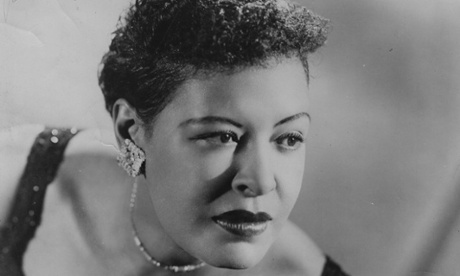
“Southern trees bear strange fruit / Blood on the leaves and blood at the root,” sings Billie Holiday on the harrowing protest song Strange Fruit. A song that began, in 1937, as a poem by New York schoolteacher Abel Meeropol, it portrays a lynching and the horrors of racism, and became an anthem of the early civil rights movement. Although previously banned and censored, it has since been sampled by countless musicians, including Nina Simone, Annie Lennox, Tori Amos and Kanye West. This year marks the centenary of Holiday’s birth, yet a sense of racial injustice still comes through in the immediacy and urgency of her voice.
“Scent of magnolias, sweet and fresh / Then the sudden smell of burning flesh,” Holiday sings in a song that imagines an idyllic south. But the “pastoral scene of the gallant south” is shattered by murder, the beauty of those sweet, fresh flowers giving way to the ugliness of violence. As David Margolick writes in his study of Strange Fruit, fans credit it “with helping awaken them to the realities of racial prejudice and the redemptive, ameliorative power of art”, while Q Magazine described it as one of the “10 songs that actually changed the world”. It prompts thoughts about those periods when songs have galvanised people into political action, when music has empowered and mobilised the masses.
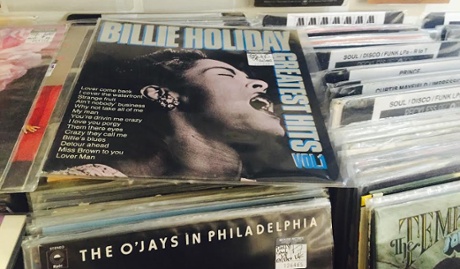
After finding a stash of records left in a room I used to rent, I am on a mission to build up a vinyl record collection of my own, setting myself a budget of £7 or less per record, and I’m intent on adding Billie Holiday to my pile. In my quest for vinyl, I venture down London’s Golden Mile of Vinyl, as Berwick Street came to be known in the 1980s. Rummaging through the sale racks at Sister Ray, I come across Randy Crawford, Shalimar, the Bangles and Barbara Streisand – but there is no sign of Billie. I try the nearby Sounds of the Universe, but they have none in stock either. I have almost given up hope by the time I arrive at Reckless Records.
I am initially unhopeful of finding a bargain, as the first price sticker I see in the shop is on a Led Zeppelin record, for an eye-watering £1,000. I am flicking through the jazz section when I am suddenly greeted by Billie Holiday’s open mouth and closed eyes – that iconic picture of her that had so captivated me when I first saw it in that previous tenant’s collection. I am delighted to find Holiday’s Greatest Hits for £6. For another £3, I also pick up Nina Simone’s My Baby Just Cares for Me. I visit the nearby Phonica records, too, where I shelter from the summer sun and enjoy its listening booth. Next week, I will continue my vinyl treasure hunt in my hometown of Manchester. It’s been a long time since I’ve bought music in its physical rather than digital form. Strolling down the street with my purchases, holding on to a record full of pain and joy that may have, in some way, changed the world, £6 seems well worth it.
I have also been listening to Holiday’s version of Summertime. Like Strange Fruit, George Gershwin’s song has been recorded thousands of times – by everyone from George Benson to Janis Joplin to Amit Chaudhuri – and yet it still sounds unique in each artist’s voice.
I listen to the song on the summer solstice, with the knowledge that darker days are coming, that the days will soon start to get shorter and the sun scarcer. The song has a sense of capaciousness, of air and light and flight. Full of vulnerability and strength, Holiday reassures the listener that “nothin’ can harm you”, capturing the hope that better days are to come. The tragedy of her life imbues these lyrics with pathos.
Heaviness fills her words in other songs, each word weighted like stones, world-weariness echoing through a voice filled with toughness and tenderness. “My heart has an ache / It’s as heavy as stone,” she sings in I Cover the Waterfront. Images of aloneness and a heavy heart recur in Trav’lin’ All Alone: “I’m so weary and all alone / Feel tired like heavy stone / Trav’lin’, trav’lin’ all alone”. She wonders: “Who will see and who will care / ’Bout this load that I must bear.” There’s a pleading for more time: “Give me just another day / There’s one thing I want to say.”
But Summertime has a sense of hope, of burdens alleviated, of weight being lifted off shoulders. There’s a surge of optimism, of promise and potential: “One of these mornings, you’re goin’ to rise up singin’ / Then you spread your wings and you’ll take the sky.”