DETROIT _ The U.S. automotive industry has been through a rough couple years filled with massive recalls, congressional hearings, record fines, and allegations, at times, of a careless, shoddy approach to safety.
And yet, for the most part, consumers seem unfazed as they continue to buy cars and trucks at record levels and at record prices.
"The fact of the matter is, there is a plethora of recalls, and after a certain point in time people become numb to them," said John Humphrey, senior vice president of J.D. Power's global automotive practice. "We have more recalls now than we have ever had and yet the industry is selling more cars than ever."
Legendary consumer safety advocate Ralph Nader said the industry has improved, but continues to get away with cutting corners that harm consumers and the environment.
"Today, the cars are much safer, less polluting, modestly more fuel efficient but there is still a long way to go," Nader said in late July, as he was inducted into the Automotive Hall of Fame. "We've ceased to see just carelessness, ignorance and indifference. These are increasingly criminal acts, now prosecuted because there is no criminal penalty in the motor vehicle safety law."
Erik Gordon, a business professor at the University of Michigan, argues that the long list of recent investigations and recalls has damaged the image of the U.S. auto industry just as automakers need to recruit young, talented engineers to develop autonomous vehicles.
"Automakers have progressed from occasional, seemingly innocent mistakes and low-profile recalls to endless, high-profile recalls that resulted from decisions to save money, to cover-ups top-level executives blamed on lower-level engineers, to cover-ups suspected of going all they way to the top and claims of paying dealers to lie about sales," Gordon said.
Meanwhile, Americans are buying more new cars and trucks than ever before at historically high prices. Last year, automakers sold more than 17.47 million new cars and trucks _ the most in U.S. history _ and this year, sales are on track to match that record.
CRISIS MANAGEMENT
During the past six years, as U.S. sales steadily rebounded from the depths of the Great Recession, the CEOs of General Motors, Toyota and Volkswagen _ the world's three largest automakers _ all testified before congressional committees to defend decisions tied to safety lapses, fatal accidents and cheating on emissions testing.
Along the way, CEOs lost jobs, automakers overhauled corporate structures and others took steps to rethink safety processes and speed communication with regulators.
TAKATA
The automotive industry is currently in the midst of the largest recall in U.S. history and the general public seems largely unaware or concerned.
The Takata air bag recall affects 32 million vehicles made by 33 automotive brands. The media focuses on the recall as federal regulators issue dire warnings and automakers send millions of recall notices directly to owners.
And yet, the recall has the lowest general awareness of current events and issues at just 52 percent, according to a recent study by Kelley Blue Book that surveyed 1,000 respondents in June. That's a lower awareness than the Zika virus, at 84 percent, or Hillary Clinton's email issue at 87 percent.
The low awareness is despite the potential danger of spraying shrapnel caused by defective air bag inflators when the air bag goes off. At least 10 deaths and more than 100 injuries have been tied to the defect.
"Consumer opinions on the Takata air bag recall seem to be another unfortunate case of people thinking, 'It won't happen to me.' But this is easily the largest, most expensive automotive safety issue in U.S. history," said Karl Brauer, senior analyst for Kelley Blue Book.
To be sure, Takata, as a company, might not survive its crisis. The company is bleeding money and many automakers are moving work away from Takata to different air bag suppliers. Takata has been working on a restructuring plan and is said to be open to selling to a private equity firm or another company, according to Bloomberg News.
Still, only a quarter of respondents in the Kelley Blue Book survey said they think the Takata air bag recall is very or extremely important.
TOYOTA
Toyota was initially slow to react in 2009 when an off-duty state trooper and three members of his family died in fatal car crash when the gas pedal got stuck in the floor mat. The crash was recorded in a horrifying 911 call.
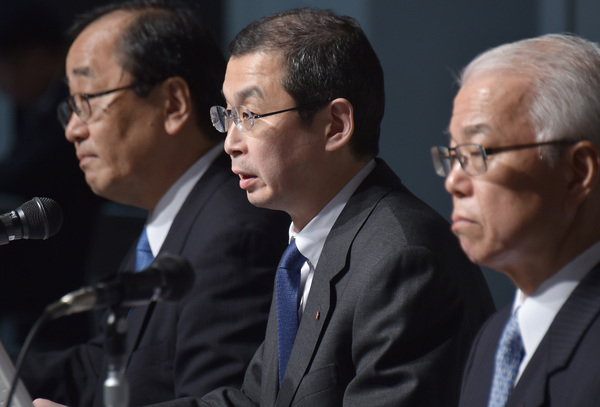
Eventually, the Japanese automaker recalled 8.1 million vehicles and CEO Akio Toyoda testified before Congress.
Several years later, Toyota was forced to agree to pay $1.2 billion in a settlement with the U.S. Department of Justice, largely because it initially concealed information about defects from consumers and government officials.
The crisis had a massive impact on the company. Toyota realized that the structure of its company, characterized by top-down management directed from Tokyo, hindered its ability to make decisions quickly and to manage the public relations crisis. Toyota overhauled its global structure, appointed clear leaders in each of its main global regions and provided them with greater decision-making capability.
Toyota's U.S. market share plummeted to a low of 12.9 percent in 2011 from 17 percent in 2009 _ a massive drop considering the usual slow pace of market share gains and losses in the industry. But the market share drop was largely because of a 2011 tsunami in Japan that stopped production at a number of its plants and decimated the automaker's inventory.
In 2012, as Toyota launched new cars and trucks, its market share rebounded to 14.4 percent and has remained relatively steady since.
GENERAL MOTORS
GM's decision in 2014 to recall 2.6 million older-model cars with faulty ignition switches touched off a firestorm of criticism from safety advocates, Congress and the media.
Documents showed at least some engineers knew about problems with the design of an ignition switch for years before the automaker finally recalled the vehicles and 124 deaths were ultimately linked to the faulty design.
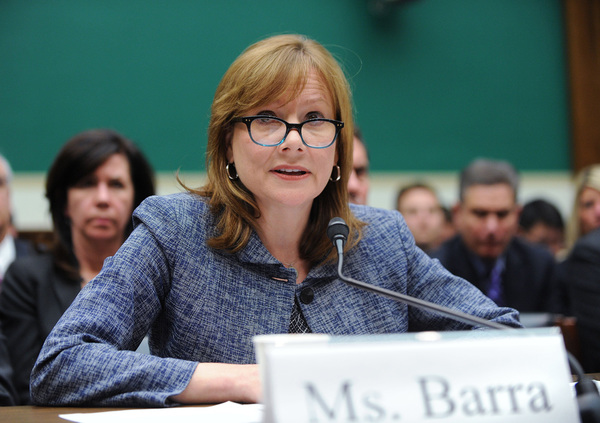
But GM avoided many of the mistakes made two years earlier by Toyota. GM CEO Mary Barra held town hall meetings with employees urging them to take the safety lapses seriously and to change the way the company operates.
Barra also apologized before Congress and apologized in a four-minute video even though some legal experts said it was risky, from a liability standpoint. GM overhauled how safety is monitored within the company, dramatically ramped up recalls of vehicles for other issues and set up a victims compensation fund overseen by Kenneth Feinberg, a respected attorney.
Despite the controversy, GM's sales increased 5.3 percent in 2014 _ just shy of the overall industry's 5.9 percent _ and the automaker's market share remained virtually unchanged.
By the end of 2014, Fortune Magazine named Barra "Crisis manager of the year," and said "Barra made herself the focal point of a company in crisis _ and in doing so, she may have saved an American icon from going further down a self-destructive spiral."
VOLKSWAGEN
Volkswagen, unlike other automakers that managed to survive scandals, is more likely to suffer long damage to its reputation and sales.
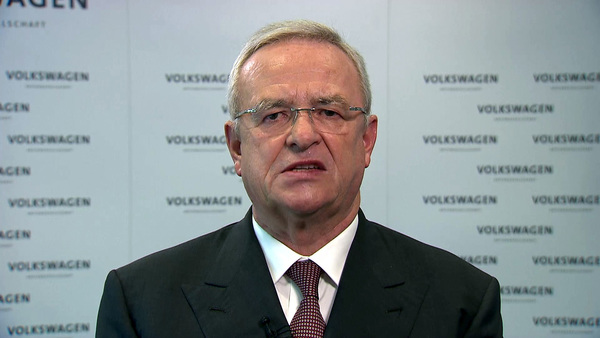
On July 20, Volkswagen Group raised the estimated tab on its diesel emissions scandal to a total approaching $20 billion. The German automaker said "legal risks predominately arising in North America" would add $2.4 billion to a bill that already totaled an estimated $17.8 billion.
Volkswagen in June agreed to pay up to $10 billion for vehicle buybacks and loss compensation to consumers, $2.7 billion in environmental mitigation, $2 billion on clean-emissions infrastructure and $603 million to most states in a sweeping settlement that must still be approved by a federal judge.
VW has admitted to inserting software in VW and Audi cars with 2-liter engines going back to 2009 that allows them to beat emissions tests.
Damage to Volkswagen's image and sales have been more serious than the damage that Toyota and GM faced because its engineers intentionally designed software to cheat and because fuel efficient diesel engines are at the core of the German automaker's brand image, said J.D. Power's Humphrey.
"They have a long way to regain consumer trust," he said.
Volkswagen's U.S. sales have dropped 8.4 percent over the first six months of this year while overall industry sales have increased 1.5 percent.
In December, 58 percent of consumers said they have "complete" or "general" mistrust of VW's integrity, according to a survey of 1,000 car shoppers conducted by Kelley Blue Book's KBB.com and 63 percent said "intentional deceit" was the most troubling aspect of the issue.
FIAT CHRYSLER AUTOMOBILES
FCA is the latest automaker in the cross hairs of a potentially damaging investigation. FCA confirmed July 18 that it's under investigation by the SEC for the way it reports sales figures.
But if the U.S. government brings a case, Brauer and Humphrey expect FCA has a good shot at managing the crisis without lasting damage.
Factors in FCA's favor include the reality that many automakers have fudged sales numbers over the years, Brauer said.
"It will come down to evidence and the extent to which Chrysler officially broke laws in trying to tabulate sales that were not real sales," Brauer said. "And it's going to be fascinating. Because we all know this is rampant throughout the industry."
Said Humphrey: "If it's all about falsifying sales to boost up numbers, I don't think the public cares. It's an industry thing. Consumers will conclude that 'it doesn't have to do with the quality of my car.'"