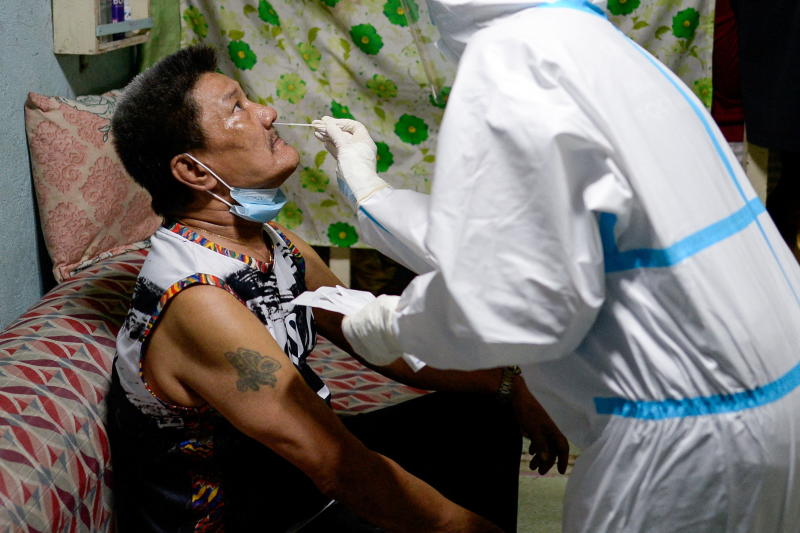
The percentage of positive Covid-19 tests reached a record high in the Philippines, fuelling fears of a return to stricter curbs on movement and triggering a selloff of stocks as hopes fade for a swift economic recovery.
Positivity rates are rising across Asia, a warning sign as countries brace for the highly infectious Omicron variant to take hold after Delta ripped through the region last year.
The positivity rate surged to 46% in the Philippines on Monday, more than four times the level at the end of 2021.
Cases jumped with the spread of Omicron during the Christmas and New Year’s Day holidays.
With infections continuing to spike and more than half of the beds in hospitals’ intensive care units now occupied, anticipation is building that the government may soon impose fresh restrictions.
One-fifth of Philippine universal banks’ branches in the capital region are closed, as the fast-spreading Omicron variant caused staff shortages, central bank Governor Benjamin Diokno said, adding that the ratio is double for smaller lenders.
“Most transactions you can do digitally, so that’s not a problem,” Diokno said in an interview on Tuesday. “There’s no dysfunction in the delivery of services,” with clients able to transact in other nearby branches, he said.
A surge in Covid-19 cases, which reached a daily record of 33,169 on Monday, also disrupted airlines and hospitals. Nearly three dozen Globe Telecom Inc stores are temporarily closed, it said in a statement Tuesday, adding it was “not spared from the current challenges of rising community infections”.
Health officials are considering cutting required quarantine and isolation, Health Undersecretary Maria Rosario Vergeire said in a briefing. While the surge in infections in the capital has yet to translate to the same spike in critical cases, it doesn’t mean hospitals aren’t burdened, she said.