Busui Ajaw, a famous Akha artist, is aware that Akha culture is disappearing. She had been thinking about holding an exhibition to showcase and preserve her own culture for years, which led to her latest exhibition "The Preservation Of Fire" on display at Bangkok Kunsthalle.
"I noticed that Akha culture is disappearing. These days, the younger generation does not grow up in traditional Akha homes; they also do not often see our traditional embroidery patterns," explained Busui.
"In the past, I created art to express what I saw -- both in my life and the lives of those around me. However, 'The Preservation Of Fire' is not about venting my emotions. It is about turning Akha culture into art. As an Akha, this makes the work more meaningful because it aims to preserve our culture."
Busui is part of the Akha hilltribe which resides across northern Thailand, Burma and Laos. Since the mid-20th century, Christian missionaries have uprooted various facets of traditional Akha culture including their language, religion, building techniques and other cultural traditions.
Busui explained that she worked with curators Gemmica Sinthawalai, Mark Chearavanont and Stefano Rabolli Pansera to name the exhibition. She chose the name "The Preservation Of Fire" because it serves as a metaphor. As culture is fading, she has to preserve it by keeping the fire alive.
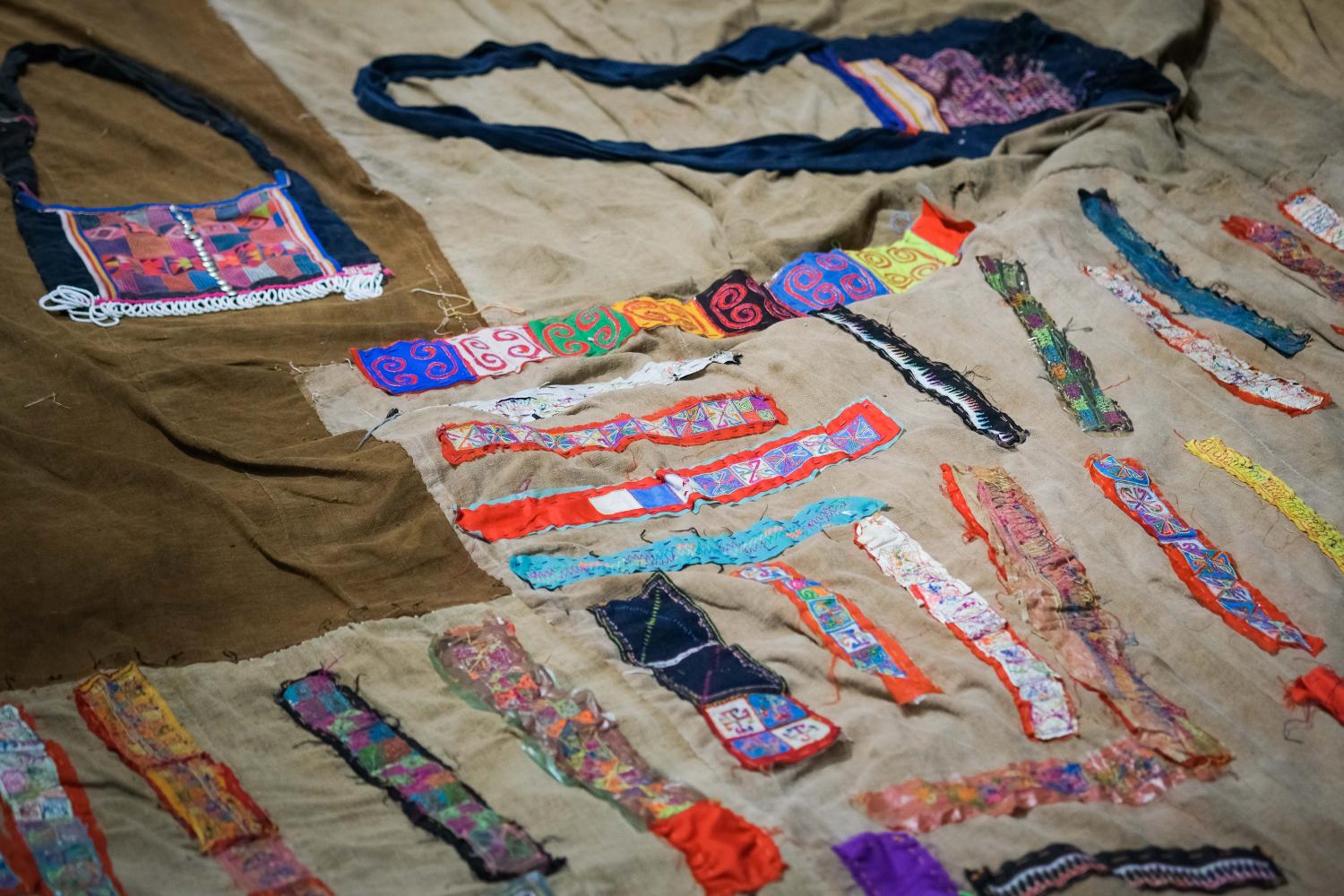
Occupying two floors, "The Preservation Of Fire" presents two Akha traditions on the brink of extinction.
A room on the ground floor displays traditional textiles of the Akha people, while the 2nd floor is a traditional Akha house which was disassembled and transported from Chiang Rai and rebuilt in Bangkok Kunsthalle by a team of Akha workers.
For almost a decade, Busui had aimed to showcase Akha hand-woven textiles and she spent three to four years collecting them. Some pieces on display are 100 to 200 years old. Akha textiles are considered heirlooms -- indigo-dyed fabrics, embroidered with intricate designs unique to each Akha tribe. These precious fabrics were crafted with love by mothers or wives.
Each piece takes a very long time to make because they have to grow and dye the cotton with indigo themselves. Moreover, Akha women have many daily tasks, including farming rice and corn. They only have time for embroidery when they finish their chores.
As a result, an Akha person owns only four to five embroidered shirts in their lifetime. The embroidered patterns are usually nature-inspired motifs such as wildflowers, butterflies' tongues or snake patterns.
In the past, these embroideries were not made for sale, but today they are available in the market.
It took time for Busui to find the right venue for the collection because the concept of these embroideries is dying out. She felt that a gallery space was the right place for the exhibition because it has a long rectangular shape which resembles that of a coffin.
Another reason why embroidery is related to coffins is that traditionally, Akha people put all of the clothes and belongings of the deceased in a coffin.
"Some fabrics that I brought used to be buried with the deceased, but they were dug up and sold," explained Busui.
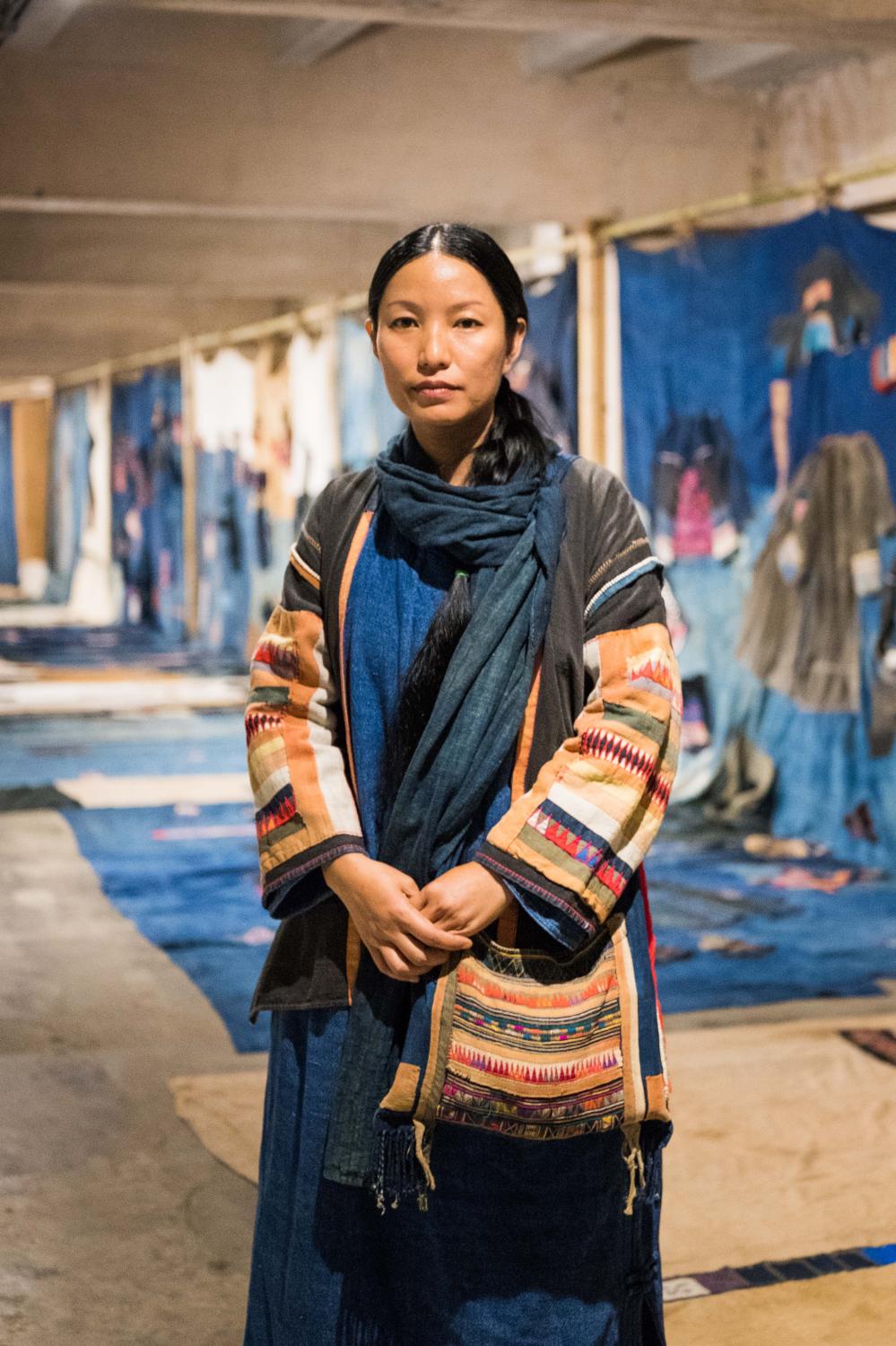
"Akha people do not believe in reincarnation or hell. We believe that there is a spirit world which looks exactly the same as this world. Akha people put clothes, other belongings, unhusked rice and a horse in the deceased's coffin, so they will have these items in that spiritual world."
Busui revealed that feedback from elderly Akha crew members, who were in their 60s, made her happy. The crew said that they were thrilled to see many patterns that they had never seen before. They even compared Busui to a god because she could find embroidery patterns that are barely seen nowadays.
"Embroidery patterns show whether they are old or new. Patterns, which depict nature, such as butterflies drinking water, reflect the traditional way of life of Akha people who lived in harmony with nature," explained Busui.
"Cross patterns are more modern and reflect the influence of Christianity, which led to the loss of many aspects of traditional culture. Additionally, modern clothes and embroideries are rarely made of cotton; they are mostly made of nylon."
An Akha house, which was dismantled in Chiang Rai, was reassembled and is on display on the gallery's 2nd floor.
Traditional Akha houses were built without modern technology; even measurements were taken using hands and arms, not a tape measure. Nails were also rarely used; instead, they used a traditional technique of tying and binding the wooden joints with bamboo strips.
The house reflects the lifestyle of the Akha people. Stilts are used to protect against flooding and specific bracing techniques help to cope with the windy climate.
Bedrooms are aligned to the movement of the Sun in accordance with spiritual beliefs, while built-in drying racks and a central hearth reflect Akha cuisine.
The house is filled with traces of being lived in and the everyday objects of the Akha people can be seen scattered in the house; a charred ceiling, farming equipment and decorative feathers reveal the day-to-day life of the Akha.
It took Busui many years to find this traditional house because Akha people rarely live in them anymore. The original house was demolished because the son of the owner, who returned from working abroad, wanted to replace it with a modern house like the ones he had seen there.
"The elderly owner of the house was moved to tears when the salvaged parts were reassembled to look like the original house and put on display at the gallery. He said those salvaged parts were thrown away like trash, but Busui was able to make them valuable. He was touched that the audience including international viewers appreciated this reassembled house," said Busui.
Besides the elderly owner who was delighted by the display of the traditional Akha house, the exhibition also helps young Akha people realise the value of their heritage that they often overlook.
"Many young crew members initially did not want to work on this exhibition because it was difficult to reassemble the salvaged parts into a traditional house," said Busui.
"However, I tried to encourage them that the project was not just about making money, it was a meaningful project to Akha people. Once the young crew saw how international visitors were excited about the traditional house, they were inspired. They told me that they would build a traditional house when they returned home."
Busui hopes that "The Preservation Of Fire" will inspire viewers to appreciate their own culture.
"Shelter, food, and clothing are essential to humans," she said. "When these are lost, we can no longer trace our origins.
"Akha people who visit the exhibition will gain a deeper understanding of their own culture. Hopefully, visitors from other countries will be inspired to cherish their own culture and history."
"The Preservation Of Fire" runs at Bangkok Kunsthalle in Pantachit Alley, Pomprap Sattruphai district, until Nov 1. Admission is free. For more information, visit facebook.com/BangkokKunsthalle.