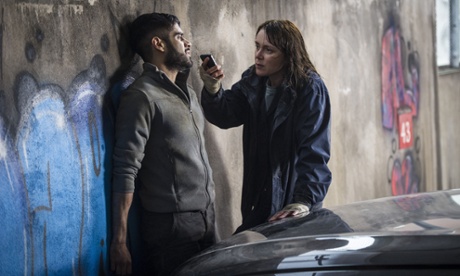
As Paul Abbott’s police drama No Offence roars across our screens, with its trio of bolshie and brilliant leading ladies (Joanna Scanlan, Alexandra Roach and Elaine Cassidy), here’s our guide to six of British TV’s most memorable women in blue.
Detective Inspector Maggie Forbes, The Gentle Touch (1980-1984)
Beating Juliet Bravo’s Inspector Jean Darblay by four months, the no-nonsense but tender-hearted Maggie made a household name of Jill Gascoine. Hard-hitting for its time, The Gentle Touch tackled everything from prostitution to antisemitism. However, its greatest strength came not from the ripped-from-the-headlines plotlines, but the character of Maggie herself. Widowed in the opening episode, when her husband, also a police officer, was killed in the line of duty, Maggie juggled life as single mother with long hours and a demanding job. Today, that’s pretty much standard fare; back then it felt daring and new.
Sergeant June Ackland, The Bill (1984-2010)
Ah, Saint June. Over her time at Sun Hill, The Bill’s long-suffering sergeant faced everything from an attempted murder plot to the death of her father, but it is her complicated on-again, off-again relationship with the hard-drinking DC Jim Carver for which she is best remembered. A serious case of opposites attract, Jim and June’s relationship went from fling to marriage to divorce and throughout it all June stoically powered through. A solid, empathetic team player who gave her all to the job (prior to becoming disillusioned in later seasons), June may not have been the flashiest copper at Sun Hill, but she was the backbone of the force, keeping the whole show ticking over while rarely raising her voice.
Sergeant Harriet ‘Harry’ Makepeace, Dempsey and Makepeace (1985-1986)
We all need a little bit of glamour in our lives and no one provided it better than the UK’s least likely police officer, the glamorous, aristocratic Lady Harriet Makepeace, played with style and verve by Glynis Barber. Essentially The Professionals with a transatlantic spin and opposites-attract charm, Dempsey and Makepeace is classic 1980s television: slick, shiny and utterly over the top. That it works is entirely down to the chemistry between Barber and Michael Brandon, who played Harry’s streetwise partner, caustic New York transplant Lt James Dempsey. The pair later married. There might be better cops on this list (and certainly more realistic ones), but few of them made racing around London while trading quips and bringing down bad guys look so much fun. For that, Lady Harriet, we salute you.
Detective Chief Inspector Jane Tennison, Prime Suspect (1991-2006)
The queen of the female cops, DCI Jane Tennison, played by Helen Mirren in a career-defining performance, was a fiercely intelligent tough talker, determined to prove herself in the male-dominated police force in which she worked. Icy yet inviting, tough but troubled, Tennison became the marker by which subsequent TV cops would be judged. Writer Lynda LaPlante – who turned to TV writing after being unimpressed with the dialogue she was given as an actor in an episode of The Gentle Touch – was determined not to soft-soap either the story or her heroine. When the first series was written in the early 1990s, there were only four female DCIs in the UK, and LaPlante makes it clear just how hard the role was for a woman. Thus, Tennison battles the constant sexism of her colleagues, who ignore and belittle her, while fighting to land cases and placing her professional ambition above personal happiness. Always a heavy drinker, she was depicted in the final series as an alcoholic – a decision that infuriated LaPlante, who had by then stopped writing the show. But even at Tennison’s lowest points, Mirren is mesmerising to watch.
Detective Inspector Lindsay Denton, Line of Duty (2012)
Recent years have seen an explosion in cop dramas, in particular those with female cops at the centre (call it the Sarah Lund effect). Any number of interesting women, from Gillian Anderson’s slinky Stella Gibson to Olivia Colman’s everywoman Ellie Miller, could have made our final cut, but ultimately steely Keeley Hawes’ powerful, ambiguous turn as DI Lindsay Denton just sneaked it. An absolutely average cop, Denton is a jobsworth, getting through each day, cashing her paycheck and checking in on her dying mother, before going home to a lonely life with only her cat to care for. Or is she? One of the great joys of the second season of Line of Duty was the growing sense that there was so much more to the character than first glimpsed. Was she a once-good cop now disillusioned? Or had she never been that good? Was she a criminal mastermind or the victim of circumstance? Writer Jed Mercurio’s script, aided by Hawes’s wonderful performance – equal parts vulnerability and venom – kept us guessing right to the bitter end.
Sergeant Catherine Cawood, Happy Valley (2014)
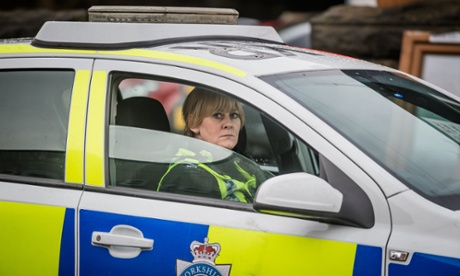
When Happy Valley started, Sally Wainwright already had written one acclaimed cop show, the entertaining Scott and Bailey, and at first this seemed to be similarly straightforward fare. Tough but compassionate leading lady? Check. Sarah Lancashire? Check. Has some family issues? Check. But just as viewers were beginning to think they’d seen it all before, Wainwright pulled the rug out, presenting us with a beautifully paced but very dark tale of suicide, kidnapping, rape and revenge. Best of all, she did so without compromising the integrity of her main character. In contrast to most TV detectives, Catherine isn’t a mercurial genius or an obsessive able to crack crimes seemingly at will. She’s an ordinary grandmother in her late 40s who has weathered some truly terrible experiences, including her daughter’s suicide. She solves the crime at the heart of Happy Valley through ordinary police work, following up on leads, making phone calls, efficiently doing her job. It is that efficiency that ultimately makes her such a good cop – she knows the consequences of pulling every thread and following every lead might be terrible, but she does so anyway. Because that’s her job. She’s not only the most realistic cop on this list, she’s arguably the best.
So what do you think? Should we have included Stella Gibson or Ellie Miller? What about Torchwood’s Eve Myles? Hinterland’s Mared Rhys? What about Ashes to Ashes’ Alex Drake? All thoughts, suggestions and recommendations welcome below …