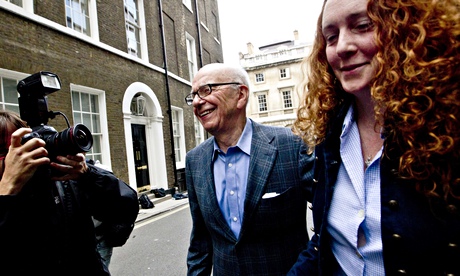
Her dad was an odd-job man, she went to a comprehensive school near Warrington. She got a reporting job on the local paper, toiled, learned, then moved to London, a young secretary on a Sunday paper. After which, bootstraps continually tugged, talent and drive manifest, she became that paper’s editor, the editor of its daily sister, and eventually chief executive of the biggest national print empire in the UK (as well as doing all manner of useful things, such as chairing Women in Journalism).
In normal circumstances, you’d expect journalists – women and men united – to hail Rebekah Brooks as their role model of choice: humble beginnings, an absence of privilege, a demonstration of what talent and hard work can achieve. The standard Ed Miliband memorial lecture. But there is, of course, much more sniping than hailing as Rupert Murdoch thinks of bringing Rebekah back from the sidelines (where she’s languished since she was declared not guilty of anything last year) and pushing her into the digital development game.
Brooks is a ritual hate figure for many now, just like Murdoch himself. And if you’re a Sun reporter, shopped when the empire turned over all its contact files to Scotland Yard, grounded during years of threatening inquiries, you can understand the angst. Injustice is a dish best served simmering. But even so, mix jury verdicts with life histories, and pause.
The admiration over her rise tells us something about ourselves. The condemnation around her fall adds another message. And Murdoch’s move for a second chance? It may be cynical calculation, of course, but give loyalty and personal fellow-feeling their weight as well. Our stage is too full of stereotypes already.