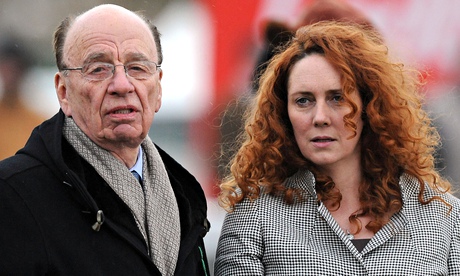
Forget raising two fingers as Rebekah Brooks returns atop News UK. Leave moral outrage to one side for the moment. This is a business decision by the boss who runs the whole business. Rupert Murdoch has rescued his protege from oblivion. She was acquitted of phone hacking and quite a lot else. So here she comes again, leading a shake-up that brings in Tony Gallagher from the Mail as editor of the Sun and sees the current holder of that chair installed at midpoint in the new hierarchy. Good moves, bad moves?
It’s hard, with Premiership deadline day just gone, not to think of Rupert van Gaal buying back a Titian-haired striker he’d given £16m to go away (whose goalmouth misses had cost him £300m besides). More manic dealings in a mad, mad world. But pensive shareholders, perhaps, would do best to settle down and wonder where the madness – or, at least, very frail appointments system – began. For Rebekah’s return isn’t some one-off sensation. It’s just another chapter of wacky Murdoch management history.
Rupert Murdoch loves collecting newspapers, and appointing sons, journalists or antipodeans to run them. He bought the Wall Street Journal for $5bn at the end of 2007 and appointed a former journalist and Aussie confidant, Les Hinton, to lead it at Dow Jones. That meant uprooting Les from Wapping. Enter the son who at that stage always seemed to rise, James Murdoch, in a mystically executive non-exec role, with Mrs Brooks promoted from the Sun to sit at his right hand and play savvy print counsellor.
Well, the world knows what happened next. Disaster for James, recalled to New York pursued by select committee; for Rebekah, forced to resign and await trial; for Hinton, unseated far away by the ghosts of problems past. Who could take over in Wapping? Enter, from Sky Italia, a talented Kiwi retainer, Tom Mockridge. He only stuck it out for 18 months. Enter another Kiwi in his stead, Mike Darcey, chief operating officer of BSkyB, chosen as a paywall wizard who could do for the Sun, Times and Sunday Times what he’d done for satellite TV. Now he’s gone – and lo, Rebekah’s back, more or less where she started. A curious take on career progression. (Come home, David Moyes!)
Worse, for shareholders, the personalities involved fit with constantly shifting philosophies, too. Darcey, now spoken of as a “finance man” rather than a newspaperman, performed exactly as requested. He was told to make Murdoch’s diktat on digital transformation – everything paid for, everything with a price – reality. He launched riffs on the subscription schemes that had worked at Sky. But much too little happened. Murdoch’s cherished Sun, anchor of the London newspaper group’s finances, lost print circulation: down 10.99% this year on last at 1.84m copies a day and down 11.22% on Sundays, in the hole where the News of the World used to be. It lost profitability: down from £62.1m in 2013 to £35.6m 12 months later. And it lost online visibility: down to below 800,000 unique browsers a month when it finally revealed post-paywall statistics a few days ago: the worst result for any and all titles of our national press.
That’s a dismaying situation for a paper that, historically, makes the cash the Times and Sunday Times lose – and now depend on, in a scenario where the moneybags of TV and film are closed to them. Something must be done. Apparently, something called Rebekah.
But now the crystal ball of business clouds over again. Murdoch’s record of success looks much thinner online. He bought MySpace for £580m and saw Facebook obliterate it. He launched his own tablet newspaper – The Daily – and watched it fade and fail. He bought a zippy news startup, Storyful, for £16m and has recently seen its founder depart, saying he’s “getting out while the going is good”.
Murdoch is not Mr Infallible on the net. Just the reverse. He likes sweeping ideas in an arena where, in fact, different things work differently. The FT and Economist can flourish behind a paywall; the Times can staunch losses and put in an enviable performance in print; but redtop tabloids – with or without video soccer bait – are not natural candidates for subscriptions on the net. Rupert was wrong about that. In some small, flexible ways, his error is admitted even now, as stories and features seep under the wall. But the crucial decision still lurks: free or part paid-for? A future founded on advertising reach or fudged betwixt and between, so that neither choice gets a full chance?
Of course there are dilemmas. No newspaper has got online strategy consistently right. Opportunity knocks, and changes, with every fresh technical twist. Mail Online eclipses the Sun. The Mail in print is poised to overtake Rupert’s best beloved too. But will CEO Brooks be allowed to do what she decides must be done? And where will Tony Gallagher sit as the debate eddies back and forth?
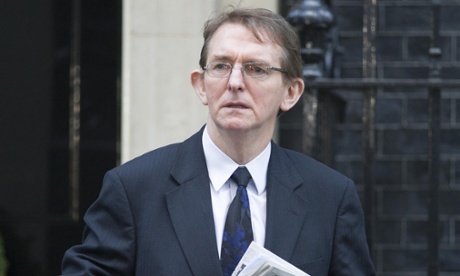
Here’s another oddity. Gallagher, once editor of the Telegraph and commander of its substantial website, could be just the practical online hand News UK needs. After all, in a previous job, he was actually one of the founding fathers of Mail Online. Brooks has far less of a reputation in this area. David Dinsmore’s Sun has been saddled with too many half-rules and half-changes of tack to prosper. The salience of the Sun as top dog, winner of elections, honoured guest at Downing Street receptions is long gone. If you can’t see it, you won’t feel it. Don’t think web or print in these circumstances: think both.
Gallagher, by common consent, is a dynamic newsman. He handled the MPs’ expenses saga for the Telegraph. He’s there to put the Sun on the map by getting real exclusives, making real political waves. But doing that as third in the management line may prove damnably hard if Brooks and Dinsmore are executing Murdoch’s business and the supreme leader is still calling the wrong shots.
Naturally, there are hopeful possibilities in here. Murdoch, yet again, is staking his reputation on turning a print present into a news future. He values journalists, their friendship and their capabilities. He doesn’t desert a close colleague in need. He remains engaged, and able (in Gallagher) to recruit scarce talent. The news men and women, for good or ill, are back in charge.
But will Rebekah’s return mollify or irritate the reporters she left behind, facing too much music of their own? Is she the right person to guide the Times and Sunday Times? How do you “charm” and “network” advertisers or politicians if toxic memories linger? How close to the action is Lachlan Murdoch, the son back on the rise as Rupert weaves through his 85th year?
The answers to questions like these matter because the financial survival of major newspapers matters – and failure would leave not just News UK but the underpinning of our news industry at risk. Perhaps two fingers are one too many. One thumb, for sucking hard, will have to do.