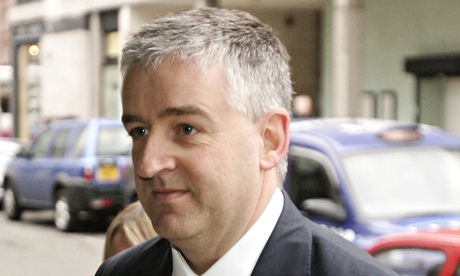
Rebekah Brooks promoted one of her most senior journalists on the Sun by scrawling a job description on a Post-it note, a jury has heard.
The yellow note, now 10 years old, was produced in Kingston crown court on Monday in the trial of Graham Dudman, the paper’s former managing editor.
After a brief objection by the prosecution, which had not seen the note, it was passed around the jury.
Brooks, the former Sun editor, wrote “PPC, Staff performance, Project Hal, Lorna, Courses – CRD advise, PA – Philipps/Marie, Corporate News” on the Post It.
Dudman explained the list referred to his responsibilities to liaise with the Press Complaints Commission – the industry regulator now replaced by the Independent Press Standards Organisation – take responsibility for the company’s new printing press initiative “Project Hal”, to liaise with the paper’s then PR manager Lorna Carmichael, to train staff, and to take charge of the two personal assistants in the managing editor’s office.
Dudman is on trial for a conspiracy to cause misconduct in public office by allegedly agreeing payments to public officials for tips and stories, charges he denies.
He was appointed managing editor in 2004 after a meteoric rise through the ranks.
He talked the jury through the system of expenses at the paper, explaining that in some circumstances they were considered payment in lieu of overtime. “Some people were claimed up to £200 a day. The company knew what was happening,” he said. “Reporters never got any overtime.”
The practice was common across Fleet Street when he was a reporter in the 1980s and 1990s, he said.
Dudman regaled the jury with what he described as a famous example during the outbreak of the first Gulf War, when a “pack” of reporters were in Dubai and unable to get expense receipts.
“After three or four weeks, it became clear that we did not have enough expenses. One of the guys from the Express found a printing shop and got several pads of expenses printed up, which he shared round our dinner that night … So everyone had a similar amount of expenses claims when we came back to Britain.”
The expenses budget would run to £5m annually he said, against a total editorial budget of £63m in 2011, the last year he held the post, Dudman said.
When he became managing editor, he had responsibility for everyone’ expenses other than the editor’s, he explained.
Dudman described how the Sun had a safe containing £25,000 in cash which would be topped up every week to make cash payments.
He explained that some people wanted cash because they didn’t have a bank account, or because “people didn’t want their spouses, or did not want anyone else, to know they were selling stories to a newspaper”.
“Cash payments were the tiniest of payments, less than half of 1% of what was going out every week,” said Dudman.
Jurors heard a “batch of A4 paper on landscape” with the list of payments for stories would be “wrapped together in huge industrial rubber bands and plonked on my desk”.
The list would run to “thousands” of stories a week, explained Dudman, who was responsible for every department and the Scottish and Irish offices.
Dudman described the Sun’s coverage of the Hillsborough football disaster in 1989 which claimed 96 lives as “without doubt the darkest hour in the paper’s history”.
Questioned by his counsel, Oliver Blunt QC, he told jurors he was not on the paper at the time, but had been deputised by Brooks to try to reach out to the people of Merseyside who were boycotting the paper ever since the controversial claims put on the front page by her predecessor Kelvin MacKenzie.
The paper’s front page headline “The Truth” which was based on false information given to the paper “caused immeasurable hurt and harm in Merseyside,” Dudman said. It was “beyond appalling”.
He met with the Hillsborough family support group but said he failed to persuade them of the paper’s remorse over the headline.
The trial continues.