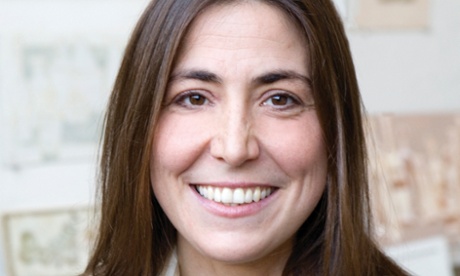
Rebecca Stead began writing her award-winning books for children by accident –literally. More than a decade ago, she was working as a public defender in New York City and struggling to find traction with her writing. She loved adult fiction, but it wasn’t coming naturally.
“I felt almost too slow, a little bit paralyzed when it came to trying to write that kind of material,” she said. “I couldn’t shed my self-consciousness.” She was reluctant to share her work, and even more reluctant to revise it.
Then one day her toddler knocked her computer off the table, and all the stories she had been laboring over were permanently gone. “When I lost all of that, even though it was sad, it also felt like a release, in a way: it was a clean slate,” she said. “And then I asked myself what it was that I wanted from writing, and where my connection with books began, and the answer to that question was definitely in childhood, because that’s where my connection with reading began.”
She decided to buy all the books she could remember reading as a child, as well as books that had been written for children since. “I just sort of tried to rediscover what it was that made me feel so strongly about books in the first place.”
The most formative were the ones she read around age 11 or 12, on the border between childhood and puberty. “For me, that time was an awakening,” she said. “I began to see more complexity in the world around me, I began to have different kinds of thoughts, I began to form deeper friendships. I think that a lot of that was inspired by the books that I was reading. For the first time, really, I had access to the internal lives of other people.
“They didn’t happen to be real people, because I was reading fiction, but the emotion was true,” she continued. “And so there was a way in which I was learning about myself by reading about the inner lives of people who didn’t exist. I think that’s one of the most important things that books do: not to teach you anything, but to help you teach yourself, by just being in the world of the book and having your own thoughts and reactions and noticing your own reactions and thoughts and learning about yourself that way.”
It was hardly surprising, then, that Stead began to write books for and about children at that formative age. Her debut novel, First Light, was published in 2008, but it was 2009’s When You Reach Me, set in Manhattan in the late 70s, that launched her into the public eye: the novel was awarded the John Newbery Medal and received wide critical acclaim. She followed that two years later with Liar & Spy, and her newest novel – published this month – Goodbye Stranger.
Like much of Stead’s previous work, Goodbye Stranger is set in New York City, and it explores the often complicated dynamics of friendship as children enter adolescence. The novel alternates between three storylines, told in three different forms. A trio of seventh-grade girls struggle with burgeoning sexuality and the peer pressure that accompanies it; a boy writes to a grandfather who has betrayed the family; and an unnamed second-person narrator skips school on Valentine’s Day. Their stories weave together and connect in surprising ways, particularly as the identity of the unnamed narrator, who plays a minor role in the three girls’ story, begins to come into focus.
Stead uses the word “echoes” to describe the way the conflicts play off of and reflect one another: all three storylines deal with a betrayal of some kind, and the way that old relationships bend – and sometimes break – with these betrayals.
Stead said that she wanted to “stuff the book with relationships” of all kinds: friendship, romantic love, familial love and all the ways that grow with and apart from one another. At the heart of the story is the trio, who work to stick together as life actively pulls them apart.
“I knew I wanted to write a story about three girls who really love each other, and are there for each other, even though they’re going through a year with a lot of changes, where they’re making different decisions – and people might disagree about which of those decisions were great and which of those decisions were less terrific.”
In Goodbye Stranger, those decisions are often morally murky ones: issues of modern teenage life that could have easily slipped into sensationalism, but Stead handles them deftly. “What I really love in a book, what I want to give to my readers, is room to think, and room to have their own thoughts. That’s what I’m trying to create,” she said.
“My books tend to have a lot of questions in them, and they tend to avoid black and white, for lack of a better metaphor. I think those kinds of decisions are not so interesting to think about. Either you’re sitting there saying, ‘Oh yeah, she did the right thing,’ or ‘Oh no, we all know that’s not the right thing.’ And it’s much more interesting to have a situation where people are doing all kinds of things, and maybe not everybody in a room of a hundred people would agree upon which were the obvious right things to do and which were the very obvious wrong things to do.”
Stead trusts her readers to be able to dig into that moral complexity. “I do try to write in ways that reflect reality,” she says, “and I think that reality is rarely simple. And often there aren’t two choices.” She mentions the ongoing riddle in the book, about two brothers standing in front of the door to heaven and the door to hell, and one character’s response: “People act like riddles are hard, but real life is harder. In real life, there are always more than two doors.”