NEW DELHI: With Covid entering its third year, one of major concerns has been its impact on India's economic growth. In fact, Covid has been a pain point for the economy ever since its inception as it pushed India into its first ever technical recession in financial year 2020-21.
A report by State Bank of India (SBI) economists showed that real gross domestic product (GDP) for FY22 was higher by Rs 18,000 crore.
The first advanced estimates released by the Centre in January had estimated FY22 real GDP at Rs 1,47,53,535 crore. However, in the second advanced estimates released today, this figure has been modestly revised upwards to Rs 1,47,71,681 crore. This is higher by Rs 18,146 crore.
GDP grew by 5.4% in Q3
Data released on Monday by the ministry of statistics and planning implementation (MoSPI) showed that India's economy grew by 5.4 per cent in Q3 FY22 after exhibited 8.5 per cent growth in Q2 and 0.7 per cent in same quarter last fiscal.
For the full fiscal GDP growth is expected to increase by 8.9 per cent and GVA growth by 8.3 per cent.
Based on the FY22 yearly numbers, the report estimates Q4 growth to be around 4.8 per cent.
"Given the impact (though not so serious) of Omicron variant and Russia-Ukraine crisis in Q4, we believe that Q4 GDP growth may not be more than 4.5 per cent. This means that FY22 real GDP growth would be around 8.9 per cent with downward bias," it said.
However, this is lower than 9.2 per cent GDP growth that was given by the first advanced estimates.
Higher nominal GDP eating away government debt
The report estimates fiscal deficit as percentage of GDP to be revised downwards from 6.9 per cent to 6.7 per cent.
Nominal GDP numbers have also been revised to Rs 2.36 lakh crore as compared to Rs 2.32 lakh crore projected by first advanced estimates -- which became the basis for projecting budget deficit numbers.
For FY23, nominal GDP growth comes to 9.1 per cent from 11.1 per cent (given in the budget). SBI economists assumed that impact of 11.1 per cent growth rate on the new GDP numbers for FY22, fiscal deficit for FY23 will also come down to 6.3 per cent of GDP from the budgeted 6.4 per cent of GDP.
"Clearly, higher nominal GDP is eating away government debt, though the dangers of higher inflation are many," the report said.
India v/s the world
Almost all major economies grew more than pre-pandemic levels. India's growth is almost 2.1 percentage points more than the pre-pandemic growth.
The reported noted that average latest quarter growth of 20 major economies is almost 2.7 percentage points more than the pre-pandemic growth.
Sector-wise performance
Trade, hotels, transport, communication and services related to broadcasting’ is the only sector which is still not out of woods, the report noted.
The growth in agriculture & allied activities decelerated to 2.7 per cent in Q3 FY22 as compared to 3.7 per cent in previous quarter and 4.1 per cent in Q3 FY21.
For FY22, agriculture is expected to remained constant at 3.3 per cent, the report said.
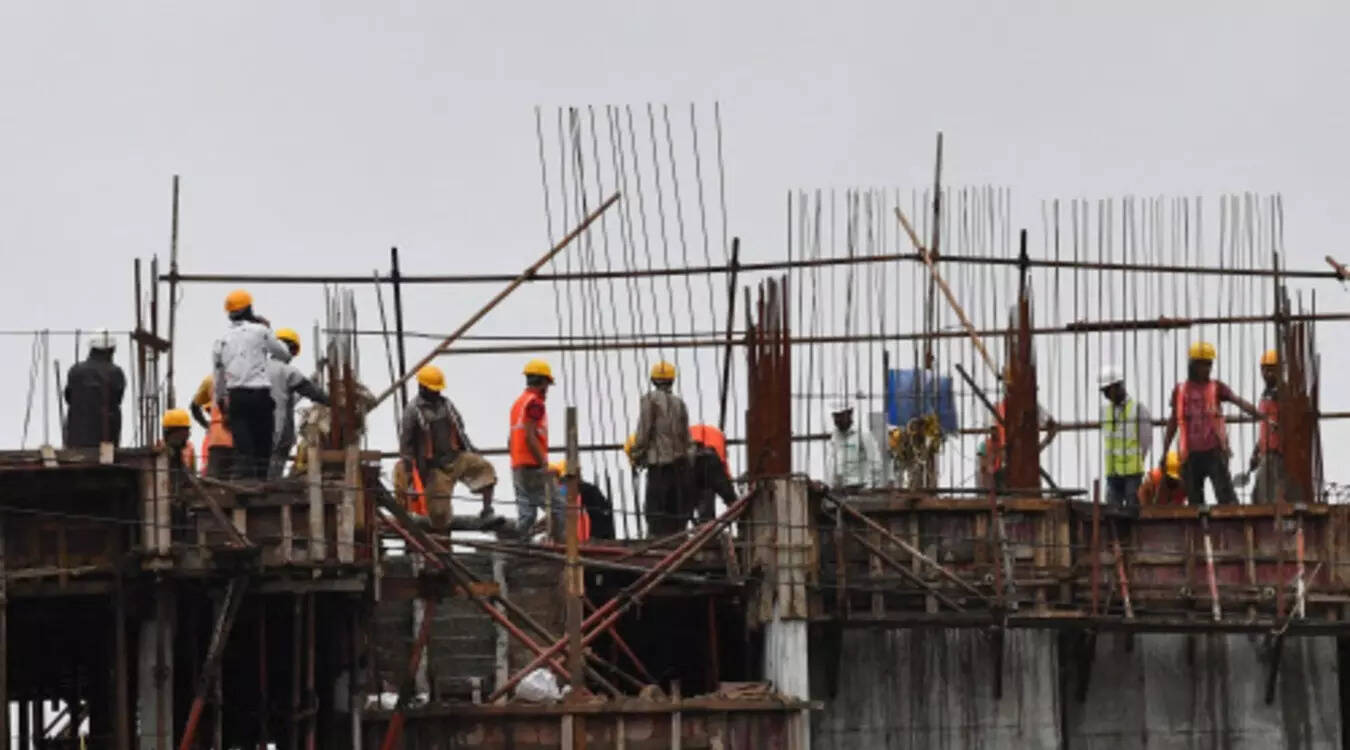
The industrial sector grew meagrely by 0.2 per cent in Q3 compared to 5.6 per cent in Q2, mainly due to decline in construction sector and near zero growth in manufacturing, the reported noted.
While, construction sector plunged into negative territory again after a hiatus of four quarters, manufacturing grew by just 0.2 per cent -- lowest since Q1 FY21.
Mining was the only silver lining as the sector grew by 8.8 per cent in Q3.
Meanwhile, service sector witnessed a growth of 8.2 per cent mainly on account of 16.8 per cent growth in public administration, defence and other services.
Expenditure side observations
The report states that after Monday's GDP data release, in general the economy may have crossed pre-pandemic level even when the Q3 figures show a decline.
"The main observation from current release is that most of the sectors baring retail and trading have attained their pre-pandemic level (pre-pandemic defined as level in FY20)," it said.
However, the improvement in economic activity has not translated into demand to the extent anticipated.
The report further says that all heads under expenditure side have advanced, but still remain pre-pandemic level in December 2021.
"Private consumption is below the pre-pandemic level and this largely because labour intensive sector trading and construction have not recovered from the pandemic shock," it added.
Besides, it said import prices have risen more sharply than export prices. Thus, the value added across sectors have contracted sharply.
Finally, it noted that the cascading impact of inflation is clearly visible on demand side. With crude oil prices soaring as an impact of the Russia-Ukraine conflict, SBI economists say that it is highly unlikely for private consumption to regain its pre-pandemic levels soon.