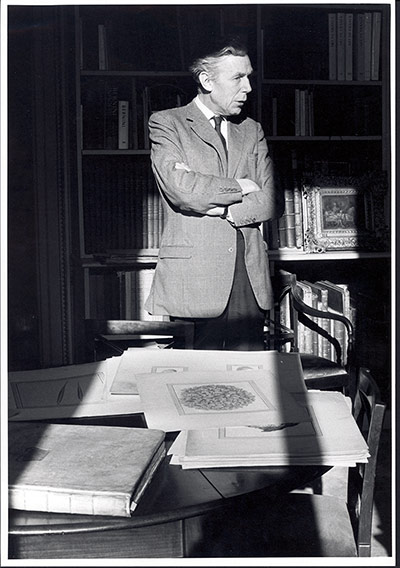
Suggested by: DiesIrae
1907-1983
One of the Cambridge Five, Blunt was related to the Queen Mother, became art history professor at the University of London, director of the Courtauld, surveyor of the King’s pictures and a knight. At Cambridge he became a 'talent spotter' for the Soviet union and later a double agent for MI5, during which time he passed on decrypted Enigma information to the Russian front. Nobody was sure who he worked for, the Soviets sometimes believing him to be a triple agent. In 1963 he was discovered by MI5, but was protected for 15 years in exchange for the names of other double agents. When Margaret Thatcher eventually outed him he was stripped of his honours. John Banville’s novel The Untouchable was based on Blunt’s memoirs, which were made available in 2009 Photograph: Jane Bown
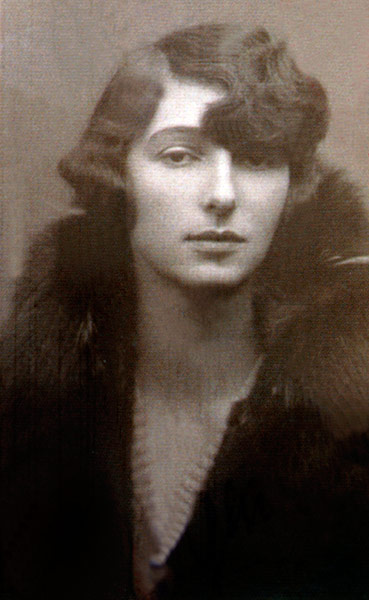
Suggested by: DragonNoodle
(1908-1952)
Skarbek was one of the longest-serving of all Britain’s wartime woman agents, and influenced the decision to employ more female spies. Born a Polish aristocrat, she was distantly related to the composer Chopin. Coming to England after the outbreak of the second world war, she was recruited by the intelligence services, for whom she skied into Poland from Hungary, where she organised a network of couriers who brought intelligence from Warsaw to Budapest, and parachuted into occupied France. She was captured by the Gestapo twice but managed to secure her release both times: once by by feigning a tubercular attack, once through bribery and threats of Allied vengeance. She survived the war, only to be stabbed by a hotel porter whose advances she had refused Photograph: Rue des Archives/Getty Images
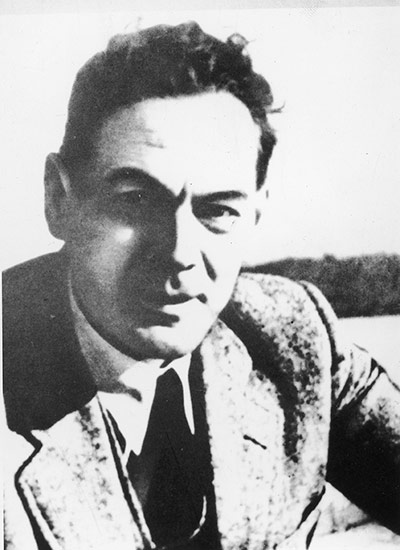
Suggested by: Eatapeach
(1895-1944)
Regarded by Ian Fleming as 'the most formidable spy in history', Sorge was a Russian-born German communist. Though his great uncle was an associate of Karl Marx and Friedrich Engels, he came to communism by reading Marx, after serving in the first world war until he was medically discharged and awarded the Iron Cross. He became a Russian spy, gathering intelligence on countries sensitive to communism under the cover of legitimate German journalism. He joined the Nazi party, went to China under the guise of an agricultural journalist, and organised a spy ring in Japan, which passed on information about Pearl Harbour and various Japanese attacks on the Soviet Union. When he was arrested he denied any association with the Soviets, even under torture. Sorge was hanged in 1944 Photograph: Getty Images
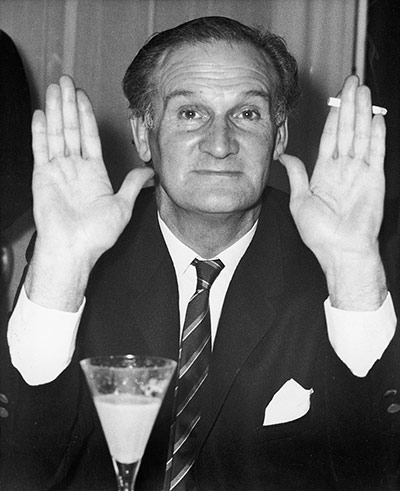
Suggested by: conejo
(1914-1997)
Chapman – or Agent Zigzag, as the Brits dubbed him – was regarded as rogue. He deserted the Coldstream Guards to become a safecracker for a 'jelly gang’, was in a Jersey prison when the Germans took the island, and offered his services to the Nazis. When parachuted into England to blow up a factory he immediately switched sides. His faked attacks against the British earned him a yacht in Norway and the Iron Cross, making him only Brit in the war to hold one. When the war ended he eventually set up a health farm in Hertfordshire Photograph: Keystone/Getty Images
Suggested by: ssjgr01
(1922-)
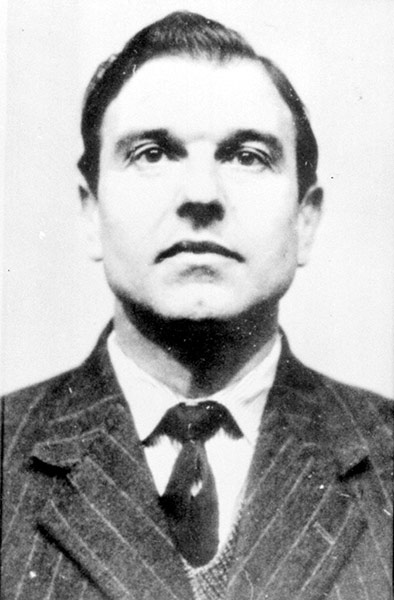
As a teenager Blake was part of the anti-Nazi resistance in Rotterdam and escaped to London disguised as a monk. After translating German documents for MI6 during the war he was sent to Korea, where he was captured and became a communist. While pretending to turn Soviet spies to double agents in Berlin, he passed British and American intelligence to the KGB. After betraying 400 MI6 spies, he was discovered and summoned to London. After serving five of a 42-year prison sentence, Blake escaped Wormwood Scrubs in 1966 and fled to the USSR Photograph: PA
Suggested by: Pazuzu
(1912-1988)
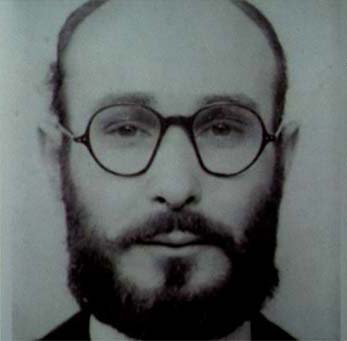
Joan Pujol Garcia, codename Garbo, was arguably the greatest double agent in history, and most likely the only person in the second world war to win both an Iron Cross and an MBE. He duped the entire German military intelligence apparatus into believing that he ran large networks of pro-German agents in the UK – networks and individuals who were entirely fictional. All the while, he was passing invaluable intelligence to the Allies. He had the Germans so thoroughly fooled that after the Allied victory, his German handler met him in Spain to give him his outstanding wages and to apologise that there was no more work for him Photograph: Public Domain
Suggested by Rassendyl
(1876-1917)
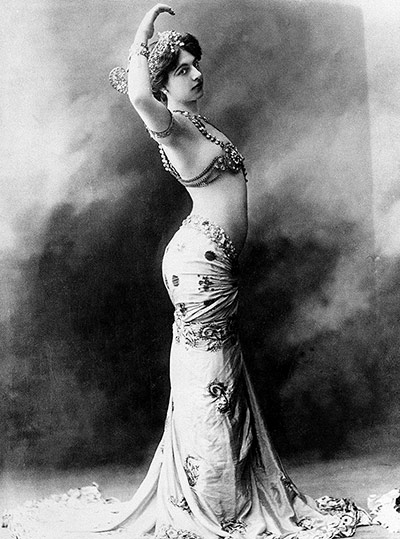
Hari was a famous Dutch pioneer of modern dance and contemporary of Isadora Duncan. Fleeing an abusive husband in the East India company, she became a circus horse rider, an artist’s model and eventually a famous exotic dancer. Often photographed nude or in the garb of a Javanese princess, she was courtesan to millionaires and politicians. She was captured in London during the first world war and admitted to working for French intelligence, though it is unclear whether this was just another stage identity. She was later accused of spying for the Germans – which documents made available in the 1970s corroborated – and executed by firing squad Photograph: Francois Mori/AP
Suggested by: blatantfraud
(1919-1963)
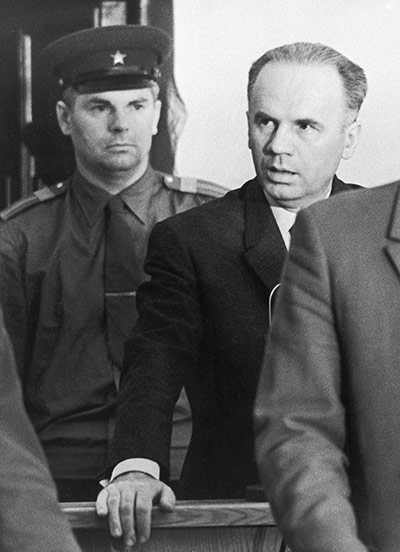
This Russian turncoat supplied Soviet information to the MI5 and the CIA during the cold war, including the location of Cuban missile bases. Penkovsky still seems to be playing his tricks. We don’t know for sure whether he genuinely defected to the US or was a Soviet agent, put there to lull the Americans into a false sense of security about Soviet nuclear firepower. Though he was officially executed by the Russians in 1963, some people believe he was given an invisible post in the Soviet Union Photograph: Keystone/Getty Images
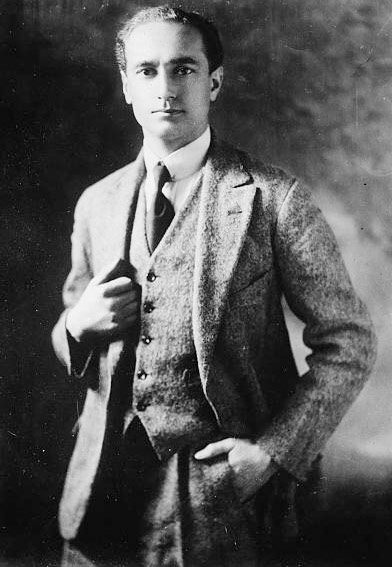
Suggested by: Raka E
(1889-1967)
Born to a Somerset vicar, Dukes was the only spy in Russia at the time of the Bolshevik revolution and the only person to have been knighted (at 31) solely for of espionage. While in residence at Petrograd Conservatory as a concert pianist and assistant conductor he smuggled hundreds of White Russians out of Soviet prisons and into Finland. Through use of disguises he infiltrated the political police, the Communist party of the Soviet Union and the Politburo. He was also one of the western pioneers of yoga Photograph: Library of Congress
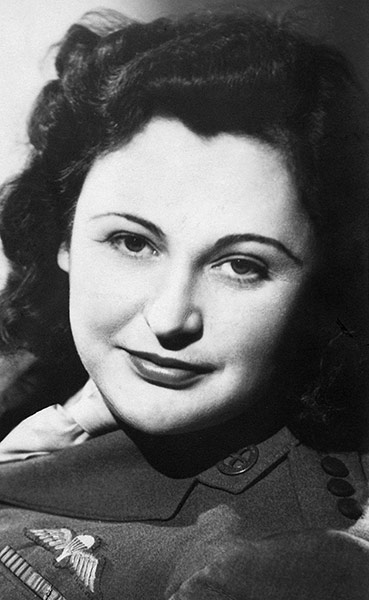
Suggested by: GedJames
(1912-2011)
Probably the longest living spy, she was a leading figure in the Maquis groups of the French resistance. Born in New Zealand, she ran away from home to New York, then London, and became a journalist. As a European correspondent to an American paper, she witnessed the rise of the Nazis. The Gestapo called her the White Mouse because of her propensity to elude capture, and by 1945 she was their most wanted person. She parachuted into the Auvergne and once killed an SS sentry with a single judo chop. Wake was one of the Allies’ most decorated servicewomen Photograph: AP