Dunnottar Castle, Scotland
Recommended by: Omosapien; nellief; UnsavouryExcretions; ID7072182; Gina Smith
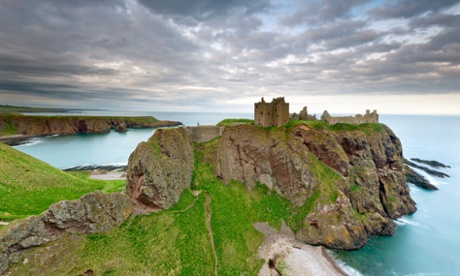
Dunnottar Castle was easily the favourite ruin among our readers. Situated on the coast of Aberdeenshire, this fortress sits atop a craggy crown of headland connected to the Scottish mainland by a small causeway. The castle has been abandoned since the early 18th century, after the 10th Earl Marischal, George Keith, had his lands seized by the government for his part in the first Jacobite rising. This collection of windblown buildings have been open for the public to explore since the early 20th century.
Stanley Dock Tobacco Warehouse, Liverpool
Recommended by: Guy Evans; jonmmm
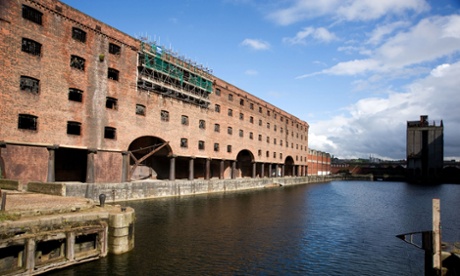
This gargantuan building, reputedly the largest brick warehouse in the world, dominates Liverpool’s Stanley Dock. Used in recent years for events as diverse as heritage markets and raves, it has remained largely derelict since the 1980s, and much like Battersea power station is now the subject of large-scale residential renovation efforts.
Castle Acre, Norfolk
Recommended by: PrincessMarinasHat
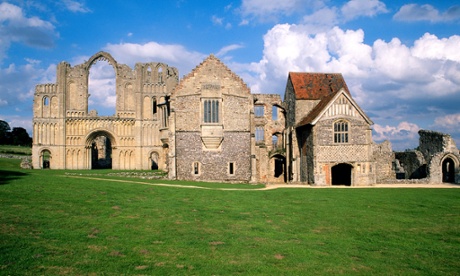
This village in Norfolk is notable for two different ruins: a medieval castle and a priory. Both were built soon after the Norman Conquest and the original walled town of Castle Acre was considered an important location to the new Norman nobility. Today the modern village lies between the ruins of the castle and the priory, described by PrincessMarinasHat as “utterly stunning”.
Dunstanburgh Castle, Northumberland
Recommended by: peopleperson; Fourpercent; suziebee; zardos
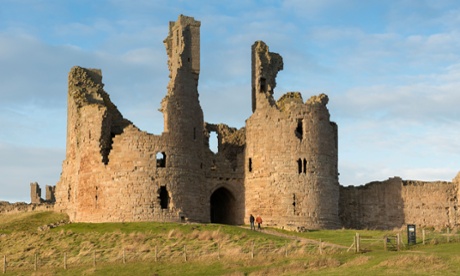
Plenty of readers were keen to mention Dunstanburgh Castle, on the coast of Northumberland. This 14th-century castle was once well defended from all sides, with the sea to the east, and three defensive lakes, or meres, on the other sides, creating the illusion of a small fortified island. Though a ruin since the Tudor era, Dunstanburgh was used as a coastal lookout point throughout the second world war.
Maunsell Sea Forts, Thames and Mersey estuaries
Recommended by: trevorn; Bernicianscots
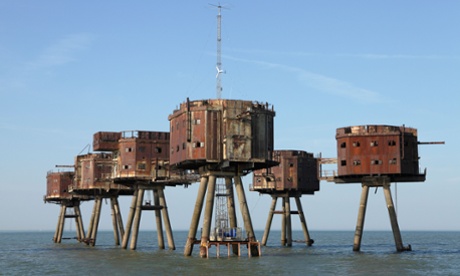
These coastal defence forts were built in the Thames and Mersey estuaries during the second world war to deter German raids. After the war, several of the forts in the Thames estuary became hubs for broadcasting pirate radio, and one became the infamous micronation the Principality of Sealand. Others still are rusty relics on the verge of being claimed by the sea, and as Bernicianscots notes, “They have an eerie beauty about them.”
Carreg Cennen Castle, Brecon Beacons National Park
Recommended by: ffynnongarw; Atombowl28; Meddwl; blueblog01; Archibalders
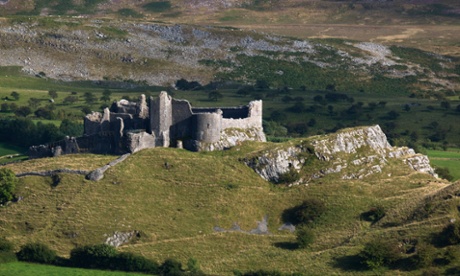
Reader blueblog01 describes Carreg Cennen as “one of the most romantic, mystical ruined castles on our island”. With its dramatic cliff top position in south Wales, it has spectacular views of Carmarthenshire and the western edge of the Brecon Beacons. There is also a hidden cave that can be accessed from within the castle walls.
Mount Grace Priory, North Yorkshire
Recommended by: JoZemla; davidcreed
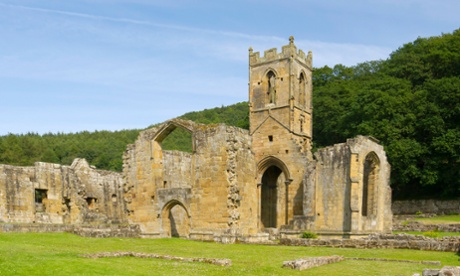
This ruined priory is located amid woodland on the edge of the North York Moors. JoZemla describes it as “one of the loveliest and most interesting sets of ruins” in Britain. It is a former Carthusian priory, an order of monks who would live in individual cells. The remains of these cells can be seen in the priory today.
Broch of Mousa, Shetland
Recommended by: TearsThatYouWeep; Shalder; BeyondOurKev
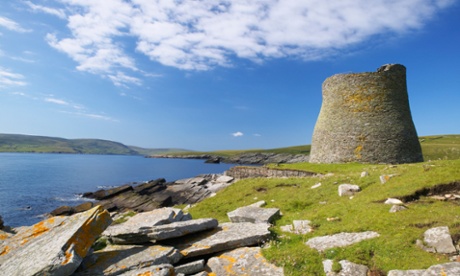
The Broch of Mousa is the finest example on Shetland of these round prehistoric towers, which can be found throughout northern Scotland. It is thought to have been built around 100BC as either a defensive structure or a home for a local leader or chieftain. The structure is constructed entirely in dry stone with no mortar holding it together, and at over 13 metres is the tallest building of its kind in existence.
Dunluce Castle, Co Antrim, Northern Ireland
Recommended by: bananatruss; Ursula Griffiths; dutchbrfc; GreenCurryTitan
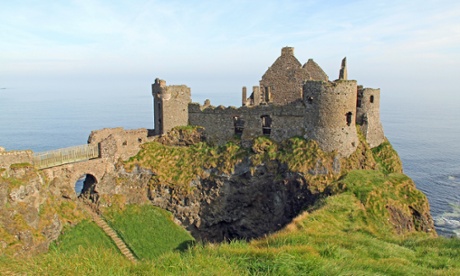
Several readers pointed out that our original list should have covered all of the UK, rather than being specific to Britain. This cliff-top, coastal castle, situated in County Antrim, has played an important role in Irish history for centuries. New discoveries are still being made about this ruin, with a lost 17th-century town of Dunluce being unearthed by archaeologists on an adjacent site in 2011; most of this still lies undiscovered.
Tintern Abbey, Monmouthshire
Recommended by: davros; earweego; Simon Clarke; TearsThatYouWeep
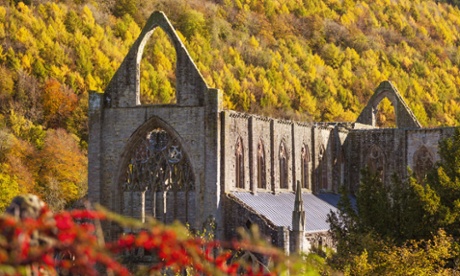
The inspiration for many poets and painters including Wordsworth and Turner, Tintern Abbey was pipped to the post by Fountains Abbey in our original article, but our readers thought differently. TearsThatYouWeep describes this ruin on the Welsh side of the Wye valley as a “beautiful setting”.