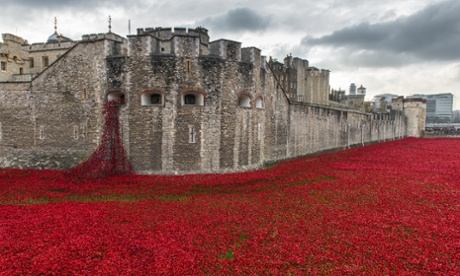
1 | Blood Swept Lands and Seas of Red, Tower of London
Suggested by moneyallgone
Marking last year’s centenary of the onset of the first world war, a sea of 888,246 ceramic poppies tumbled from the Tower and swept around the grounds, each one symbolising a serviceman or woman killed in the war. Each day at sunset, the names of the victims were read out, followed by the Last Post. This transient commemoration, created by Paul Cummins and Tom Piper, captured the public imagination, with an estimated 5 million people visiting the installation. Most of the ceramic poppies were sold, raising millions for service charities, while the remaining flowers are now on display around the country.
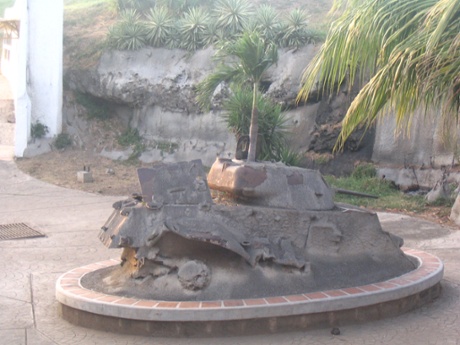
2 | Parque de la Paz, Managua, Nicaragua
Suggested by BrasilBranche
The Parque de la Paz is an enduring allegory of the challenges facing a nation emerging from war. Established in 1990 by former president Violeta Chamorro, the park symbolically buries Nicaragua’s past by entombing machine guns, pistols and even a tank in concrete. Finally, “concreted weapons actually doing some practical good”, as BrasilBranche says. Sadly, according to Lonely Planet, since it was opened the reflection pool has been drained, every brass plaque has been stolen, the generators and wiring for the lights have been pinched, and the Peace Park is now notorious for muggings.
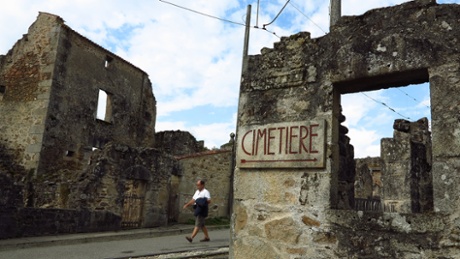
3 | Oradour-sur-Glane, France
Suggested by FrankHeaven
Towards the end of the second world war, 642 men, women and children from a peaceful village in Nazi-occupied France were massacred in one of the most notorious war crimes in French history. SS troops entered the village, shot the villagers or burned them alive and set fire to the buildings. Residents who had been away returned to a blackened scene of horror, carnage and devastation. After the war, the French government ruled that the village should never be rebuilt, but remain as “another preserved WWII ruin”, as FrankHeaven puts it. Today the village is a tourist destination, complete with maps and guidebooks, and attracts more than 300,000 visitors each year.
4 | The Peace Tower, Ottawa, Canada
Suggested by mikedow
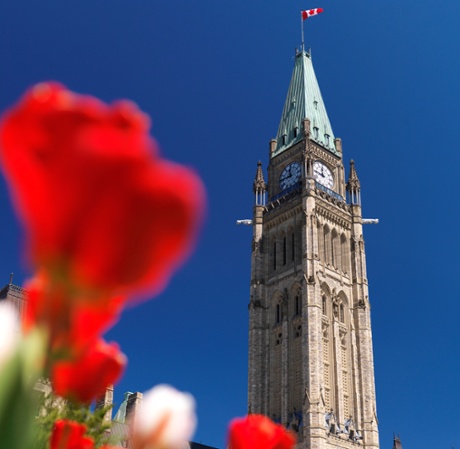
The Memorial Chamber inside the tower honours “the debt to our forefathers” for the 66,000 Canadians who gave their lives in the first world war. The floor, walls and columns are made of stone taken from battlefields in France and Belgium, the two countries in which the most Canadians fought. The Central Altar occupies the heart of the chamber, carved from a block of the stone used in military cemeteries and contains the Books of Remembrance, inscribed with the names of Canadians who died in battle.
5 | Canadian National Vimy Memorial, France
Suggested by mikedow
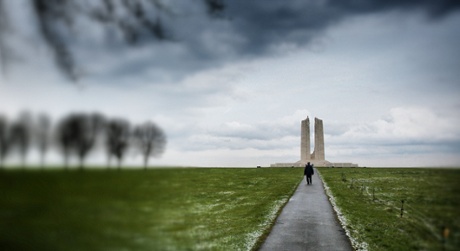
The attack at Vimy Ridge, undertaken by Canadian troops on Easter Monday 1917, is seen as the first unequivocal success gained by the allies in first world war trench warfare. The Vimy monument, carved from a single piece of stone, now dominates the landscape and serves as a tribute to the graveless Canadian soldiers killed or presumed dead in France. The monument is the centrepiece of the 100-hectare battlefield, where visitors can also see perfectly preserved trenches, tunnels, shell craters and cemeteries. “It honours the dead”, says mikedow.
6 | Thiepval Memorial, France
Suggested by valdez
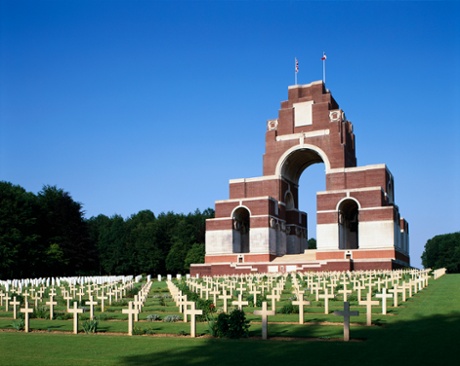
Recommended by valdez, who asserts that our list has “too much graffiti, new age art and Yoko Ono”, the Thiepval Memorial serves as a memorial to the 72,253 missing British and South African soldiers who died in the Battles of the Somme. The monument, designed as an arch representing the alliance between Britain and France during the battle against the German defensive front, remains a veritable pilgrimage site for visitors from around the world.
7 | Statue of Humanity, Turkey
Suggested by Richard Warth
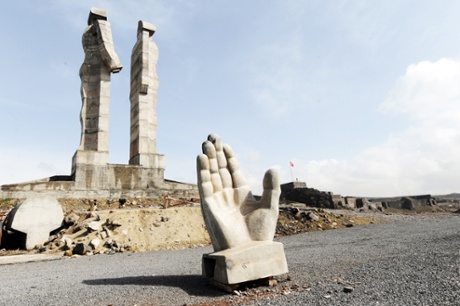
The mayor of Kars, Turkey, decided to build a giant sculpture, described as “the most pertinent monument to peace” by Richard Warth, as a reconciliation gesture from Turkey to Armenia. But it was faced by political dissent from Oktay Aktas, leader of the opposition, who said: “Why is one figure standing with its head bowed, as if ashamed?”, implying that the statue symbolised Turkey’s subservience to Armenia (although both figures had their heads held up). Aktas vowed to destroy the monument, saying: “I said I would smash the statue down with my own hands, and I will.” It never came to this though, as building work was halted and the 100-foot-tall sculpture remained unfinished before being demolished by on the orders of prime minister Recep Tayyip Erdogan in 2011.
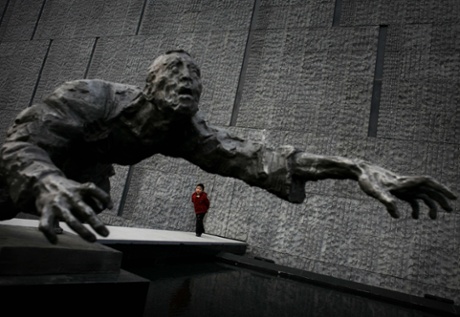
8 | Nanjing Massacre Memorial Hall
Suggested by Oblaka
Nanjing, a picturesque city by the Yangtze River and former capital of China, hides a particularly grisly history. In 1937, Japanese troops seized the city, committing barbarous acts of violence during the occupation, such as rape, arson, looting, mass executions and torture, massacring up to 300,000 Chinese men, women and children living there – an event that later became known as the Rape of Nanjing and is often referred to as a holocaust. The museum not only honours the victims who perished in the genocide, but also enshrines China’s sadness and rage.
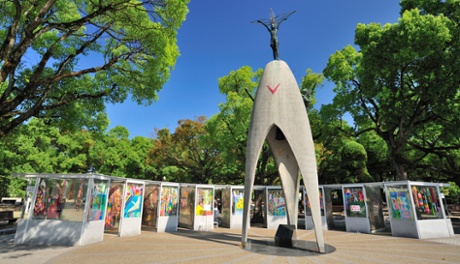
9 | Children’s Peace Monument, Hiroshima, Japan
Suggested by THBBFT
When Sadako Sasaki was two years old, the atomic bomb was dropped near her home in Hiroshima. She escaped and lived happily until, aged 12, she was diagnosed with leukaemia and told she had a year to live. After hearing a Japanese legend which says that if you fold 1,000 origami cranes you will be granted one wish, Sasaki started folding, wishing for a world without nuclear weapons. She died before she had folded 600. In memory of Sadako, and the victims of Hiroshima, her classmates launched a campaign to fund the Children’s Peace Monument, where visitors can fold their own colourful cranes and add them to the memorial. THBBFT says the monument is “the most affecting by far”.

10 | Tribute in Light, New York City
Two thousand, seven hundred and fifty three people were killed at the World Trade Center on 11 September 2001. Tribute in Light, which jshields_TTT points out is a clear inspiration for Yoko Ono’s Imagine Peace Tower, was set up in March 2002 on the six-month anniversary of the terrorist attack, and the twin beams return every year on 11 September, shining from dusk till dawn and visible for miles around. From a distance it is not clear whether the shafts are soaring upwards or beaming down from the heavens. The Tribute has become a world-renowned symbol of remembrance, healing and peace.