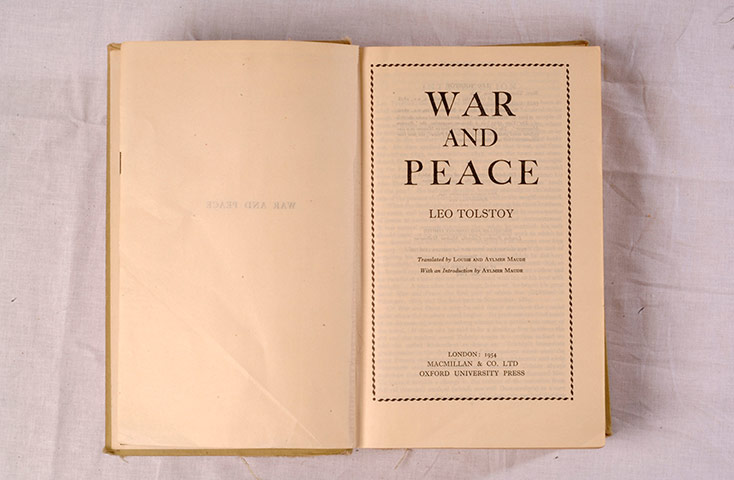
Leo Tolstoy, 1869
As recommended by VirgilHilts, mikedow, marieclaire
Tolstoy's epic work depicts the histories of five aristocratic Russian families and their entanglement with wider Russian society during the Napoleonic wars of the early 19th century. His attention to realist detail, combined with his wide-ranging narrative scope means that his 1,000+ pages are able to cover the private psychological experience of characters (including Napoleon), as well as setting down a theory of history itself Photograph: David Levene
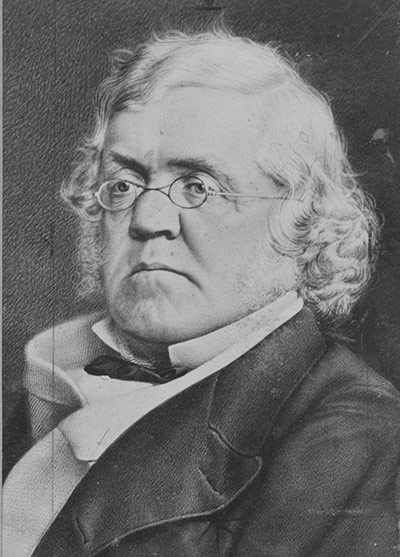
William Makepeace Thackeray, 1847-8
As recommended by bilgeandbile, KatharineP, miasmadude
Thackeray's 'Novel without a Hero', instead, has two heroines, Becky Sharp and Amelia Sedley. The narrative follows their fortunes as they move through English society. Through sharp, witty and, at times, brutal satire, Thackeray exposes the vacuousness of contemporary social life, and, what he sees as its prevailing moral corruption Photograph: Hulton/Getty
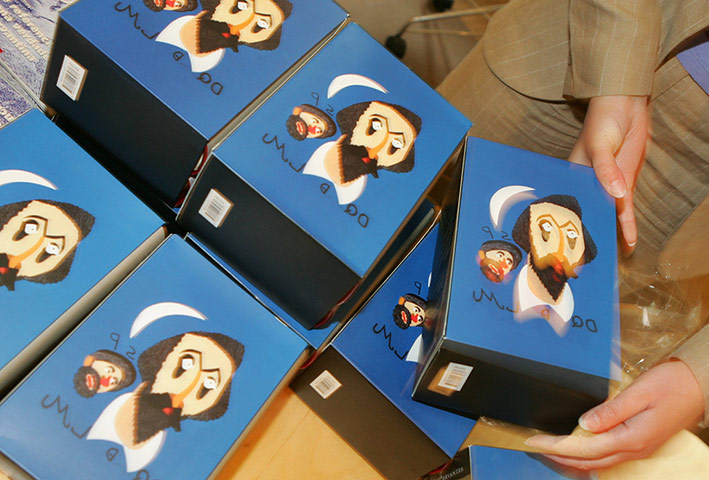
Miguel de Cervantes, 1605
Recommended by ReturnOfTheKing, TreesareGood, MarsLander
A hugely influential work, and the oldest of those nominated, Don Quixote has spawned numerous films, a ballet and an opera, and is a seminal work in the literary canon. In it, the fictional chronicler Cide Hamete Benengeli tells the story of Alonso Quixano, a country gentleman from La Mancha, obsessed with medieval books of chivalry. He decides to take the name Don Quixote and revive chivalry, accompanied by his squire, the wise but simple farmer Sancho Panza. Cervantes reveals the disjunction between Don Quixote's nostalgic chivalric values and the real world to comic effect. And the term 'quixotic' has since entered into the dictionary to describe a foolishly impractical and idealistic person Photograph: Christophe Simon/AFP/Getty Images
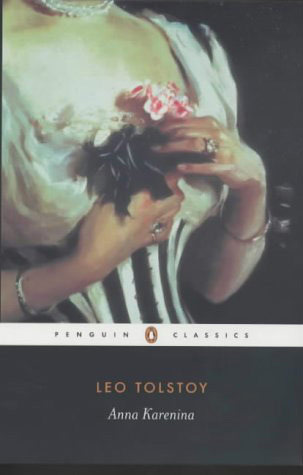
Leo Tolstoy, 1873-77
As recommended by isthisnamefree Essrog, Quicknstraight
Another entry for Tolstoy is his tale of the tragic life of Anna and her love affair with the rich and glamorous cavalry officer Count Vronsky. It is far ahead of its time in its depiction of the hopelessness of a woman caught between her own desires and the demands of society upon her. No wonder, then, that Dostoevsky called it a “flawless” work of art Photograph: PR
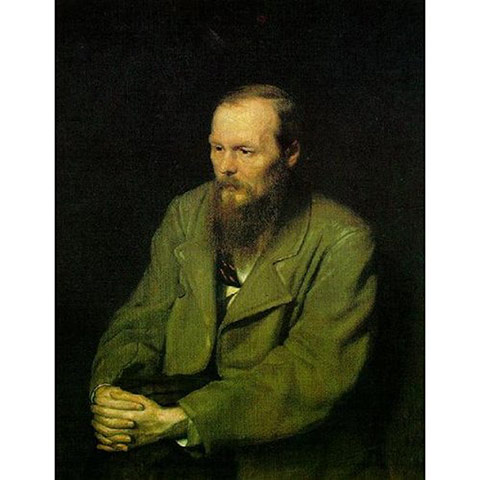
Fyodor Dostoevsky, 1880
As recommended by David Stuart, praglue, Bruskwickian
Dostoevsky's final novel was intended to be the first part of an even longer work entitled The Life of a Great Sinner, but the author died just four months after its publication. It depicts the lives of Ivan, Dmitri, Alexei and Smerdyakov, sons of Fyodor Karamazov, a brutal landowner. When Fyodor is murdered, the lives of these men change forever; the narrative explores each son's perspective, giving each a motive for his father's murder. As in the case of Dostoevsky's shorter works, the writing is thrilling and its style feels more like that of a modern novel than a novel of the late 19th century Photograph: PR
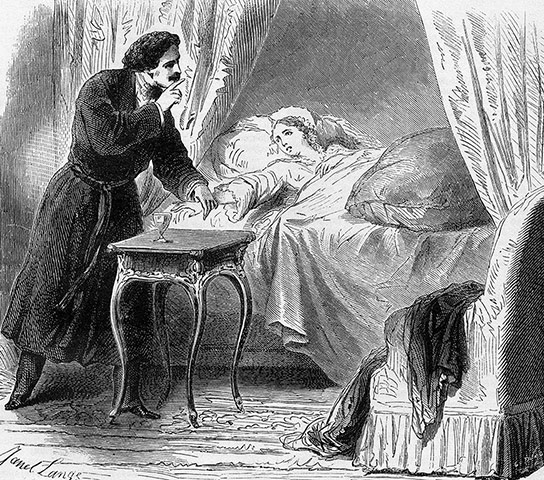
Alexandre Dumas, 1844
As recommended by djhworld, OrlandosTwin, & FletcherChristian
This French adventure novel begins just before Napoleon's return from exile and ends with the reign of King Louis-Philippe I. Its hero, Edmond Dantès, a successful sailor, is wrongfully imprisoned for treason in the infamous Château d'If, where only the most dangerous political prisoners are kept. After six years, he meets the Abbé Faria who tells him of treasure buried on the island of Monte Cristo. The abbé's death enables Dantès to escape, and the ensuing tale is one of riches, revenge and, ultimately, forgiveness Photograph: Alamy

Samuel Richardson, 1748
As recommended by Lynn_Shepherd & davidcallun1957
Clarissa is considered to be one of the earliest novels in English literature and, at more than 970,000 words, remains one of the longest works in the canon. Written in epistolary form, it follows the tragic and virtuous Clarissa Harlowe and her doomed marriage to Robert Lovelace. The work divided critics when it was first released; it was praised by some for its honest sentiment and damned by others for Richardson's perceived obsession with female sexuality Photograph: PR
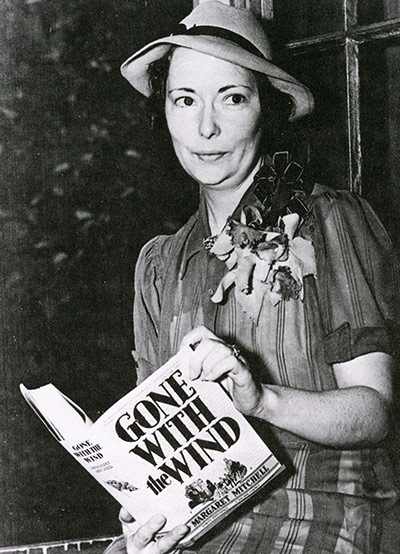
Margaret Mitchell, 1936
As recommended by tynegal, Kartfan & blahsquared
Mitchell's Pulitzer prize-winning novel was the only work to be published during her lifetime. Set in the American South during the civil war, it presents Scarlett O'Hara's struggles through the 1860s, alongside her love affair with the roguish Rhett Butler. While the novel was incredibly popular on its release, the lovers were truly immortalised by Vivien Leigh and Clark Gable in the 1939 Oscar-winning screen adaptation Photograph: Pictorial Press Ltd/Alamy
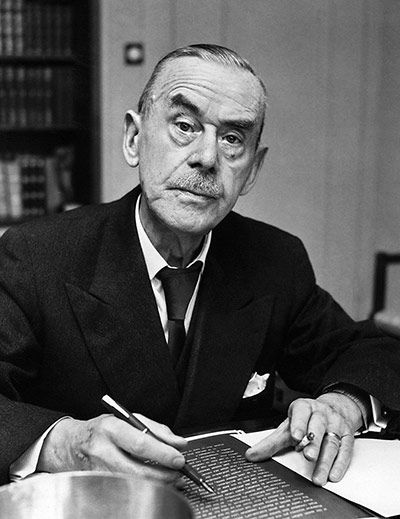
Thomas Mann, 1924
Recommended by Sandclaygravel, Wickywickyman & Philip Leung
Set in a tuberculosis sanatorium in the Alps just after the Great War, the novel explores the subject of sickness as a state of mind and body through its protagonist, Hans Castorp. His short visit to the sanatorium to visit his cousin Joachim Ziemssen extends into months and into years when Hans himself is diagnosed with the illness. The novel is many things – realist, sublime, uncanny, philosophical – but it is also, at times, surprisingly comic Photograph: A. Pfister/AFP/Getty Images
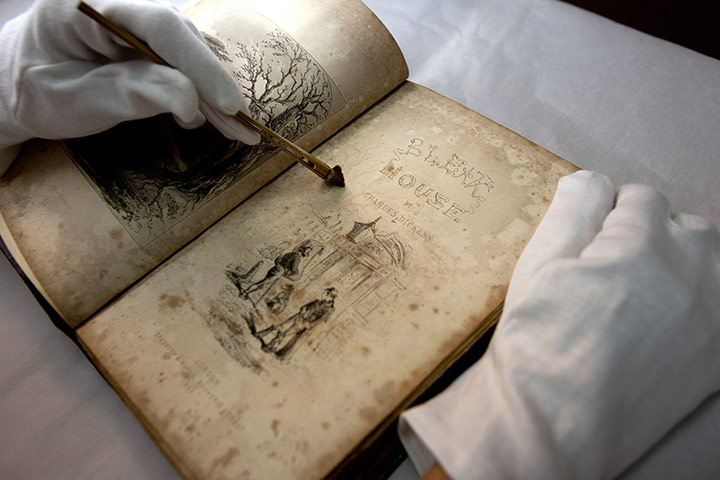
Charles Dickens, 1852-53
Recommended by InTheWeeds, Richard Nottingham and others
Bleak House contains perhaps the most complex array of plots and characters in all of Dickens's oeuvre. And in this work length is, in some ways, the point. Dickens places the endless court case Jarndyce vs Jarndyce at the centre of the novel, in order to satirise the law, manners and morals of contemporary society. The work's narrative sweep links characters from the lowliest crossings sweeper to the baronets and ladies of English society life and incorporates Dickens's only female narrator, his heroine Esther Summerson Photograph: Ally Carmichael