Sage is one of my favourite herbs; it’s hardy, aromatic and surprisingly adaptable. And, as it grows in abundance in my garden, I’ve enjoyed finding new and delicious ways to plough through the crop. Saying that, the common thread in the recipes this week was letting the flavour speak for itself in simple but stunning forms.
So I decided to kick things off with MizPepperpot’s crisp sage leaves – I urge you to make these to serve with a glass of wine or two before dinner. Next followed Shaheen’s sage and apple fritters, which paid homage to a classic combination, and delighted with every bite. At the end of the evening, Fadime’s sage and cranberry tea was every bit as soothing on a wintery day as it sounds.
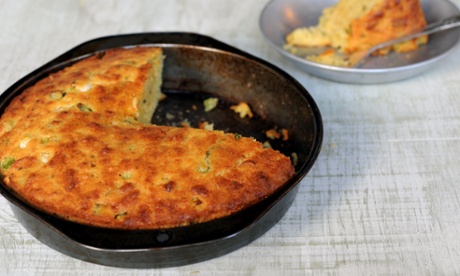
But Leftoverliz’s cornbread was perhaps the most delicious I’ve ever made. Like a good sage and onion stuffing, it’s pretty much impossible to stop picking at it until the whole lot is gone. Take that as a cue to share it with friends – they’ll thank you for it.
Sage and onion cornbread
Wonderful warm with butter, or on the side to soak up casseroles, stews, chilli con carne, or even baked beans. This cornbread is flavoured with cheese, spring onions and fresh sage and given texture by the polenta or cornmeal. And if you have leftover sage and onion stuffing, blitz it and mix it in for an extra sage kick.
Leftoverliz, via GuardianWitness
Makes 1 loaf
110g plain flour
170g polenta or cornmeal
70g fresh breadcrumbs or blitzed leftover sage and onion stuffing
1 tbsp each of baking powder, sugar and fresh chopped sage
1 bunch of spring onions, chopped
A pinch of salt and black pepper
120g grated cheese
2 eggs, beaten
240ml milk
240ml olive oil
1 Preheat the oven to 200C/400F/gas mark 6, then thoroughly grease a 20cm cake tin.
2 Mix together all the dry ingredients with the sage, spring onions and cheese. In a separate bowl, mix together the beaten eggs, milk and olive oil. Combine the two bowls of ingredients and pour into the cake tin.
3 Bake for 20-25 minutes until golden and a skewer inserted in the middle comes out clean.
Sage tea with cranberry, apple and cinnamon
Coming from a country with long, cold winters led Kurdish people to come up with variety of hot beverages. Herbal tea is one of the most common hot drinks we consume, not only for its flavours, for its health benefits too. This is my take on Kurdish sage tea. It is perfect for cold winter days. The peppery sage cuts through the tangy cranberry and sweet apple and blends so well with warm, spicy cinnamon.
Fadime Tiskaya, via GuardianWitness
Serves 4
1 red apple, roughly chopped
100g cranberries
2 cinnamon sticks
1 litre boiling water
15-20 fresh sage leaves
Honey, to serve
1 Wash the apple and cranberries. Put the cranberries in a pan and crush them a little bit with a potato masher or a rolling pin so they can release their juices. Add the apple slices and give them a little crush as well.
2 Put the cinnamon sticks into the pan, pour over the boiled water and on a low heat bring it to the boil. Turn the heat up, let it boil for 10 seconds and turn the heat off. Give it a stir, then after a minute or so stir in the sage leaves.
3 Put the lid on, then let it brew in a warm place for 10 minutes. Strain it into cups and serve as it is, or with honey or sugar. If you want it warmer you can gently reheat it, but make sure you don’t boil it.
Crispy sage leaves
One of the things I missed most while working on cruise ships was cooking. The food on board was fantastic and varied, but I worked on the admin side of things so was never allowed into the galleys to make my own food. However, my colleagues and I did once get the opportunity to cook when our ship went into dry dock for two weeks. The enterprising ship’s joiner set up a makeshift kitchen in his workshop, and myself and friends of all nationalities cooked to our hearts’ content. We had an enormous provisions store from which to snaffle our ingredients, and for a glorious two weeks we hosted endless dinners for anyone who stumbled upon our “secret galley”. The joiner with the workshop was Italian, and made these sage leaves to nibble on as we cooked each evening. I’ve introduced coarse semolina into the mix to give the leaves extra crunch. It’s important the sage has a strong flavour: you can usually tell this by smell.
MizPepperpot, via GuardianWitness
Serves 4-6
25–30 large, fresh sage leaves
1 egg
1 tbsp water
2 tbsp cornflour
2 tbsp coarse semolina
A good pinch of celery salt
Black pepper
Vegetable oil, for deep frying
1 Rinse and pat dry the leaves.
2 Beat the egg with the water. Combine the cornflour, semolina, celery salt and pepper in a bowl, then mix well.
3 Fill your pan with oil to a depth of 2cm. Heat the oil to about 190C/375F. You can test if the oil is hot enough by dropping in a small piece of bread: if it sizzles and turns golden and crisp, the temperature is correct.
4 When the oil is hot, dip the leaves into the egg, then into the flour mix, then fry in the oil until crispy and turning golden – about 3 minutes.
5 Serve warm as a nibble, or use to top a salad or garnish a dish.
Sage-brined pork chops with sage-cider gravy
Pork chop is an inexpensive cut. It can taste dry and tough, but when brined, the meat becomes juicy and tender. Serve with a simple bean dish and a cabbage-fennel slaw (and a glass of cider, of course!).
Angela Kim, via GuardianWitness
Serves 2
2 pork chops, bone-in
2 tsp vegetable oil
For the brine
750ml water
3 tbsp sea salt
6 peppercorns, lightly crushed
8 juniper berries, lightly crushed
2 garlic cloves, lightly crushed
5 sage leaves, bruised
2 tsp fresh rosemary leaves, roughly chopped
For the gravy
1 small shallot, finely chopped
7-10 sage leaves, sliced finely
25g pancetta or bacon cubes
½ apple, finely diced
1 tsp flour
90ml dry cider
1 tsp dijon mustard
Black pepper, to taste
1 Bring 250ml water, and the remaining ingredients for the brine, to a boil. Mix in the rest of the water (500ml) and let it come to room temperature. Place the pork chops in a shallow baking dish and pour the brine over. Cover and refrigerate for 4-5 hours.
2 Take the chops out of the fridge 30 minutes before cooking. Remove them from the brine and pat dry. Discard the brine. Preheat the oven to 180C/350F/gas mark 4.
3 Heat the oil in a heavy-bottomed ovenproof frying pan over a medium heat. Cook the chops on one side for about 4 minutes, until nicely browned. Flip, and place the frying pan in the oven and cook for about 6-8 minutes, depending on the thickness of the chops. The temperature in the thickest part of the chop should read around 65C. Take out of the oven, place the chops on a plate and cover with aluminium foil. Let the meat rest while you make the gravy.
4 To make the gravy, put the frying pan back on the hob over a medium heat. Add the shallot, sage, pancetta and apple. Fry until they start to soften. Sprinkle with the flour and stir once. Add the cider to deglaze. Add the mustard and stir to combine. Check for seasoning and serve.
Apple and sage fritters
Seasonal, puffy and airy-light fritters.
Shaheen Allotment-Kitchen, via GuardianWitness
Serves 4-6
100g plain flour
Salt, to taste
1 tbsp fresh sage, finely minced
1 medium egg, separated
1 tbsp vegetable oil
150ml water
2 sharp eating apples, peeled, cored and finely sliced
1 medium onion, finely sliced
Salt and black pepper, to taste
4-6 tbsp vegetable oil, for frying
1 Sift the flour with the salt into a large bowl, then stir in the sage. Make a well in the centre of the flour and add the egg yolk and oil, then gradually whisk in the water to form a smooth batter. Cover the batter and leave it to stand for 30 minutes.
2 Stir the sliced apples into the batter. Add the onion and season to taste with salt and black pepper.
3 Whisk the egg white until stiff, then lightly fold it into the batter. Heat 2 tbsp vegetable oil in a large frying pan. When the oil is sizzling, drop 2 tbsp of the batter into the pan, shaping them into neat, even discs. Fry over a moderate heat for about 3 minutes until golden, then carefully turn them over and fry the other sides for about 2 minutes.
4 Drain the fritters on kitchen paper, transfer to a serving platter and keep warm in the oven. Continue frying batches of the fritter in the same way, adding more oil if necessary. Serve immediately.