Evening politics summary
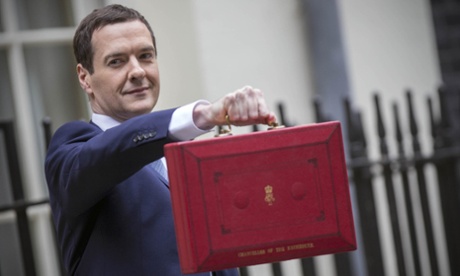
Today was about reactions to what was the first truly Tory budget in 20 years.
- George Osborne, the chancellor, was pressed on the national livin wage and he said on Today: “I also gave Britain the lowest business tax rate of any major economy in the world: 18%. I also cut taxes for small businesses and cut their national insurance bills so they can adjust as well. So I think it’s important to remember it is part of a package” (see 11:18am).
- In gaffe of the day, “dear blah blah” was sent out to the WHOLE lobby from the treasury. It seems as though a test run for a summer drinks invitation had gone wrong (see 16:15pm).

- Chris Leslie, the shadow chancellor, said: “The powerhouse has become a power cut”, of Osborne’s northern powerhouse plans (see 11:45am).
- People on tax credits would be significantly worse off beacuse of the budget, according to a damning Institute of Fiscal Studies (IFS) assessment (see 13:48pm).
Impact of tax and benefit reforms between Jan 2010 and April 2019 (incl. universal credit): http://t.co/Gd3KOr1mA2 pic.twitter.com/LkDwX4SGzX
— IFS (@TheIFS) July 9, 2015
Thats it for today. You’ve been following the politics liveblog from me, Aisha Gani, and Frances Perraudin.
Thanks for your comments.
Responding to the IFS analysis, Frances O’Grady the TUC general secretary said:
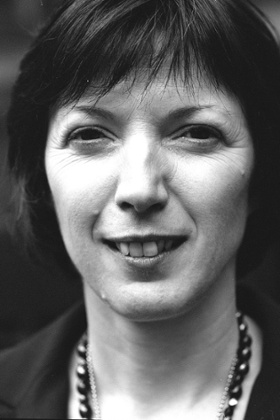
“A higher minimum wage will bring gains for some, but for many working families the Budget is a wolf in sheep’s clothing. These households will find that their tax credit losses are much larger than any gains from higher pay.
She added: “Young workers, who will see no pay hike at all, can only lose.”
“If the Chancellor hadn’t wasted so much on giveaways for the richest, tax credit cuts could have been avoided altogether. Low-income working households need decent pay and in-work benefits to make ends meet.”
Oxfam, the anti-poverty charity said the IFS findings were “deeply concerning”.
The charity’s head of UK policy and campaigns Nick Bryer said: “The Government’s decision to raise wages for the lowest paid is a significant and welcome step. But, at a time when the Government is cutting taxes for the better-off, there can be no justification for giving to low-income families with one hand but taking more away with the other.
Updated
Back to budget reactions, the Prime Minister’s official spokeswoman has defended it and said it would “keep us on the path to stronger economic security”.
Asked about the IFS analysis (13:48pm) the spokeswoman said: “The Chancellor has been clear today that with the welfare savings, the tax cuts, the introduction of the national living wage, a typical family where someone is working full time on the minimum wage will be better off in 2020.”
“The point I would make about the IFS is they themselves have said they cannot quantify how many will lose from the changes to tax credits but not gain from the national living wage as a result of the summer Budget.”
When questioned about whether the budget was regressive, the spokeswoman said: “The Prime Minister and the Chancellor have delivered a Budget that has a range of measures across society. It has delivered on a manifesto commitment on which they were elected, which was to freeze benefits.”
Number 10 also rejected the suggestion that a higher minimum wage would act as a draw for economic migrants from Europe.
“I would not accept that. There are already differences within wage levels across the European Union. There are other countries which already pay higher wages.”
Updated
While some correspondents are feeling unloved that they haven’t received a blah blah email:
Feeling left out that @hmtreasury hasn't sent me a Dear Blah, Blah, Blah email. Clearly blackballed from Blah blah blah clique.
— Sam Washington (@SkySWashington) July 9, 2015
Those lobby journalists who did, had their day made:
Email just received from @hmtreasury : Dear, Blah, Blah Blah. Regards (X) Made. My. Day.
— Poppy Trowbridge (@POPPY_SKYTV) July 9, 2015
Looks a lot like the Treasury press office has emailed the entire lobby to say "Blah, Blah Blah". I no longer feel special
— Ross Hawkins (@rosschawkins) July 9, 2015
The Treasury has just emailed this to journalists. pic.twitter.com/hNEtQBrVEF
— George Eaton (@georgeeaton) July 9, 2015
Others pictured the panic at the treasury:
blah blah UNSEND UNSEND regards @hmtreasury
— Pauline Bock (@PaulineBock) July 9, 2015
Loving this new #blahblahblah campaign from HM Treasury that has already gone viral. Very good. Very strong.
— Paul Trueman (@paultrueman74) July 9, 2015
Updated
My colleague from the lobby has let me know that the nonsense treasury email had actually gone out to the whole lobby, and was actually a test run for summer drinks.
Looks like an invitation gone wrong.
Here are a few reactions to that “Dear blah blah” letter to a journalist from the treasury that tickled us:
@JenWilliamsMEN @hmtreasury Haha. Very informative.
— Todd Fitzgerald (@TFitzgeraldMEN) July 9, 2015
@JenWilliamsMEN @hmtreasury Best bit, funnier than 'blah, blah...' is 'Regards...Billy'. That really tickled me.
— Todd Fitzgerald (@TFitzgeraldMEN) July 9, 2015
@JenWilliamsMEN @hmtreasury that is actually amazing! I can only dream of one day getting such an informative email
— Nicole Kenny (@Nicole_Kenny) July 9, 2015
@Nicole_Kenny @hmtreasury at least it's honest.
— Jennifer Williams (@JenWilliamsMEN) July 9, 2015
@JenWilliamsMEN @hmtreasury Budget-fatigue?
— Charlotte Cox (@ccoxmenmedia) July 9, 2015
In what is probably the political laugh of the day, Jennifer Williams – the political/social affairs editor for the Manchester Evening News – has shared with us in this sublime tweet:
This:

If only all emails and press releases were as concise.
Updated
Away from the maiden speeches and quoting of Voltaire in the Commons, Jeremy Corbyn – a Labour leadership contender – is to propose setting up a Defence Diversification Agency.
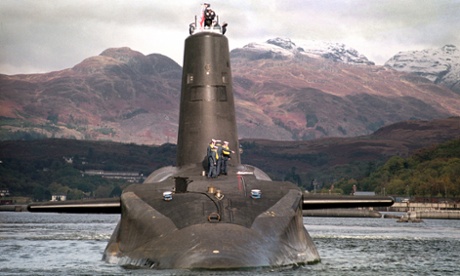
This is to help redeploy workers if the Trident nuclear weapons system is not renewed, according to Corbyn.
He is to tell a meeting on the Wirral tonight that renewing Trident would cost £100 bn, which was “totally unjustifiable”, adding especially as public services are being “devastated” by cuts.
“We cannot justify spending 100 billion on weapons of mass destruction when the vital public services that serve our communities are having their budgets slashed”, Corbyn is to say.
“But in not renewing Trident, we cannot throw the baby out with the bathwater and lose the tremendous skills of that workforce. That’s why we’re proposing a Defence Diversification Agency to redeploy that skill and innovation for the public good.”
The agency would help diversify workers’ skills for the Government’s strategic investment priorities, Corbyn will say.
The move would help create jobs and apprenticeships and give a greater boost to the economy than Trident renewal, the Islington North MP believes.
Jess Phillips, the MP for Birmingham Yardley, has written how “I relied on benefits” in a blog on the Huffington Post.
Check me out, modern day front page news pic.twitter.com/beLE2OaOI0
— Jess Phillips MP (@jessphillips) July 9, 2015
In the post, Phillips argues tax credits are a hand-up not a handout.
She said: “There are two things that gall me about what Mr Osborne said in the budget. The first is the idea that benefits system should not support ‘lifestyles’ those in work cannot afford.”
Phillips argues this is because she was in fact working. On the critique of living a lifestyle on benefits she said: “like to see him [Osborne] live it up on these benefits.”
Phillips adds: “The second thorn in the budget is the rebirth of the idea that people have extra babies to get benefits.”
Updated
On to constitutional reform news: plans for English votes for English laws are to be revised after a Commons revolt.
Tory whips have warned Downing Street it faced defeat because rebel Conservatives had joined forces with the Democratic Unionist party (DUP), Nicholas Watt, our political corespondent, reports.
Alistair Carmichael, the former Lib Dem Scotland secretary, said that the government’s plans had descended into farce after a humiliating climbdown.
You can read the full account here:
Updated
Andy Burnham, the Labour leadership hopeful, has called the IFS verdict on the Budget “devastating” and condemned the celebrations of Iain Duncan Smith, the work and pensions secretary, in the Commons.
Burnham said in a tweet it showed the “nasty party was well and truly back”.
Read the devastating @TheIFS verdict on the Budget. Then look at this picture again. Nasty Party is well & truly back pic.twitter.com/f0c7Ysfp6t
— Andy Burnham (@andyburnhammp) July 9, 2015
The IFS said 13 million families will be worse off because of the freeze on working-age benefits (see 13:48pm).
Updated
Earlier, John Cridland, the director general of the CBI – the independent employers’ organisation – also reacted to the “national living wage” and said it was a “gamble” that risked politicising the process and causing problems for some small businesses.

“The businesses that will be under the most pressure, paying a significantly higher minimum wage - 6% higher on average every year in this parliament - aren’t the same businesses as a whole who will get the benefit from the tax reductions,” he told Today this morning.
“Setting the minimum wage isn’t about morality. What we have done with the minimum wage is do the best we possibly can for low-paid workers while keeping them in a job by forensically setting a rate that small businesses could afford to pay. Now that is being prejudged by politicians to achieve a social objective.”
Menawhile, Chris Leslie, the new shadow chancellor, said Labour was “delighted” that Osborne had “stolen” some of its manifesto policies – such as the increase in the minimum wage.
But he added (see 11:36am): “Do not underestimate how important those tax credits have been for many, many people who will be waking up this morning and I think left reeling by the massive reduction to their quality of life that will come because of the nature of this set of decisions.
“It will really hit working families hard.”
Updated
In two separate charts, the IFS shows what the impact of tax and benefit reforms will be, between five and nine years:
Impact of tax and benefit reforms between Jan 2010 and April 2019 (incl. universal credit): http://t.co/Gd3KOr1mA2 pic.twitter.com/LkDwX4SGzX
— IFS (@TheIFS) July 9, 2015
Impact of tax and benefit reforms between April 2015 and April 2019 (incl. universal credit): http://t.co/Gd3KOr1mA2 pic.twitter.com/AYkv1ZUWxa
— IFS (@TheIFS) July 9, 2015
Ed Miliband, the former Labour leader, has responded to the IFS verdict (see 13:48pm). He tweeted:
@TheIFS verdict is stark: rise in minimum wage doesn't compensate for cuts to tax credits & poorest hit far harder than richest by Budget.
— Ed Miliband (@Ed_Miliband) July 9, 2015
The shadow business secretary cited a key part of the IFS statement:
.@TheIFS:"simply not enough money going in to the new minimum wage to anywhere near compensate people on tax credits" http://t.co/68Dorj1pPA
— Chuka Umunna (@ChukaUmunna) July 9, 2015
Iain Watson, the BBC political correspondent, has said:
State will be much same size- as % of national income - than it was in late 90s says IFS but higher proportion spent on health, pensions
— iain watson (@iainjwatson) July 9, 2015
Jonathan Portes, the director of the National Institute of Economic and Social Research, linked to an extract from Paul Johnson’s IFS assessment, which ends:
This was a big budget in some respects. It was a deeply disappointing budget for those of us who hoped the chancellor might take the chance to improve, simplify and reform our creaking tax system. This was not the budget of a tax reforming chancellor.
Yet Portes said he would be “slightly less” negative:
This is the most damning IFS assessment of any Budget I've ever seen: http://t.co/CzO1IrlzCT [for record, I'd be slightly less negative].
— Jonathan Portes (@jdportes) July 9, 2015
In fact, Portes concluded in a blog that it was a budget for “hard-working Poles.”
Updated
IMF cuts world growth forecast
The International Monetary Fund (IMF), an organisation of 188 countries, has said a slowdown in economic output in the UK and other advanced economies in this year’s first quarter will peg back global growth.
In its latest World Economic Outlook, the IMF predicted world growth of 3.4% this year, down from its previous projection in April of 3.5%.
The IMF had forecast UK growth this year would fall to 2.4%, from 2.7% in April, and next year it cuts its forecast to 2.2% from 2.3%.
The organisation has also dismissed fears that the Greek crisis will slow down the global economic recovery.
Blanchard: Greece a reminder of the dangers of high debt. http://t.co/ORzIA4vT5O #WEO pic.twitter.com/kfifAzIHjf
— IMF (@IMFNews) July 9, 2015
The report has said that oil prices had rebounded more than expected, after falling by more than half since last summer due to the crisis in Ukraine and overproduction.
It expected the average price of oil to be 59 US dollars per barrel over the year.
Meanwhile, the latest forecast from the Office for Budget Responsibility (OBR) for UK growth has slightly revised down the expectation for 2015 to 2.4% from 2.5%, due to lower-than-expected growth in the first quarter of the year.
You can read more about it here:
Updated
Hello, I’m Aisha Gani and I’ll be taking you through the rest of this afternoon’s proceedings in parliament. You can tweet me at @aishagani and feel free to leave comments below the line – I’ll include the best ones.
So far in the Commons there has mostly been debates on the sustainability of the NHS, mental health services in schools, and on the plight of refugees.
But back to budget responses. Perhaps the most intriguing query today was from Labour’s Helen Goodman, the shadow work and pensions secretary.
She suggested that the budget is unfair to Catholics because of plans to limit to two the number of children eligible for tax credits from April 2017.
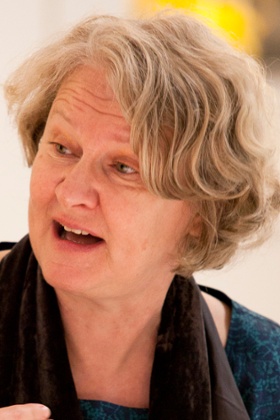
Goodman said: “Could you explain to the House why cutting tax credits for large families is a fair thing to do when it will be concentrated … on families where children are living in poverty, on Roman Catholic families, on Catholics from other minorities.
“Don’t you understand that every child matters?”
Ian Duncan Smith, the work and pensions secretary replied: “I have for some time believed the way tax credits operated distorted the system so there were far too many families not going into work, living in bigger and bigger houses, with larger families subsidised by the state when many others, the vast majority of families in Britain, make decisions about how many children they can have and the houses they can live in.
“Getting that balance back is about getting fairness back into the system.”
Updated
Taking a short break from the IFS verdict, the Guardian’s Scotland correspondent Libby Brooks has written about a controversial line in the summer budget which suggests a woman who becomes pregnant with a third child after being raped would have to justify her position in order to get tax credits. She writes :
The government has been challenged to justify an “incredibly distasteful” proposal in Wednesday’s budget which would require a woman who had a third child as the result of rape to justify her position in order to avoid losing tax credits.
The plans to restrict child tax credits to two children for new claimants from 2017 include a number of exemptions, including multiple births, and set out that “the Department for Work and Pensions and HMRC will develop protections for women who have a third child as a result of rape or other exceptional circumstances”.
Alison Thewliss, SNP MP for Glasgow Central, who first drew attention to the clause on Twitter on Wednesday afternoon, described what would inevitably result in a woman having to prove to a DWP official that she had been raped as appalling.
I am utterly furious that Tories will make women who've had a child after being raped justify that for tax credits. pic.twitter.com/Ai4SKBOHaQ
— Alison Thewliss (@alisonthewliss) July 8, 2015
Updated
Here’s some initial Twitter reaction from the IFS’s verdict.
There seems genuine surprise in some quarters that a Conservative budget has taken much more from poorer households than richer ones
— Jason Beattie (@JBeattieMirror) July 9, 2015
IFS says IHT changes increases the bias towards owner occupation and may push up house prices #budget2015
— iain watson (@iainjwatson) July 9, 2015
not much on this in the Budget... although OBR suggested 14000 less housing association homes.. perhaps more at SR: pic.twitter.com/U3ZY7nxcWM
— Faisal Islam (@faisalislam) July 9, 2015
Seems Osborne has bucked one trend though: amount of tax raised in post-election budgets. Most hike tax by £5bn-this one raises even more
— Chris Ship (@chrisshipitv) July 9, 2015
Paul Johnson of the IFS has made his opening remarks. Here are the key quotes:
- “The chancellor did not manage to find the £12bn of cuts by 2017-18 he has repeatedly promised, announcing just £7bn worth of cuts by then. But he did announce measures which should reduce spending by £12bn by 2019-20.”
- On the cap on public sector pay rises to 1% per year until 2020: “If private sector pay rises as expected we think this will take public sector pay levels well below their long-term average relative to pay in the private sector and indeed well below anything seen since we can readily make comparisons back to the early 1990s. Up to now public sector pay restraint has merely served to match changes in the private sector. We are entering a new and much tougher phase.”
Falling value of public pay relative to private sector - full presentation here: http://t.co/VTCNsapf24 #ifsbudget pic.twitter.com/qigwWa72JN
— IFS (@TheIFS) July 9, 2015
- The biggest single cut to welfare spending is set to come from extending the freeze in working-age benefits, tax credits and local housing allowance out to 2020. That will affect 13 million families who will lose an average of £260 a year as a result of this one measure. After about 2017 this will mean that most benefit rates will have fallen back behind their 2008 levels both relative to price inflation and relative to earnings growth.
- “Relative to one alternative policy which would have been simply to reduce the levels of child tax credit, the policy the government has chosen will protect those on the lowest incomes, mostly those not in work, at the expense of low earners.” Johnson adds: “Many of the gainers from the higher wage are single childless or married to someone on higher earnings. They are outside the tax credit system altogether.”
- “The key fact is that the increase in the minimum wage simply cannot provide full compensation for the majority of losses that will be experienced by tax credit recipients. That is just arithmetically impossible. The gross increase in employment income from the higher minimum wage is about £4bn. Welfare spending as a whole is due to fall by £12bn and, even excluding the effects of the four-year freeze, tax credit spending is due to be cut by getting on for £6bn. And of course many of the recipients of the higher minimum wage will not be tax credit recipients. Unequivocally, tax credit recipients in work will be made worse off by the measures in the budget on average.”
Statutory corporate tax rates in the G20, 2015 - from this #ifsbudget briefing presentation: http://t.co/HAWHKEli0H pic.twitter.com/DAt3qeakX7
— IFS (@TheIFS) July 9, 2015
- “£14bn of tax increases were partially offset by £8bn of tax cuts... The tax cuts include a further increase in the income tax personal allowance, though the biggest, and perhaps most surprising given that we already have the lowest rate in the G20, is a further 2% cut in corporation tax by 2020.”
Johnson concludes:
- “Given the array of benefit cuts, it is not surprising that the changes overall are regressive – taking much more from poorer households than richer ones. Looking over the period of the consolidation as a whole, poorer households have done worse than those in the middle and upper middle parts of the income distribution though it remains the case that the some of the biggest losers have been those right at the very top of the income distribution.”
Updated
The IFS briefing has started now and you can watch it here.
Extract from Paul Johnson's opening remarks at #ifsbudget briefing, underway now pic.twitter.com/CJgsHitvji
— IFS (@TheIFS) July 9, 2015
People on tax credits will be "significantly worse off" because of the budget, says the IFS
Paul Johnson has been speaking on the BBC’s World at One. He said that, of the range of cuts included in yesterday’s budget plans, the freezing of most working-age benefits through to 2020 would have the biggest effect, saving £4bn over that period. 13m UK families will lose average of £260 a year due to budget’s freeze on working-age benefits.
The reduction of the work allowance will also have a huge effect, he said, meaning cuts will be bigger for those with a job, reducing incentives for people to move into work.
The minimum wage announcement won’t “anywhere near compensate in cash terms” for the welfare cuts, he said. People currently on tax credits will be “significantly worse off” and the reform would cost 3 million families an average of £5,000 per year each.
The public sector pay-rise cap of 1% is more dramatic than it seems, says Paul Johnson. By 2020 public sector pay will be much lower compared to private sector pay than it has been for 30 years.

Updated
The Institute for Fiscal Studies is about to start its briefing on yesterday’s budget. But, in the meantime, the BBC’s World at One has interviewed the IFS’s director, Paul Johnson, and the verdict doesn’t look great.
Paul Johnson (@TheIFS) tells #wato as a result of the #Budget poorer households will lose out "significantly" pic.twitter.com/7fzlHlYEYB
— The World at One (@BBCWorldatOne) July 9, 2015
Updated
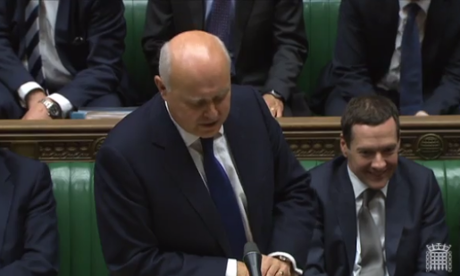
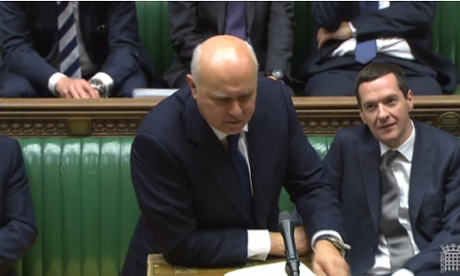
Iain Duncan Smith is making his closing comments in the debate in parliament.
I believe the next five years will see a renaissance in Britain as we change to an economic powerhouse, both in the north and in the south, with more people back to work earning a decent wage, in fact a living wage...
Even with the changes we are making, the welfare system will remain generous. Around five in 10 families with children will still be eligible for tax credits as a result of these reforms. These figures show that we are taking a balanced approach to welfare, an approach that allows people to stand on their own two feet whenever possible, but provides them with the support to do that. To reduce their taxes, to provide childcare and skills support. Providing intensive back to work support, introducing universal credit to make work pay and asking employers to play their part by increasing wages at a time when our economy is growing.
In conclusion … it is an approach that continues to provide a generous safety net and support for those who need it. It expects people to take the same choices as those in work do and those not on benefits, and at its heart it is an approach that is about moving from a low wage, high tax, high welfare country to a high wage, low tax, lower welfare country. It’s a positive vision for Britain under a one-nation Conservative government, delivered by a great chancellor and a great prime minister.
Updated
A Labour MP has suggested govt's benefit cuts will discriminate against Roman Catholics who have religious objections to contraception.
— Chris Mason (@ChrisMasonBBC) July 9, 2015
Helen Goodman said that catholics with large families would be unfairly hit by plans to restrict Child Tax Credits to the first 2 children
— Chris Mason (@ChrisMasonBBC) July 9, 2015
There has been a lot of Twitter comment about the two-child tax credit cap. Journalist Dawn Foster found the section of the red book that says protections will be developed for women in “exceptional circumstances”, including becoming pregnant as a result of rape.
So Treasury genuinely discussed whether mothers of three should receive child benefit if they were raped #Budget2015 pic.twitter.com/MLQzpm3yps
— Dawn Foster (@DawnHFoster) July 8, 2015
Updated
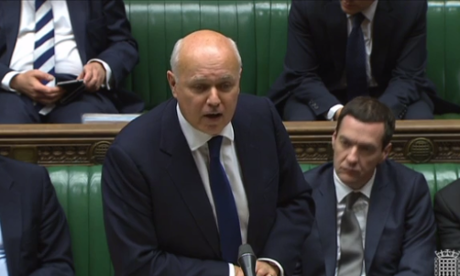
Iain Duncan Smith opens his responses to Leslie by saying – with Osborne grinning in the background – that the chancellor would be looked back on as “one of the greatest”.
IDS criticises the tax credit system, which he says was the brainchild of Gordon Brown. 40% of those being given tax credits have tax taken off them, which is then recycled through the system before being given back to them.
Tax credits cost the government £1.1bn in the first year it was introduced. It is now costing £30bn per year, most of which is on child tax credits. It was “money pumped into the system to chase, what was then, a moving poverty line,” says IDS. He also accuses the last Labour government of raising tax credit spending in the runup to general elections.
Updated
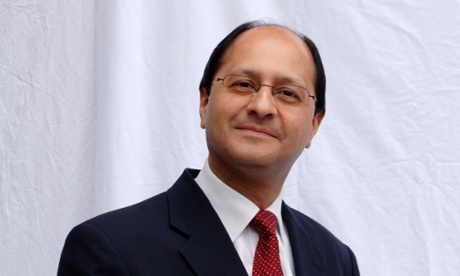
Shailesh Vara, MP for North-West Cambridgeshire, has been appointed parliamentary under-secretary of state at Department for Work and Pensions.
Updated
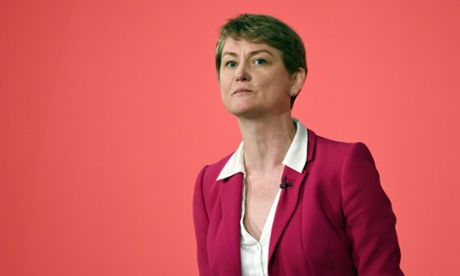
Yvette Cooper opposes 1% public sector pay cap
Yvette Cooper, one of Labour’s four leadership candidates, has announced that she opposes the government’s planned five-year 1% cap on public sector pay.
In a statement, Yvette Cooper has said:
This is an ideological assault on public services from George Osborne, not a sensible policy, and it isn’t fair. Is the chancellor really saying he can afford to cut inheritance tax for estates worth £1m but the people who care for us and keep us safe should have to face five more years of real-term pay cuts? And it is an utter disgrace that the prime minister is still considering letting an unacceptable 10% pay increase for MPs go ahead, while forcing public sector workers to fall further behind.
We need a responsible approach to pay that helps our public services cope with tighter budgets - supporting jobs and maintaining the quality of service. And that also means respecting the people who work so hard to care for us when we are sick or old, to teach our children, to keep our streets clean, to keep us safe from terror threats or to risk their lives defending our country.
I will not support this five-year 1% cap, and I believe Labour must have the confidence to stand up for what is right for our public services and fair for hard working people. The government needs to change track before our vital services pay the price.
At a lobby briefing yesterday, Chris Leslie – who is currently attacking the chancellor’s budget in parliament – suggested it was not something he would oppose.
It is very difficult. I think we’ve got to weigh up some of these changes and be more thoughtful in the way that we don’t just literally oppose everything, as Harriet was saying, tempting though it might be to oppose everything. We don’t want to see public sector jobs being lost in the way that would happen if you found departments choosing to raise pay but making people redundant. And that is a very difficult and somewhat invidious choice for those departments. Ultimately, I think a level of restraint is probably necessary.”
Updated
Iain Duncan Smith, the work and pensions secretary, has intervened to dispute Leslie’s anecdote, which he has repeated a lot today, about the effects of yesterday’s budget on a two-parent family on an average salary. Leslie says they will be £2,000 poorer. IDS says they will be better off as a result of yesterday’s budget.
Updated
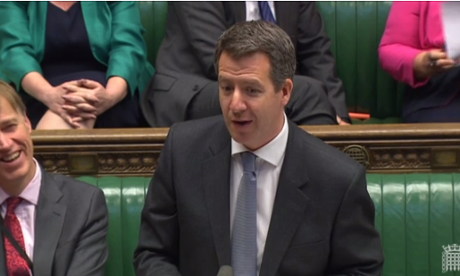
We learned more about Tory plans to cut welfare in one hour of the chancellor’s budget speech yesterday than we did in a whole general election campaign, says Leslie. The Conservatives did win a majority, but they concealed their plans from the electorate.
The Conservative manifesto said there would be a two-year freeze in working-age benefits, but yesterday the chancellor doubled that, he says. It was “one of the fastest broken promises in political history”.
Updated
“The powerhouse has become a power cut”, says Leslie of the chancellor’s northern powerhouse plans.
Alex Salmond reminds Leslie that in the runup to the Scottish referendum the former SNP leader described Darling as a “Tory frontman”. Does the shadow chancellor think that this is a fitting description in light of Darling’s comments this morning? Leslie repeats that he hasn’t read Darling’s remarks, so can’t comment.
Updated
MPs in parliament are now continuing the debate on the budget.
It was a budget entirely concerned with chasing headlines and furthering the political ambitions of the chancellor, says shadow chancellor Chris Leslie.
Leslie is interrupted to be asked what he thought of comments made by former chancellor Alistair Darling, who addressed an audience at Edelman this morning. Darling is reported to have said that Labour is in disarray and are paying the price of not having a credible economic policy.
Leslie says he hasn’t read Darling’s comments.
Updated
Evel vote climbdown shows how important the votes of the DUP could be over the next five years - to both sides... http://t.co/SgIpmJJ7hn
— Kate Devlin (@_katedevlin) July 9, 2015
The government announces EVEL delay
The government will rewrite its EVEL (English Votes for English Laws) plans – which would give MPs representing English constituencies a veto over laws affecting England only.
The Leader of the Commons, Chris Grayling, told parliament that the vote – which had been due to take place last week – would be delayed until after the summer recess and that there would be a two-day debate on a modified set of proposals.
Majority of 12 not quite as big as it felt a month ago, eh? https://t.co/seblHGp9YP
— Douglas Carswell MP (@DouglasCarswell) July 9, 2015
Updated
The budget is a "new contract with the country", says George Osborne
The chancellor has been all over breakfast television this morning, answering questions about the first budget from a Conservative majority government since 1996. Here’s a summary of the highlights:
The budget offers a new contract with the country, Osborne told Sky News.
It says to businesses ‘we are going to cut your taxes but you have to pay higher salaries’. It says to people ‘we are going to make sure you get a proper wage, a National Living Wage, but there are going to be less benefits’. And it says to the country ‘we are going to spend less but we are going to live within our means and have economic security’.”
Appearing on the Today programme, Osborne was asked about his “national living wage” announcement: “I also gave Britain the lowest business tax rate of any major economy in the world: 18%. I also cut taxes for small businesses and cut their national insurance bills so they can adjust as well. So I think it’s important to remember it is part of a package.”
The chancellor was asked about Tim Montgomerie’s column in the Times today, which quotes an unnamed cabinet minister as saying that the minimum wage announcement was designed to “kick lazy British businesses up the arse”.
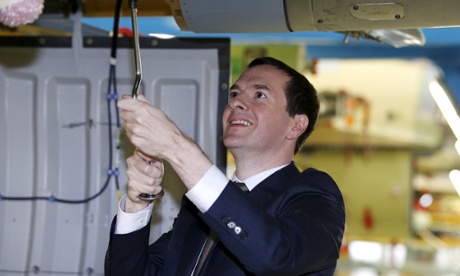
I don’t know exactly who said that but I’d use slightly more diplomatic language, which is there are some really great British companies – I’m at one today here in Lancashire, they’re hiring apprentices, they’re providing great skills for their workforce – and there are other businesses that, frankly, have taken a free ride on that because they’re not training their own workforces. They use training that others have provided.”
Osborne was asked about the plans to limit child tax credit support to two children. “It doesn’t affect people today, the policy on children; that is for future families,” he said.
It’s part of saying to our country: look, we’ve got to have a better contract. We can pay this national living wage but we can’t have this welfare system that just grows and grows and grows, crowds out the kind of spending I think we should be making on things like education and infrastructure in our country to provide for the real welfare of the country in the future.”
Updated
Former guitarist with the Smiths Johnny Marr, has also weighed in ...
Do Cameron & Osborne actually think that people in the north are ok with the term "Northern Powerhouse ?". Patronising and thick or what ?
— Johnny Marr (@Johnny_Marr) July 8, 2015
Updated
Alistair Darling tells an audience at Edelman: "Lab is in disarray... We are paying the price of not having a credible econ policy."
— Kiran Stacey (@kiranstacey) July 9, 2015
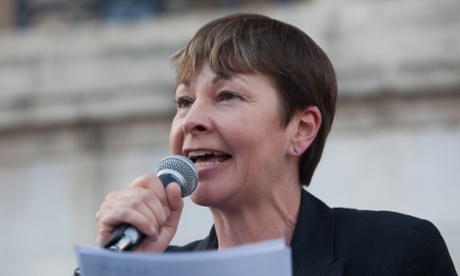
The Green party’s only MP, Caroline Lucas, has written in the New Statesman about the welfare cap. Osborne announced yesterday that he would be lowering the welfare cap to £20,000 per family (£23,000 in London) down from the previous cap, introduced by the coalition government, of £26,000.
The welfare cap appeals to the very worst in human nature. It’s part of a narrative that chooses to ignore the underlying causes of poverty or inequality, justifies punishing anyone out of work, and breeds resentment towards anyone who falls on hard times. Sadly, it’s a narrative that the shadow frontbench will not risk challenging – and many are even willing to go along with it.
It’s likely that other aspects of the budget will start attracting attention as the day progresses, but this moment – which came at the end of Osborne’s hour-long speech – is the main focus of attention this morning.
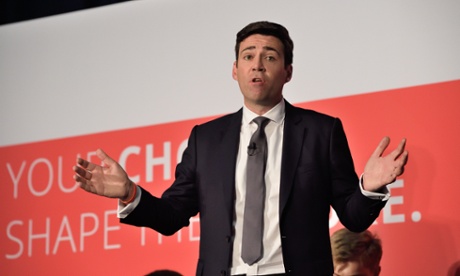
Shadow health secretary and Labour leadership candidate Andy Burnham has written for Huffington Post, focusing on the fact that the new ‘National Living Wage’ will only kick in for 25-year-olds.
A Two Generations Budget, Cementing the Divide Between Young and Old
...the biggest slap in the face for young people in this budget is what George Osborne has done on pay. His flagship proposal of a ‘National Living Wage’ only kicks in at 25, but his cuts to tax credits affect people of all ages. He was not honest about this before the election and has no mandate for his plans. There is a real risk this will cement a two-tier workforce between young and old as he brings down the deficit on the backs of young people.
Updated
Analysis roundup
Say what you like about yesterday’s budget, it wasn’t lacking in big talking points. And the commentary in today’s papers reflects that. Here’s some of the best post-budget analysis.
George Osborne seeks to be a progressive, but he’s still in thrall to Thatcherism, Steve Richards in the Independent
But before very long Osborne was deploying the language of the 1980s, a decade during which Margaret Thatcher strode away from one-nation Toryism. When reflecting on his plan to slash spending Osborne stated that “there can be no turning back”, a double whammy that echoed Thatcher’s defiant declaration that she was “not for turning” in relation to her economic policy and paid homage to the Thatcherite “no turning back group”. Later Osborne proudly declared that he was raising more cash from privatisations than at any point since 1987, when Thatcherism was at its height.
Osborne focuses on the right place, Stephanie Flanders in the Financial Times
He likes to honour past battles, this chancellor. With the decisions in this budget, Mr Osborne has opened the way for many future ones — about the nature of the state and its role in a modern economy. He does not have all the answers, and some that he does have will seem profoundly wrong to many on the left. But he is, finally, focusing the country’s attention in the right place.
There’s a reason Iain Duncan Smith looked so happy, Christian Guy in the Telegraph
For many years the left took the easy way out when it came to helping our poorest families. Rather than encouraging work and rewarding those who took personal responsibility, too often they grew the welfare bill in the hope of short-term success. Lift groups of people above an income line by increasing their welfare payments, so the thinking went, and poverty would be dealt with. But Labour tested to near destruction the idea that you can tackle poverty through higher welfare spending. It sounded compassionate but it failed to change lives.
Osborne’s budget stole Labour’s best election promises like a relative rummaging in the wardrobe, Jonathan Freedland in the Guardian
His chosen approach is devilishly simple. His goal is to recast the Tories as the champion of all those who enjoy the admiration or sympathy of their fellow voters – workers, especially in the private sector, pensioners, soldiers – and to let Labour be the advocate of everyone else. He wants the Conservatives to be the party of working people, leaving Labour as the party of worklessness and welfare. He’ll speak for the strivers, they can have the skivers – along with all those who either don’t vote or whose votes he’s happy to write off.
To that end, like a grasping relative rummaging through the cupboard of a dying family member who lies helpless on the bed, Osborne set about stealing any item of Labour clothing that took his fancy – picking out all those with mainstream appeal.
Updated
Thursday will be dominated by reaction to the budget, which saw Osborne hike up the minimum wage and cut tax credits. Parliament will continue debating Wednesday’s announcements and the Institute for Fiscal Studies will be doing its post-budget briefing around 1pm.
George Osborne has been speaking to broadcasters about yesterday’s announcements. Talking on the Today programme, he repeated that he wanted a country that lives within its means. He responded to the idea that he had adopted policies proposed by the Labour party ahead of the election – like cracking down on non-doms and increasing the minimum wage.
My opponents were proposing to spend more money, to increase the welfare bill and the like, and we’re not proposing that. I think people need to be very clear, there are difficult decisions to be taken on public expenditure and welfare ... the net effect is that the deficit is reduced at the same pace as the last parliament. Not faster, not slower, but at the same pace.
Osborne was asked if his national living wage was essentially just a higher national minimum wage. “It is a national living wage. It is set, obviously, at a much higher rate than the current minimum wage, which will still apply to younger people.”
He said the policy had been influenced by a recommendation by the Resolution Foundation, which Osborne himself said was on the centre-left of British politics. The higher minimum wage would go alongside welfare savings and business tax cuts. “The reason it is a Conservative budget is because all those three things are put together.”
I’ll post more about Osborne’s appearances this morning shortly.
The shadow chancellor, Chris Leslie, has also been doing the broadcast rounds commenting on the budget announcement. He told the Today programme that he welcomed the increase in the minimum wage for over-25s, but argued that it was outweighed by the £4.5bn cuts to tax credits.
He said tax credits were vital for “making work pay” and has described the measures as a work penalty, which will disincentivise people to work. Ahead of the election, Labour pledged an increase of the minimum wage to £8 for all adults in 2020, one pound less than Osborne promised for over-25s by the same date.
“If he wants to steal policies in our manifesto, then fine,” said Leslie, who added that Osborne’s national living wage was simply a rebranding of the minimum wage.
The cut in tax credits would pull the rug from underneath working people’s feet, said Leslie, citing calculations that suggested a couple with two children working full-time on average earnings would lose £2,000 a year as a result of the measures. For every £1 this family gains from the minimum wage increase, they will lose £2 from the cut in tax credits, he said.
Sorry for the delayed launch this morning (see here - London grinds to a halt). I’m filling in for Andrew Sparrow today and will be covering the breaking political news as it happens, as well as bringing you the best reaction, comment and analysis from the web.
If you want to follow me on Twitter, I’m on @fperraudin
Updated