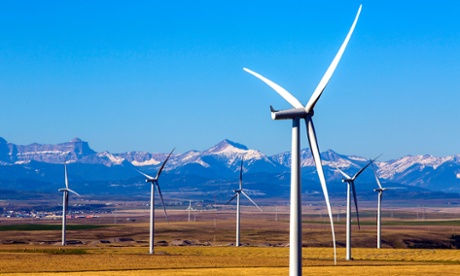
You don’t get anywhere in this world without vision. And world leaders have just cemented theirs - a world free of poverty, inequalities and climate change is spelled out in the post 2015 sustainable development Agenda launched at the UN on September 25.
Opening the Summit, Pope Francis called on governments to exercise their power to deliver on the 17 goals. The first real test of whether leaders are serious about doing so will come at the Paris climate talks this December, where they can forge a new international climate agreement that accelerates the just transition to a world powered by renewable energy.
This agreement can drive true sustainable development but without it, climate impacts will worsen, and strip away hard won development gains, putting the goals further out of reach, which may make achieving the rest of the goals impossible.
While we wait for a clear picture of the future to emerge following Paris, it isn’t hard to find places where true visionaries are already making the transition to a more just, clean energy future. People, businesses and institutions are out ahead, lighting the way to 100% renewable energy, often in places where you’d least expect it. We’ve met some of them and their stories show just what we stand to gain by building on this great start.
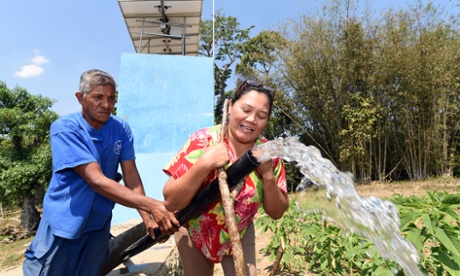
Sulis Setiawati from the island of Sumba in Indonesia catalyzed her community’s support to bring power to the entire island with 100% renewable energy. The solar panels delivered power where fossil fuels could not, boosting the local economy.
“By working together to harness 100% renewable energy,” she tells us, “we are delivering prosperity, equal opportunity and fundamental human rights for our communities – no more living in darkness.”
Her story is echoed by that of Marjina Begum in Bangladesh. She became the first woman in the village to install solar because traditional access to electricity was expensive and unreliable.
She’s since convinced many others to go for it because the light provided means women can work longer and be safer around the village. “I advised more than ten families around here to get it,” Marjina says. A few of them took it even after having traditional electricity lines. They are all smiling now, saying – ‘we did a wise thing listening to you, now we also have lights in our home’.”
It’s not just individual homes or small villages leading the way. Godfrey Kime, Mayor of Kasese in Uganda will power his city with 100% renewable by 2020. With renewables, people no longer have to burn expensive and dirty kerosene and can stay connected to telecommunications, which along with the new jobs created by the scheme, has boosted the local economy.
“They have witnessed the project providing energy access for the first time to tens of thousands of people by harnessing off-grid solutions like solar,” Kime says. “I can proudly say that the initiative has already benefited 26.8% of the residences in the Kasese district - including homes, schools, municipal services and small businesses.”
Making Vancouver’s infrastructure and economy more resilient to the climate impacts was one of the key drivers behind mayor Gregor Robertson’s decision to go 100% renewable energy by 2050 or sooner. “There is a huge economic opportunity in shifting away from fossil fuels and towards a green economy. Vancouver has an opportunity to lead and the 100% renewable goal will make our city a greener, more resilient place to call home.”
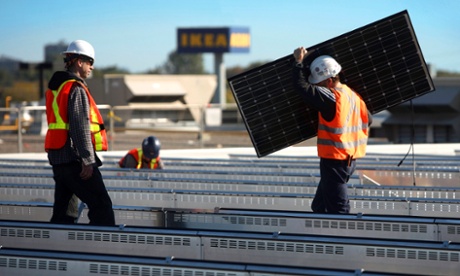
Businesses too have been embracing 100% renewable energy because it insulates them from fluctuations in the price of energy and also the hit they experience from climate driven extreme weather events like Hurricane Sandy, according to Steve Howard, Chief Sustainability Officer of Swedish furniture giant Ikea. “Our investment in energy independence makes good business sense,” Howard says. “Being more energy efficient and producing renewable energy enables us to reduce costs.”
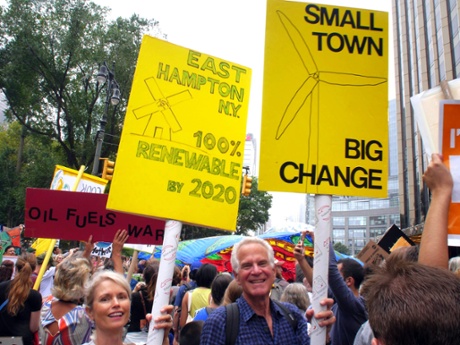
The damage caused by Hurricane Sandy was also a driver behind the decision of the community of East Hampton on Long Island in the United States to go 100% RE by 2020. But town supervisor Larry Cantwell says the program will also deliver lower power prices and better services to residents.
“By harnessing indigenous and locally available energy sources in conjunction with smarter energy infrastructure, our power, heating, cooling, water, transportation, communications, medical, emergency assistance and other essential services are more likely to be available during times of extreme weather events, natural disasters or other crisis situations,” Cantwell says.
In the face of worsening impacts, the chief of Canadian First Nation in Dokis, Denise Restoule, wanted to act to preserve the culture of the ancient tribe. By building a microhydro plant, she is powering her community entirely with just 4% of the energy produced and investing the money made from the excess energy into cultural preservation projects.
“For people seeking to consolidate their rights, protect their heritage, live in harmony with their surroundings and leave a legacy for the future – we have shown that renewable energy can deliver,” Restoule says.
From villages to big cities, businesses and first nations, these leaders who are driving the transition to 100% renewables because no matter the circumstances the benefits are palpable. These are the stories world leaders need to hear as they leave New York and think about how they will set their countries on a path to achieve the new Sustainable Development Goals.
Content on this page is paid for and provided by Connect4Climate, a sponsor of the Guardian Global Development Professionals Network.