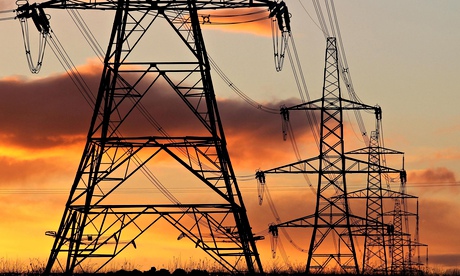
The cost of energy is an issue that affects every household and business in the UK. At the same time each of us has a stake in energy security too. Reliable supplies of electricity and gas mean that we can do everyday things like switch on the central heating when it gets cold, or turn on the lights when we need to.
To deliver these basic needs the UK requires a robust energy network that provides safe and secure energy while also giving consumers value for money. Today I am giving evidence before the Energy and Climate Change Committee (ECCC) on this very subject.
The ECCC is currently carrying out an inquiry into network costs – the proportion of our energy bills made up of transmission and distribution costs for electricity and gas. This is part of the ongoing parliamentary scrutiny of energy prices, profits and the issue of fuel poverty. The committee will be exploring some fundamental questions around fairness of costs, factors determining those costs, and how they affect household energy bills.
At National Grid, our role is to connect people to the energy they use, safely. We make sure consumers have a transmission and gas distribution network that delivers energy to homes and business with exceptional levels of safety and reliability. Through our regulated business model, we have a responsibility to be as efficient and transparent as possible.
So what are the facts? Well, network costs account for about 23% of an average household dual fuel bill, according to figures from Ofgem. While network charges decreased by about 50% in the 15 years after privatisation, they have started to increase in recent years as new networks are built to help connect low carbon energy and as we renew ageing parts of the network.
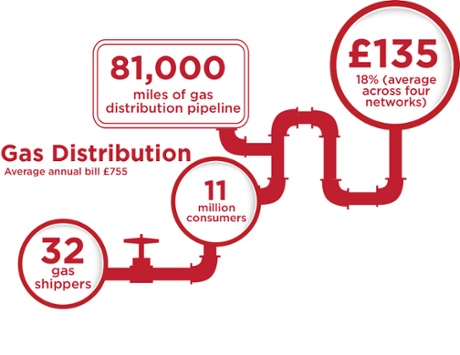
Currently, the total cost per household for our network costs sits at around £170 a year, with about £135 of that coming from our gas distribution networks. These costs are the only part of the consumer bill that are scrutinised and regulated by Ofgem.
That scrutiny has extended to our investment plans. Over the next seven years we are spending around £20bn on replacing and upgrading our networks to make sure we continue to deliver world-class levels of reliability every single day. We are also planning to expand the grid to keep pace with changes, such as the closure of old power stations and the arrival of new renewable sources of energy.
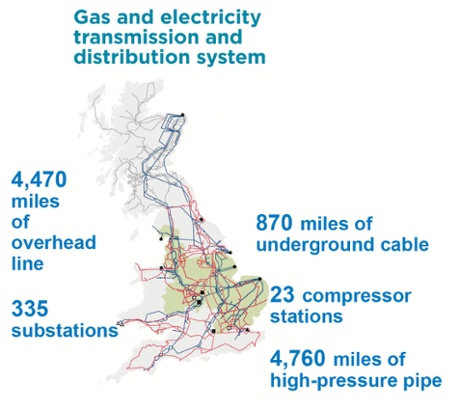
Our investment plans through to 2021 were thoroughly reviewed and challenged by a number of different stakeholders, including consumers, before being agreed by Ofgem in 2012.
We are acutely aware of the importance of delivering value for money for consumers and the very real issue of energy affordability. Despite the necessary increase in investment, the outlook is that for a typical household receiving service from all our networks, the cost will remain flat in real terms over coming years. This means they will only be increasing in line with inflation.
There are, of course, significant challenges ahead. In terms of political leadership, whoever is in charge beyond the next election will need to grapple with concerns about bills, security of supply, the pace of decarbonising the economy, and communities’ concerns about major infrastructure being built in their area. There is a clear need for politicians and those of us in the energy industry to spell out the benefits and trade-offs that come with infrastructure investment and a low carbon future.
The challenges extend to investment too. The UK has historically been seen as a good place to invest and it is vital that this remains the case. Overall we need about £110bn worth of investment, so ‘UK plc’ and the energy sector in particular must be attractive to investors. We also need to have a stable investment framework so that the cost of financing these investments can be minimised.
National Grid welcomes the opportunity to speak openly and transparently in the debate about these issues: how network costs are set, the investments we are making in the network and what this means for the consumer. We need to have an active dialogue in the UK about all aspects of our energy future – because it really matters.
John Pettigrew is executive director of National Grid UK
Content on this page is provided by National Grid, one of the sponsors of the Big Energy Debate.
More from the Big Energy Debate partners: