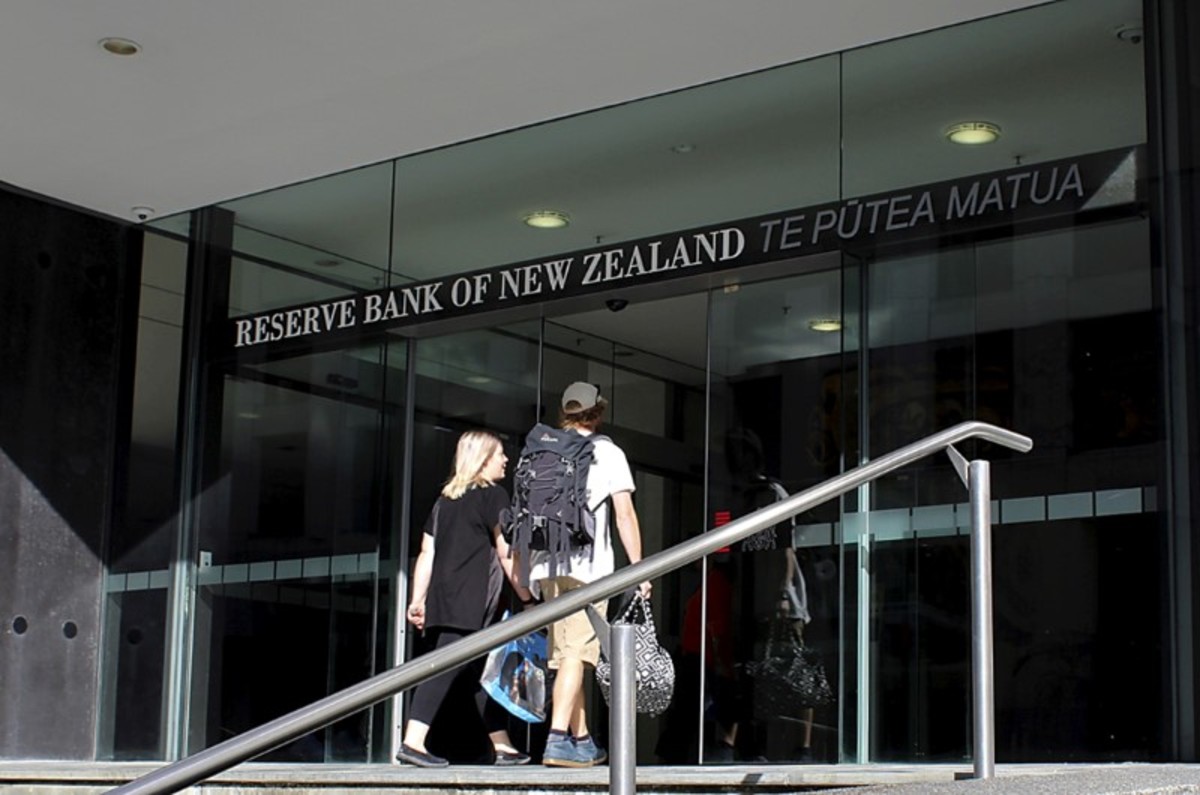
WELLINGTON (Reuters) - Reserve Bank of New Zealand (RBNZ) governor Grant Spencer on Tuesday said the bank has adopted a flexible approach to inflation targeting as it grappled with low global price growth, sparking a rally in the local currency.
Spencer said in a speech that monetary policy had less leverage over inflation than in the past because of persistent low prices for imports, one reason it had resisted pressure for more cuts in interest rates.
"The changes in domestic pricing behaviour are causing our flexible inflation targeting approach to become more flexible," Spencer said in the speech to the Institute of Directors and published on the bank's website.
"In pursuing our long term price stability objective, relatively more weight is being attached to output, employment and financial stability," he added.
The kiwi <NZD=D4> jumped to $0.6902 in the wake of the speech, from around $0.6866.
"What he's saying right now is they're conscious that there's this lingering softness in the imported side of the inflation picture but they're not in any rush to cut rates which...gave the dollar a boost," said Satish Ranchhod, senior economist at Westpac Bank.
Nevertheless, Spencer cautioned the RBNZ might ultimately have to cut rates again should non-tradable inflation fail to accelerate in late 2018, as forecast in its November monetary policy statement.
"If this response does not eventuate then we would have to consider a further easing of policy to generate additional domestic demand pressure, particularly if global inflation remains low in line with our forecasts," he said.
New Zealand's central bank has held rates at 1.75 percent for seven consecutive meetings and projected rates would stay flat until mid-2019 to counter low global inflation and a slowing economy.
Spencer also highlighted that the RBNZ was already paying attention to factors such as employment, a shift desired by the country's new Labour-led government.
The government launched a review of the RBNZ in November to expand its mandate away from just inflation targetting. It plans to introduce a bill to Parliament in early 2018 to put the changes into action.
(Reporting by Ana Nicolaci da Costa and Charlotte Greenfield; Editing by Eric Meijer)