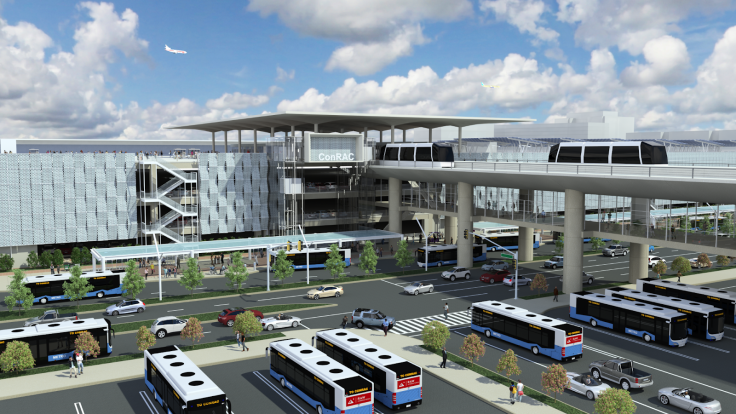
According to Grand View Research, the global architectural services market surpassed 376 billion dollars in 2023 and is expected to reach more than 520 billion dollars by 2030. That growth is being driven not by spectacle architecture but by firms capable of solving complex urban, behavioral and functional problems. Few embody that shift more directly than RAW International, the Los Angeles practice founded by Roland Wiley and Steven Lott, whose partnership has spanned more than four decades, multiple economic cycles and a radically evolving city.
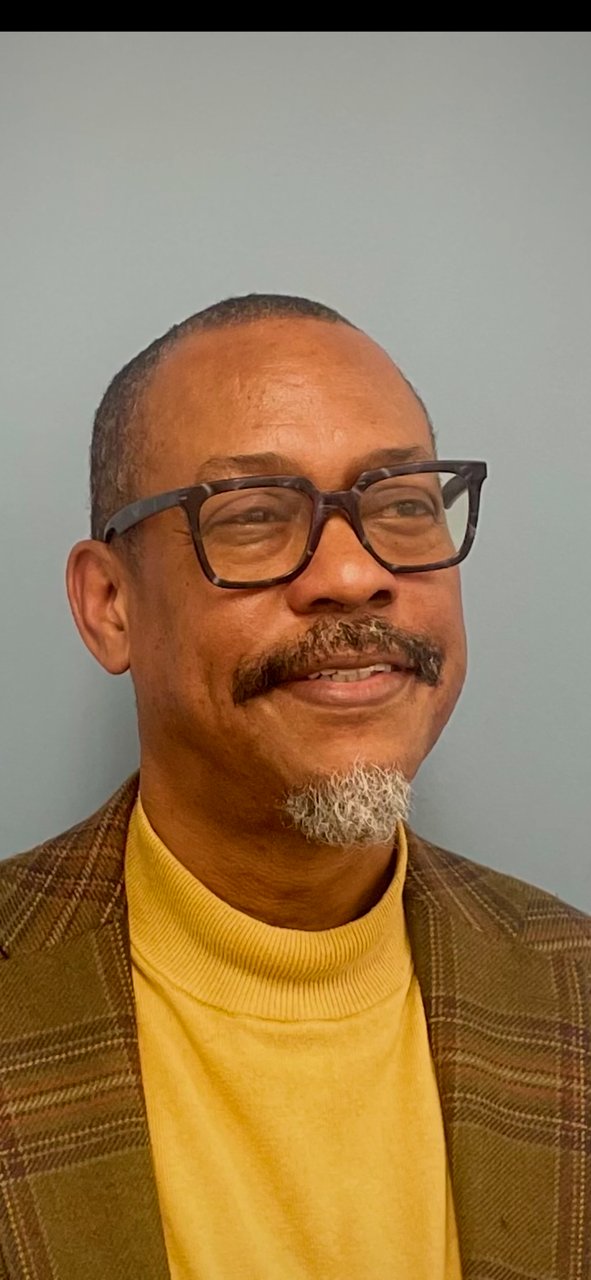
A Partnership Formed in the Margins of the Profession
The firm's origin story is almost cinematic. Wiley, fresh out of Ball State and newly arrived from Indianapolis, remembers interviewing at Gruen Associates in 1979 when he met Norma Sklarek, the first licensed Black female architect in the United States. "I'm ashamed to admit that I thought she was the secretary," he recalls with a laugh. "Then she introduced herself in this solid New York accent and I said to myself, 'This ain't no secretary.'"
Sklarek hired him on the spot. It was there that Wiley first saw Lott. "He had an afro and a gold chain," Wiley says. "Just real cool. And I knew right then this is where I want to be."
Lott had also been hired by Sklarek, but his story took a detour into entrepreneurship before returning to architecture. "I had no intention of getting back into architecture," he says. He opened businesses, licensed products for the Olympics and flirted with real estate appraisal before Wiley told him he was leaving the corporate world. Lott offered him his newly leased office space for six months. "I said, instead of working out of your kitchen, just come in and draw."
That tiny Baldwin Hills space became the first home of RAW International. "We didn't have eight cylinders," Lott jokes. "We had four."
The name came soon after. Wiley recalls asking Lott:, 'How about RAW Architecture?'". Lott replied:, 'That's interesting. How'd you come up with that?' And he said, 'Those are my initials.'"
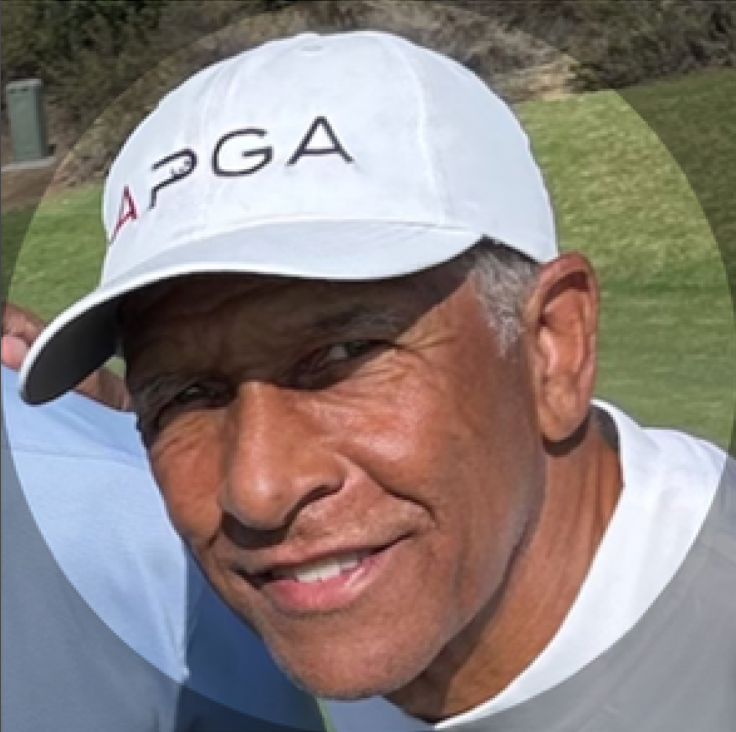
Function Before Flash: The RAW Approach to Architectural Value
From the beginning, Wiley and Lott resisted the profession's fixation on aesthetics. "Sometimes architecture is one-dimensional," Lott says. "It's all about the look. It may be published on the front cover of a magazine, but it's totally dysfunctional."
Lott's process begins with what he calls the "cookbook" of design: the program. It is the functional, behavioral and programmatic base that every project must stand on. RAW's designs are consistent with the old adage : "Form follows Function".
Wiley sees the same divide in the profession. "Our profession puts so much value on aesthetics and the functionality is secondary. Our firm focuses on functionality and the user experience.. Harmony with the site, order, balance and the spirit of a building matter. Value is in the function."
Their website reinforces that ethos. RAW International's portfolio spans large-scale Public Infrastructure, Healthcare, Showrooms, Higher Education, Transit Facilities, Federal and Civic buildings designed around flow, safety, circulation and long-term durability - all housed in enclosures of timeless elegance rather than visual spectacle. Their work with the Los Angeles County Metropolitan Transportation Authority reflects decades of expertise in spaces where user safety, movement and clarity matter more than ornament. RAW's design ethos has been recognized and published nationally.
Seeing What Clients Cannot
RAW International's strength, they say, lies not only in design logic but in cultural and contextual insight.
"Clients have blind spots," Wiley says. "They have funding, but they don't necessarily understand the social dynamics of an environment. That's where we come in."
Lott has his own version of this story. A Beverly Hills surgeon once asked how he managed to break into the city's famously insular Golden Triangle. Lott remembers hearing referrals that revealed: "It's not that they necessarily like him but that his work precedes him".
It's a line that lands heavily. Something more structural, more familiar. A reminder of who is presumed to belong and who has to prove it twice. RAW International's track record in such territory didn't come from access; it came from performance. "We don't have the luxury of dropping the ball," Wiley says.
Their ability to read a neighborhood, understand its politics and anticipate its sensitivities has become a core competency. And as the built environment becomes more complex, that kind of insight is no longer optional - it is survival.
A Broader Reckoning in the Built Environment
RAW International's ability to understand a community - its pressures, its blind spots, its internal logic - is increasingly aligned with what the industry now demands. Cities are swelling. Nearly 70% of people are expected to live in urban environments by 2050. Climate stress is escalating. Infrastructure is aging. Transit networks are expanding under tight deadlines, such as the run-up to the 2028 Los Angeles Olympics. Architects are being pushed to think in systems rather than silos.
Sustainability expectations have risen sharply too, but Lott cautions against assuming progress equals substance. "I've seen projects wave the sustainability banner," he says, "but the roof reflectivity doesn't meet code, the materials aren't compliant or the systems don't work. It's smoke and mirrors."
RAW International takes a different approach. When working on upgrades for the Natural History Museum in Los Angeles, Wiley says the team pushed for measures that actually reduced operational load - daylight optimization, envelope performance, circulation efficiency, systems integration. Not glamorous features, but measurable ones, the sort that shift long-term performance rather than short-term optics.
Wiley sums it up simply: "Water will be precious. Renewable energy will rise. But society has to put pressure on architects. Pretty buildings are secondary."
Mentorship, Community and the Human Dimension of Practice
Wiley's professional discipline extends into his personal commitments. Outside office hours he pours time into Menformation, a mentorship nonprofit for young men. "It's something I feel called to do," he says. His weekly service work in Leimert Park has given him a first-hand view of how architecture and social dysfunction collide. "This insight is something I hope to apply in architecture if we get the chance."
Lott, quieter but equally firm, sees architecture as an outward expression of personal ethics. "Your religion is within you," he says. "Architecture can be a manifestation of who you really are, and one of many ways in which to express yourself through your clients and their projects. The end game being an enhancement of the environment in which we live.
Legacy, Integrity and the Future of RAW International
After four decades shaped by community ties, functional rigor and a refusal to cut corners, the conversation inside RAW International has shifted from growth to inheritance. Wiley frames legacy in terms of values rather than portfolio. "Integrity. Responsible practice. Our work should improve a community's conditions. There are so many institutions that contribute to decline. We want to be the opposite of that."
Lott condenses the firm's value proposition into a single principle: when RAW International leads, projects work. "We will vet the client's wishes, understand the end game and deliver something that works - not just something that looks good."
As Los Angeles prepares for the Olympics, as transit continues to shape development patterns, as sustainability moves from aspiration to necessity, RAW International finds itself well-positioned for the era ahead, not because it chases trends but because it has always focused on fundamentals.
Wiley puts it plainly: "Forty years later, we're still here because the yin and yang work together."