Nikki Bensted-Smith has a way of getting people to change their minds and, as head chef of the Warehouse Café in Birmingham, she’s getting something of a reputation. Having been with the hugely popular restaurant for just over a year (it’s rated the top vegetarian restaurant in Birmingham on TripAdvisor and the third best overall) she’s been inspiring locals to try vegetarian food and is beginning to introduce more and more raw dishes to the menu.
“Many people are sceptical when I talk about raw food,” she says. “They think it’s mainly salads and juices but there are so many techniques you can use to create amazing dishes.”
Contrary to how it sounds, raw cuisine does not only include completely raw ingredients. The aim is not to heat food above 49C (120F). “It can be difficult to get the balance of flavours,” says Nikki. “Usually in cooking, you tend to cook the flavours out, which doesn’t happen in raw food preparation.”
There are many ways of introducing flavour and texture. “You can soak nuts and sprouts to soften them,” explains Nikki. “For example, we’ll be using sprouting lentils for the dahl at the event and the nuts will be soaked for the yoghurt carrot halva; by soaking them, they blend a lot better.”
“I’ll also be using a dehydrator to make the pastry for the samosa.” A dehydrator is a square box with little trays that uses a fan and low temperatures to dry out food. “They don’t go above a certain temperature (about 50C), so you’re not cooking food,” says Nikki.
Raw foodies want to avoid heating food above 40-49C - as this temperature destroys enzymes in the food making it less nutritious. “Also there are no extra oils - we tend to use a bit of olive oil but don’t need anything extra for cooking - as raw food people argue that frying oil releases carcinogens. So it’s seen as clean living for your body,” says Nikki.
To make her wraps for the event Nikki will blend carrot with brown flaxseed, water and spices, and will then spread on the dehydrating machine and heat slowly for eight hours. “So there’s not much room for error,” she says. “If you mess it up, you can’t just create another one. You have to be really organised. We also need large quantities of fresh food so you also need to factor that in.”
Nikki’s love of raw food stems from her decision to turn vegan nine years ago. “I was one of those kids whose mum never enjoyed cooking and ate a lot of pre-packed food from the supermarket as a result,” she says. “I had a vegan friend at college. The first thing I made was a really bad curry. I bought some tinned lentils and threw in some spices.”
At university she became a key organiser for animal rights groups promoting veganism within the local community through food fairs, then once back at home in Norwich she volunteered at the Greenhouse, a community-run veggie café. “I went on to organise the Norwich Veggie Fair, a vegan fair which is now celebrating its fourth year.”
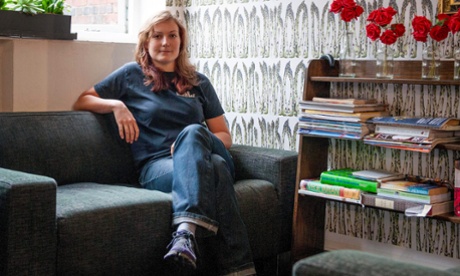
As we’re taking Nikki’s photograph for this piece two tourists turn up at the cafe, guide books in hand, hugely disappointed to find it closed. And a TripAdvisor review posted on the day I visited by Laura_HanleyGorton sums up the experience. “I am not a vegetarian and wouldn’t normally go for the veggie options at restaurants but, dining at the Warehouse Café has completely changed my view on vegetarian food.”

Four raw tips for beginners
• Sprouting
Soak your choice of aduki beans, chickpeas, green lentils or mung beans overnight. Rinse, drain and leave in a warm place. Rinse and drain once/twice a day for four to five days.
• Courgette hummus
Peel and chop two courgettes. Blend
with a teaspoon of tahini, a little garlic and a squeeze of lemon juice, adding ground cumin, paprika and salt to taste. Turn this into a wrap by filling lettuce leaves with hummus, sun-dried olives and fresh herbs.
• Courgette noodles and pesto
Peel a couple of courgettes and run through a spiral slicer. For the pesto, blend some pine nuts/walnuts and basil with salt and pepper to taste and a little olive oil. Toss together.
• Couscous
Blend cauliflower florets with a tbsp of pine nuts, some olive oil and salt and pepper until very fine. Mix with fresh corn, finely diced carrot, diced courgette, slices of sun-dried tomatoes, fresh peas, olive oil, lemon juice and extra salt and pepper to taste.
Nikki Bensted-Smith is hosting a three-course dining event on 13 September. To find out about other upcoming events sign up to become a Guardian Member.