After months of speculation about who will succeed Cuban leader Raul Castro, something became clear this past week: Castro will not be able to pass the government leadership to his son, Col. Alejandro Castro Espin.
At least, not legally.
Castro Espin was not nominated to the National Assembly, which according to Cuban law would prevent him from assuming the highest office in government. The head of the Councils of State and of Ministers must be a member of the Cuban Parliament and be ratified by it. Castro Espin, however, could retain great power, if he remains as the head of the National Defense and Security Commission, a newly created entity of which little is known but which has control over ministries and security forces within the country.
With Castro Espin out, there is a significant decrease in the likelihood that the island's next leader is from the same family that has been ruling the country for 60 years. Raul Castro is supposed to step down in April.
However, there is another possibility for a Castro to climb the political ladder: Mariela Castro Espin, the daughter of Raul Castro, has been nominated as a deputy for Parliament.
The director of the National Center for Sex Education has served as a de facto spokeswoman for the government, especially abroad, but has said she has no intention of running for office. Last April, she made some surprising statements suggesting that there were several contenders to succeed her father, who said he would retire after two terms.
"Who do I want for the future of the country? I have no idea. In all of those I look at I see virtues and defects, including in my dad," she said. "The people are the ones who have to decide. I do not have a favorite but there are several people with qualities. I'm still not going to make a statement, I'm watching."
A political transition was to begin with elections for a new legislature that was scheduled for February. But the elections were postponed in a time of economic and political turmoil. Cuba is struggling with a huge loss of subsidies from Venezuela and profits from the export of medical services. The country urgently needs new investors at a time when relations with the United States are at a low point.
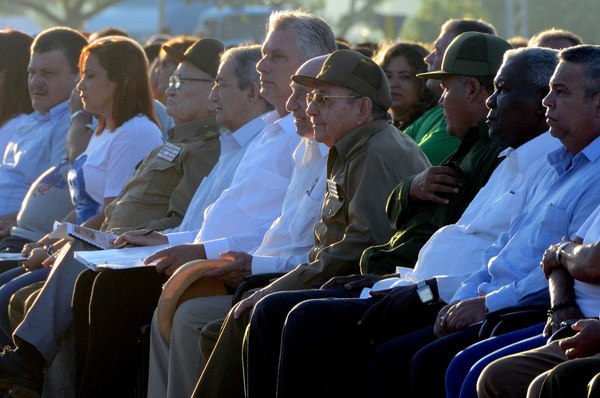
Raul Castro, 86, leader was also nominated to the National Assembly and is expected to remain as first secretary of the Cuban Communist Party. The list of nominees also includes the First Vice President Miguel Diaz-Canel, the widely presumed successor to Castro, and other figures in the group of more conservative "historical" leaders such as Ramiro Valdes, 85, and Jose Ramon Machado Ventura, 87.
The nominations of vice presidents Valdes and Machado Ventura _ who also serves as second secretary of the Communist Party _ have raised eyebrows because it seems to clash with pronouncements made by Castro himself. In the most recent Congress of the Party in April 2016, Castro proposed both age and term limits for government and party posts.