AS Jack Carter shuffles around the site of the former RAAF base at Rathmines, Lake Macquarie forms more than a dramatic backdrop; it is a reservoir of memories.
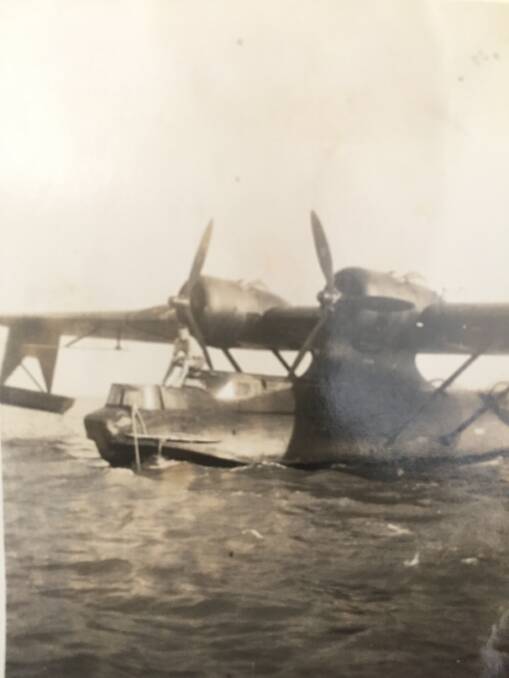
For Mr Carter can recall when that vast stretch of water was a runway for Catalina flying boats during World War II.
In his mind's eye, he can see those Catalinas taking off and landing on the lake, undertaking long-range missions, playing a vital role in campaigns against the Japanese forces to the north of Australia.
The aircraft, often known as the Black Cats because of their paint colour, were involved in reconnaissance patrols, participating in rescues, transporting supplies, and conducted bombing and mine-laying operations.
"I see them every day just about, the Catalinas coming in and landing," says 95-year-old Mr Carter, calling up his wartime memories. He explains one of his jobs was to help guide the flying boats home safely, day and night.
'I used to put flare paths on the lake."
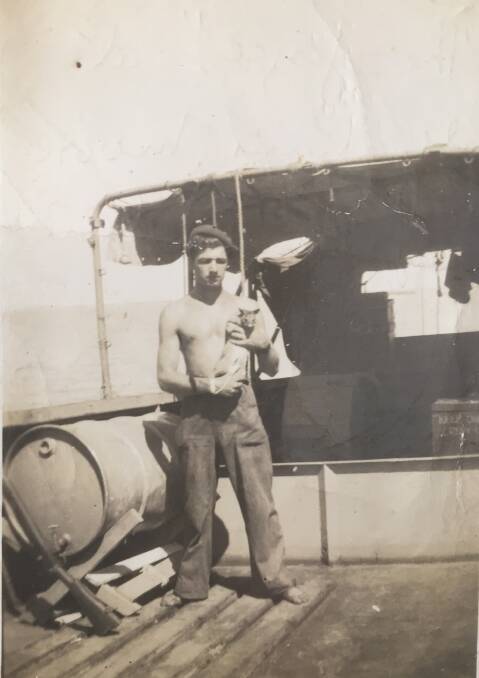
At the age of 18, Jack Carter swapped a job on the Stockton ferry for service in the Royal Australian Air Force, at a time when there were still fears the Japanese forces could invade.
"There were stories about how we could be invaded," recalls Mr Carter.
"It didn't worry me that much. As a young man, being here safe and sound, you looked on service with a bit of excitement. You wanted to do it. You wanted to get there.
"Once you got there, you started to think about why you're there. And what could happen if you hadn't done it."
Before being sent to northern Australia, closer to the battles raging through Asia and the Pacific, Leading Aircraftman Carter underwent training by the lake at the Rathmines RAAF base.
He was attached to the Marine Section and learnt skills such as navigation, Morse code - and the fine art of attaching wheels to the Cats in the shallow water, so they could rumble up onto the land.
Mr Carter points to the vast concrete ramp sliding into Kilaben Bay and says, "In the very early stages, we'd have to take the wheels out and put them onto the Cats to bring them onto the shore".
"We'd wade into the water, about a metre deep, with the wheels. ... and we'd attach them to the Catalina."
The air force base on the western shores of Lake Macquarie took shape just as the world plunged into war in 1939. One of the prime reasons for the base's location was the lake itself, providing the aquatic runways for the flying boats and seaplanes based at Rathmines.
Along the shores, a military community was carved out of the scrub. By the time Jack Carter arrived at the base, there were dozens of buildings, ranging from massive hangars to rows of sleeping huts and mess halls. Thousands of young men and women lived, worked and played by - and on - the water during the war. Rathmines would become the largest flying boat base in the southern hemisphere.
"It was just packed, so full," recalls Mr Carter, as he points to a cleared area near the concrete apron that once nursed Catalinas. "The parade ground was there."
As a member of the Marine Section, Jack Carter was based on the western fringe of the base, at Styles Point.
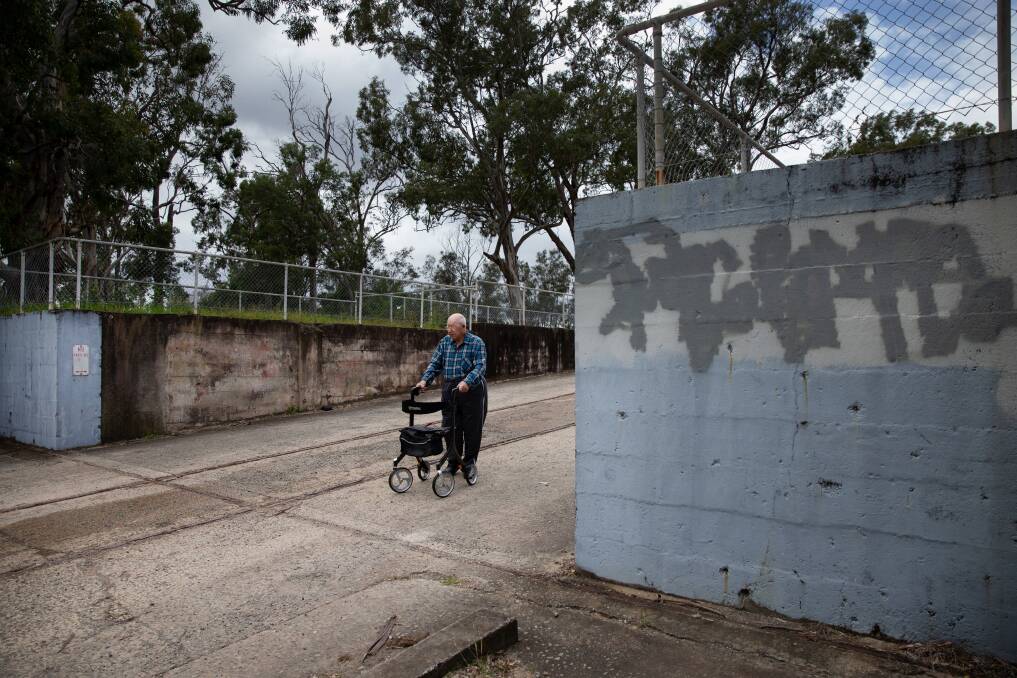
As he walks down the long concrete ramp, where he used to launch boats to putter out to the Cats, he marvels at how the landscape has changed. For he has not been back here to Styles Point for about 78 years.
"These trees have grown immensely," Mr Carter mutters. "There was a farmhouse here, and they still had animals. Pigs and chooks, and all that sort of business.
"This was the quietest area around here. We were here to learn what we had to learn, so that we were of use when we were up north."
He looks down at the pebbly concrete and adds, "It's unreal, to think it's been here so long."
Indeed, so much has changed through all those years.
Near the former officers' mess on a knoll at the north-east corner of the old base, Mr Carter marvels at what he sees. That building is now part of a bowling club.
"Well, there certainly wasn't a bowling green there," he says, shaking his head. "I wish there had been. I took up bowls later on. To see a bowling green is unreal."
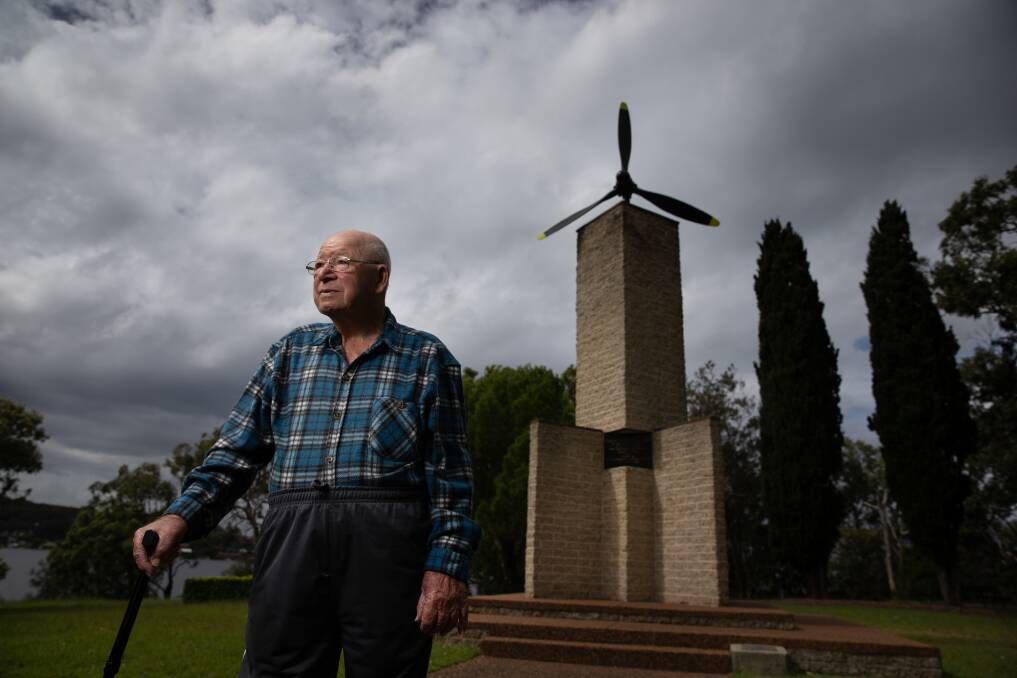
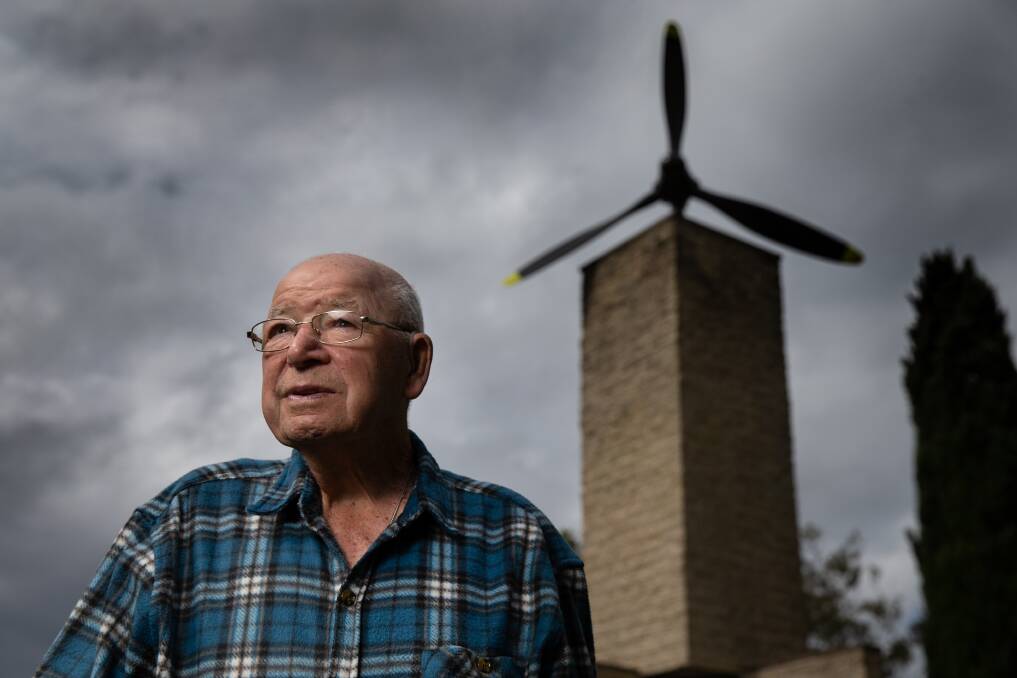
He walks towards the propeller-crowned memorial on the point. A plaque on the memorial explains it is "dedicated to those who served at the RAAF Rathmines and to all those associated with flying boats and seaplanes, 1939-1960," which was around the time the base closed.
It is the first time he has seen the memorial. "I never realised anything like this would be here," he says. "It's certainly not forgotten when you see something like this."
During World War II, about 320 RAAF Catalina crew members were killed, many of them with connections to this base.
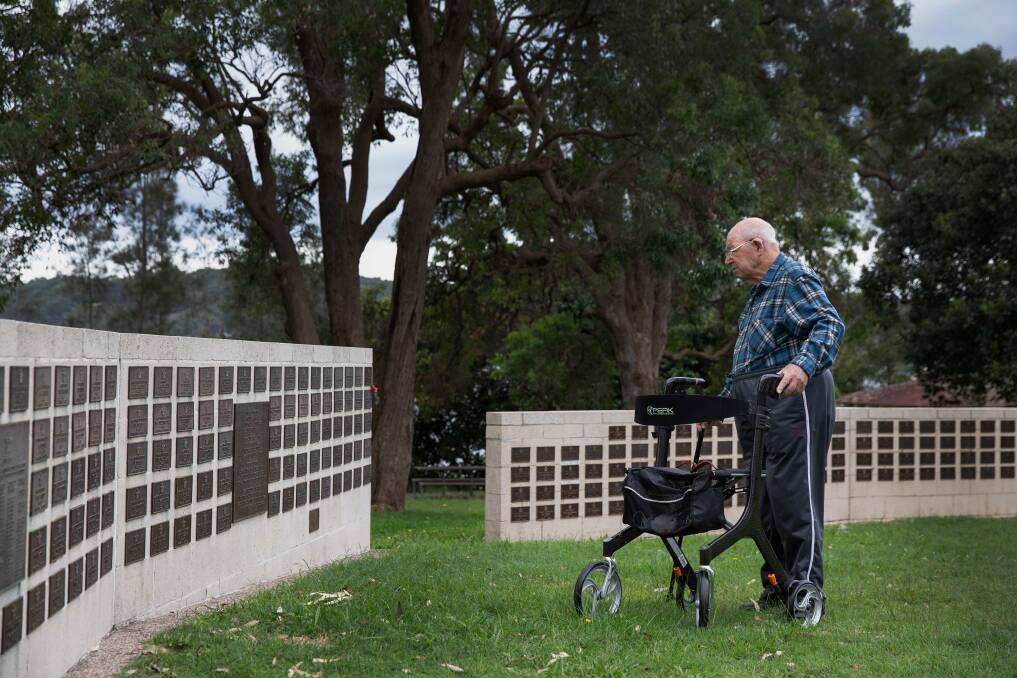
Jack Carter turns around and makes his way to the rows of plaques commemorating servicemen, servicewomen, and veterans who have died. As he reads the names, he quietly weeps.
"I was thinking I'm about the last," Mr Carter says. "Of all my mates who I know, they're gone.
"I'm still going, and they're all gone."
Which is why Jack Carter will be attending the dawn service held by his RSL sub-branch, Cardiff.
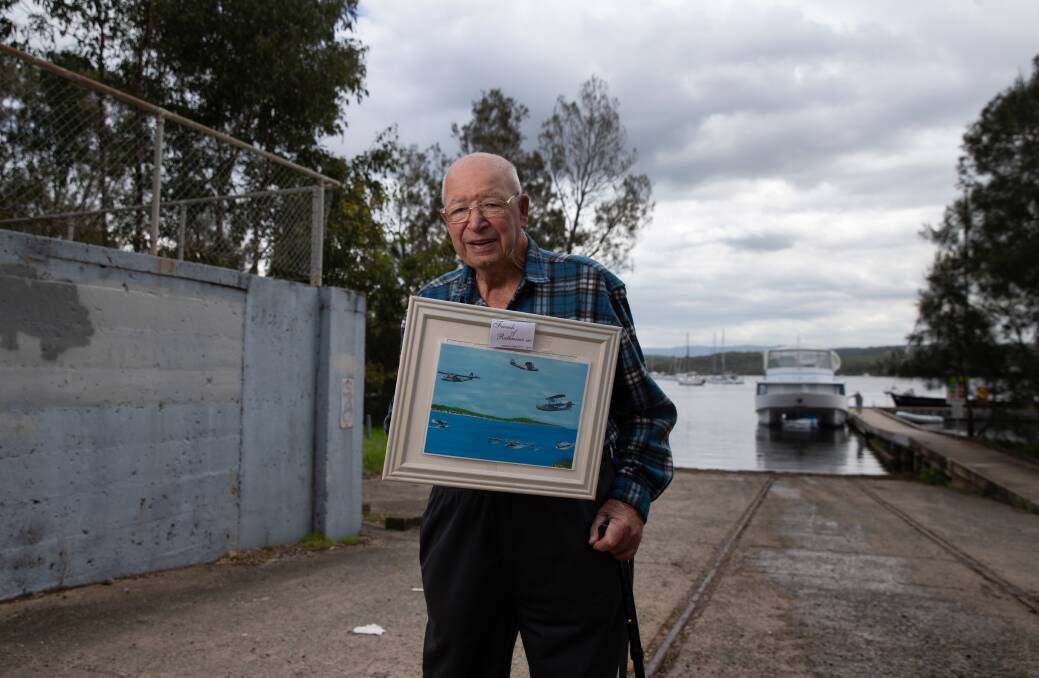
Last year, as COVID restrictions forced Australians to rethink how they observed Anzac Day, Mr Carter was one of the many to hold a service out the front of his home at Elermore Vale.
He lined his front fence with Australian flags and put on display a few of his paintings, including a depiction of Catalinas in action on, and over, the lake.
He figured that this year, Mr Carter would be once again honouring his mates from home - "I thought I might be too old to keep going to Anzac Days" - but when a fellow sub-branch member visited with an invitation to the dawn service, he changed his mind.
"When that turned up, I thought I'd make an effort somehow to get there," Mr Carter says.
"I'm really looking forward to going with my son."
In the meantime, he is walking with his memories and the ghosts of war around the vast spaces of the old base, gazing out to the bay that once cradled the Cats.
He is delighted to learn the area along the former base's eastern edge is now called Catalina Bay.
Many of the wartime buildings are long gone, and a few have been reinvented for 21st century uses, such as the recently restored Rathmines Theatre, which includes a small museum that holds memorabilia of the base days.
Jack Carter wishes there was a large sign at what used to be the base's entrance, telling people what was once here - and why it should be remembered.
"It should never be lost," Jack Carter says.
"There's so much history here.
"So many died being part of that history. They should never let it go."
Read more: COVID couldn't quell Anzac spirit in 2020