The backcloth was spectacular and inspiring as the unexpected April snow covered the tops and down the hills. Below it the old Caledonian pine forest spread down, dark green, to the lower slopes. The river Affric meandered through the flats of the strath, and it was there I saw the red deer stags. A small number of the older stags had cast, or shed, their antlers, which would grow again for the challenging rut in the autumn. One old male had cast just one antler and it seemed uncomfortable with balancing the other on its left side. The hinds must have been on higher ground awaiting the birth of their calves in May or June.
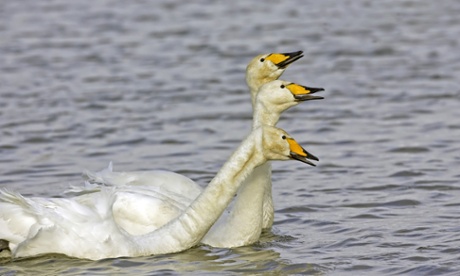
On the opposite side of the flats were six nanny goats with their recently born kids, four of them. Suddenly, from behind thick scrub, a black-and-cinnamon nanny appeared, a colour combination I had never ever seen before. However, what kept my attention was six birds on the side of the river where it flowed into a loch – large, white and regal whooper swans .
This is a breeding site for whooper swans and as there are fewer than 30 individuals that remain in Scotland in the summer the Affric sighting is rare indeed. Whoopers wintering in the Highlands normally fly back north to breed in Scandinavia and Siberia, but last year two pairs in the glen brought off some cygnets. There have been various ideas as to why they stayed. My own theory is that one of the adults had been injured, perhaps by hitting overhead cables, to the extent it could not fly. Its mate stayed with it, and this persuaded the others to stay.
Soon these three pairs will be building their huge nests and laying three to five large off-white eggs. Both parents will tend the young, which feed themselves, and are brooded at night. I will return later in the year to see how they have fared and how many cygnets they have managed to rear. Such moving birds and just unforgettable, despite all the other distractions.