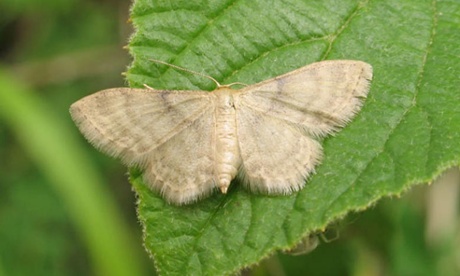
Everything I’ve heard about the silky wave moth puts me in mind of fairy lingerie. It is small, pale tan, with a pearly sheen and delicate fringing at the edges of its wings. It appears from midsummer and is very rare, found in just one place in England and a further two in Wales.
Conservationist Jen Nightingale is taking me on a tour of the sites she surveys for the moths in the Avon Gorge. After two vertiginous rockfaces open to the growl of traffic on the Portway, I am relieved to be guided to something a little closer to a storybook scene.
The gully nestles between the grassy expanse of Clifton Down and a rocky path leading up through mixed woodland. Its south-facing slope of limestone is dotted with whitebeam, grasses and wildflowers. Rock rose is known to be the moth larvae’s favoured food but there is a theory that they might like bird’s foot trefoil even more. Both shine their golden beacons in the tumble of green and grey.
As I scrabble up the scree, Jen is agitating the plants to bring out the moths and it’s not long before they are scattering around us.
Marbled white and brimstone butterflies glide the length and breadth of the gully but the silky wave moths make only brief journeys. They will be on the wing for the next few weeks to find mates and it is a time for focus. They do not feed as adults, so once the new generation are established as eggs, the old ones will die.
When they land they hold their wings open to attract attention. They span just the width of my thumb but I can get close enough to admire the namesake silky lustre. The faint taupe waves radiate out like tidemarks on summer laundry.
The scientific name, Idaea dilutaria, means diluted or washed-out mountain nymph. This refers to the moth’s appearance but reflects its puzzling rarity too. Limestone grassland is not after all uncommon.
At first glance this might seem a simple, papery insect but its enchanting subtlety invites further study.
.png?w=600)